























Buying disposable gloves – your comprehensive guide to materials, applications, standards & use
Disposable gloves – also referred to as single-use gloves – are an essential part of protective equipment in many sectors. Whether healthcare, nursing, dental, tattoo, beauty, food processing, catering, laboratory work, cleaning or industry: every area of use places specific demands on material, colour, quality and level of protection.
As one of the leading suppliers, AMPri offers one of the widest ranges of disposable gloves made from nitrile, latex, vinyl, TPE and PE – complemented by innovative specialist solutions such as vitrile, Low Derma™ and our Nature Gloves. From thin, highly sensitive models for precise work through to high-risk gloves for laboratories and industry, you will find the right disposable glove for every requirement.
Would you like to visually organise your workplace or implement a modern studio design? Our extensive range of coloured disposable gloves – from pink, purple, turquoise, Clean Ocean and platinum through to black and green – enables professional colour-coding for hygiene zones or stylish working environments in beauty, tattoo and dental settings.
This comprehensive guide walks you step by step through all key topics: from materials and sector recommendations through standards, AQL and quality levels to wearing time, correct use, disinfection and disposal. In addition, we present suitable dispensing and hygiene systems for professional environments.
Contents
- 1. Materials used for disposable gloves
- 2. Areas of application for disposable gloves
- 3. Quality, standards & specifications
- 4. Use & correct handling
- 5. Dispensers & hygiene systems
- 6. FAQ – frequently asked questions about disposable gloves
1. Materials used for disposable gloves – which single-use glove is right for your application?
Disposable gloves – also known as single-use gloves – are made from different materials such as nitrile, latex, vinyl, TPE, PE or innovative special blends such as vitrile and Low Derma™. Each material offers its own benefits, from maximum tactile sensitivity and excellent chemical resistance through to particularly skin-friendly alternatives for sensitive hands.
To help you quickly find the right disposable glove for your requirements, we present the most important materials in a clear overview – including typical areas of use and direct links to our material categories.
Material comparison at a glance
The following overview compares the key properties of the most common materials. The star ratings provide a simple guide and do not replace detailed review of standards or individual products.
| Property | Nitrile | Latex | Vinyl | TPE / PE |
|---|---|---|---|---|
| Comfort / fit | ★★★★☆ | ★★★★★ | ★★★☆☆ | ★★☆☆☆ |
| Elasticity | ★★★★☆ | ★★★★★ | ★★☆☆☆ | ★☆☆☆☆ |
| Tear resistance | ★★★★★ | ★★★★☆ | ★★★☆☆ | ★★☆☆☆ |
| Chemical resistance | ★★★★★ | ★★★★☆ | ★★★☆☆ | ☆☆☆☆☆ |
| Tactile sensitivity | ★★★★☆ | ★★★★★ | ★★★☆☆ | ★★☆☆☆ |
| Skin friendliness* | ★★★★☆ (latex-free) | ★★★☆☆ (latex proteins) | ★★★★☆ (latex-free) | ★★★★☆ (latex-free) |
| Suitability for fatty foods | ★★★★★ | ★★★☆☆ | ☆☆☆☆☆ | ★★★★★ |
| Price / cost-effectiveness | ★★★☆☆ | ★★★☆☆ | ★★★★★ | ★★★★★ |
*Note: For particularly sensitive skin we recommend accelerator-free Low Derma™ nitrile gloves.
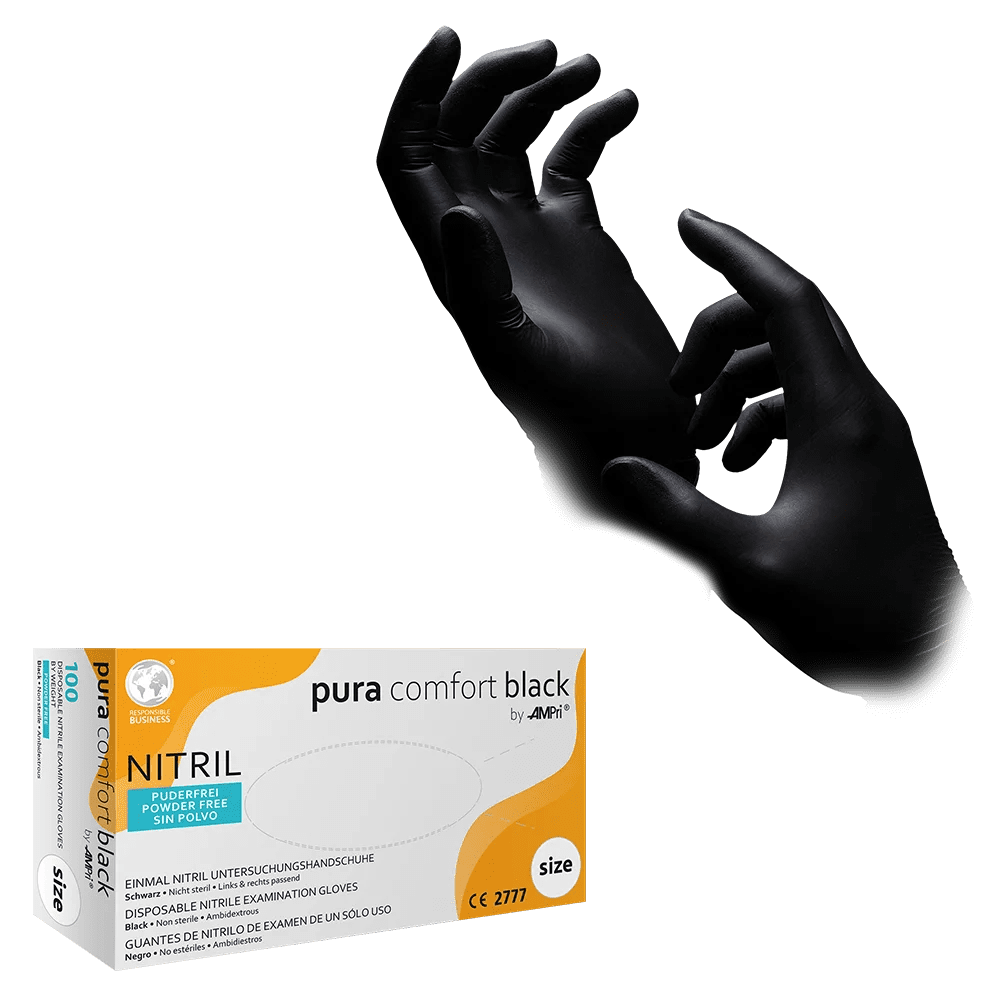
1.1 Nitrile disposable gloves – the robust all-rounder for virtually all sectors
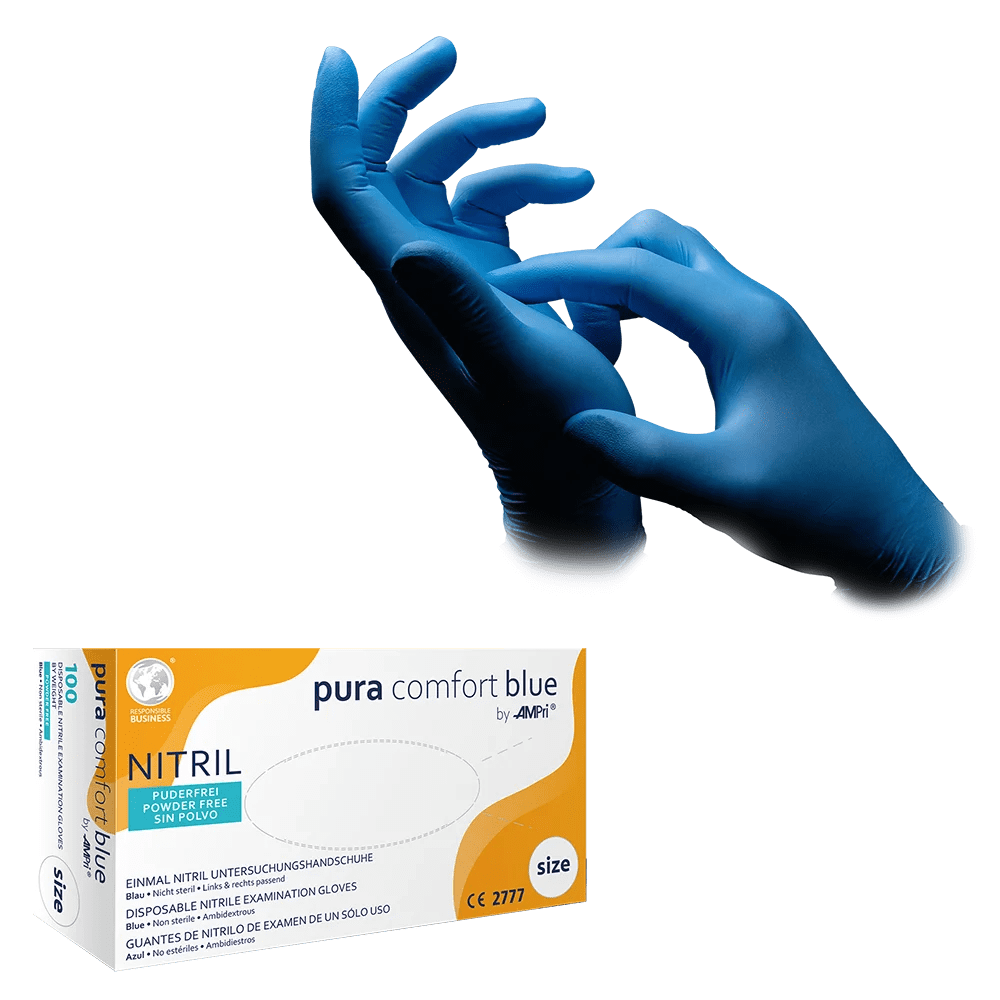
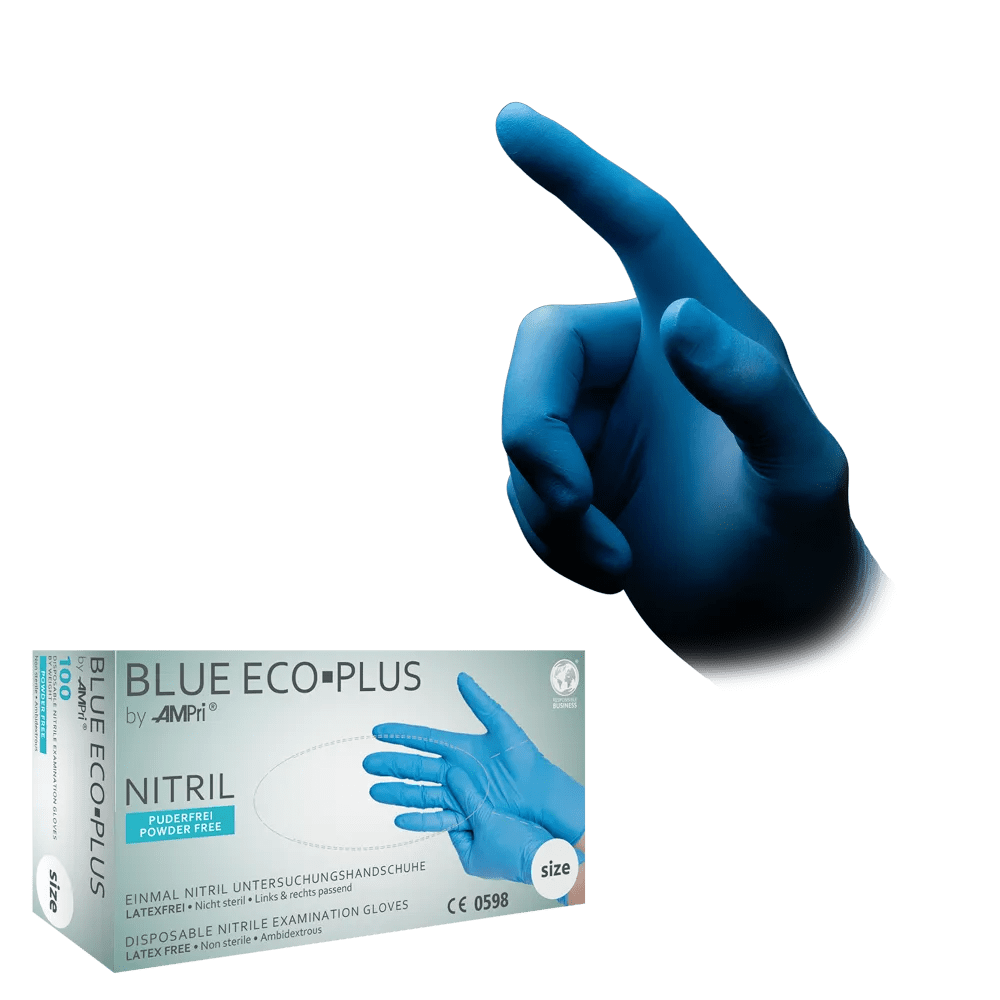
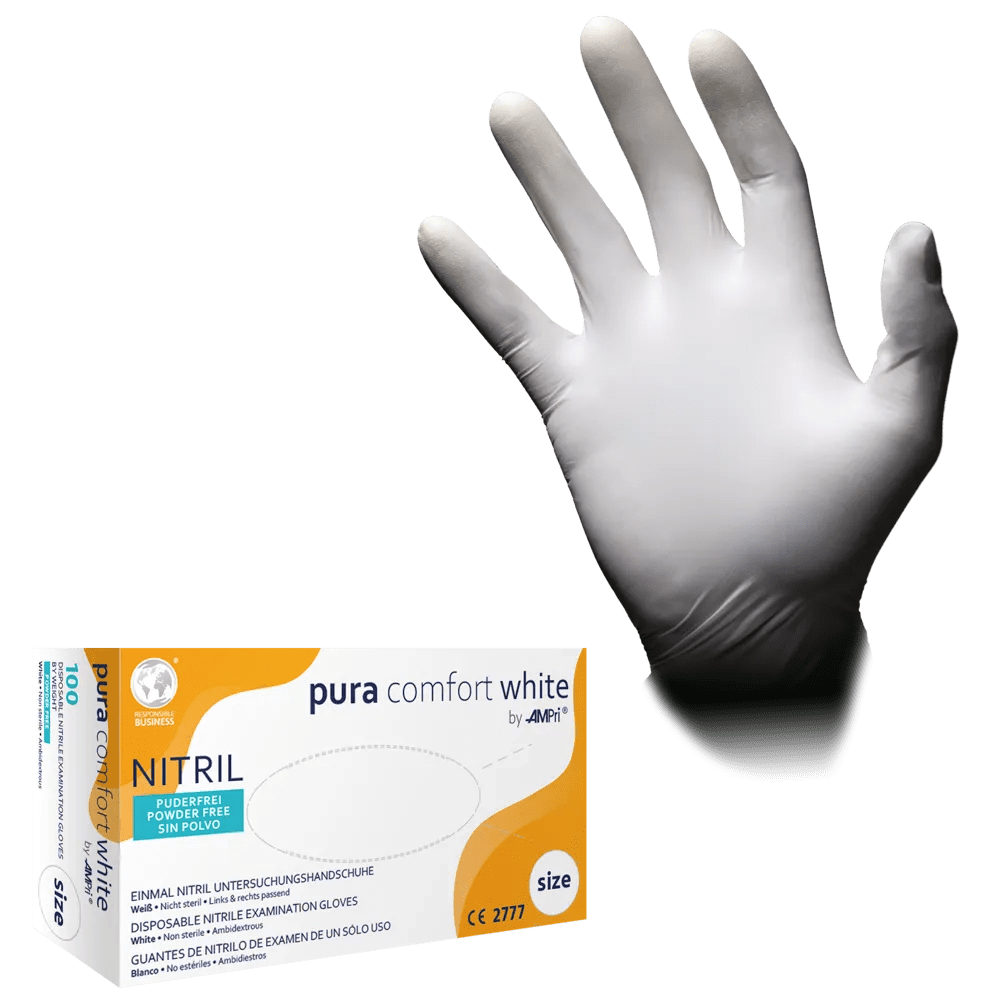
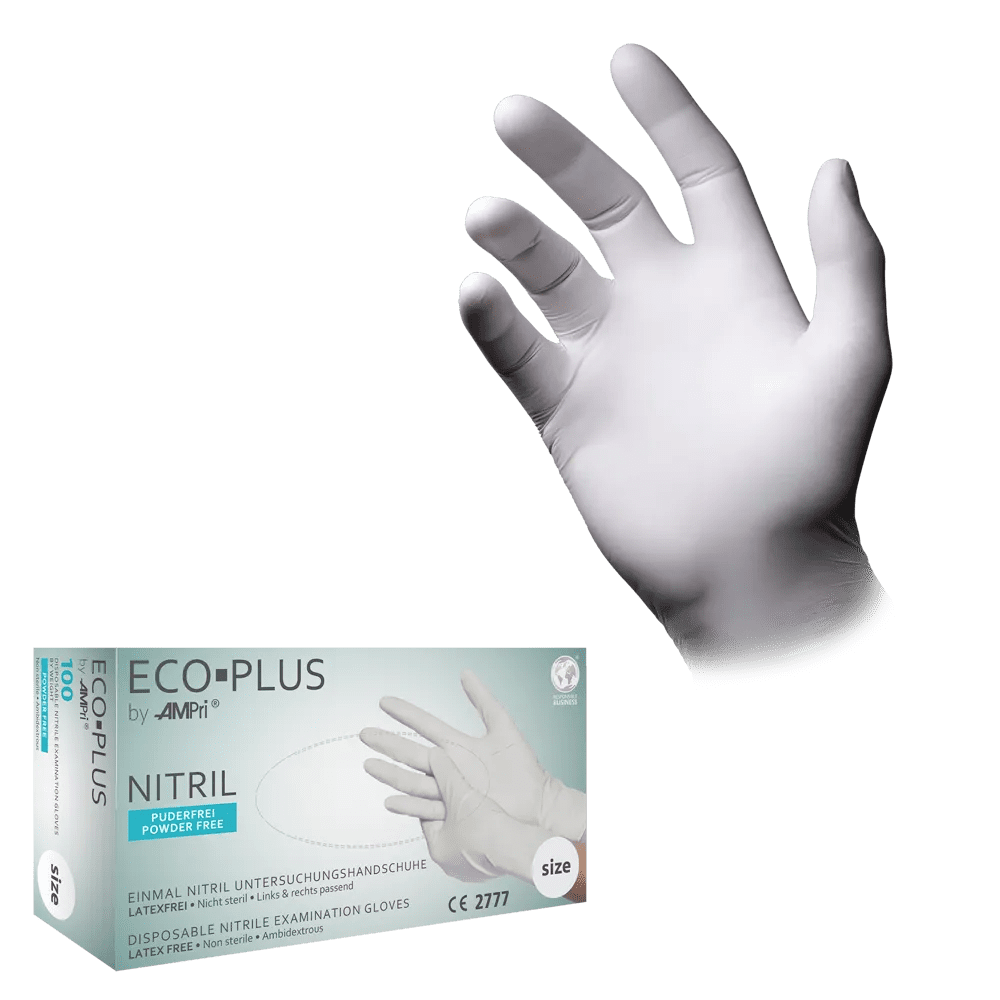
Disposable nitrile gloves are regarded as the all-rounders among single-use gloves. They are latex-free, extremely tear-resistant and offer excellent resistance to chemicals, oils and fats. This makes them suitable for almost all activities – from healthcare & nursing and laboratory work through to industrial applications, cleaning and catering.
- Properties: robust, elastic, very good tactile sensitivity, latex-free
- Typical applications: healthcare & nursing, laboratories, tattoo and beauty studios, hairdressing, cleaning, industry, catering & food processing
- Benefits: high protection against chemicals and micro-organisms, suitable for allergy sufferers, wide range of colours
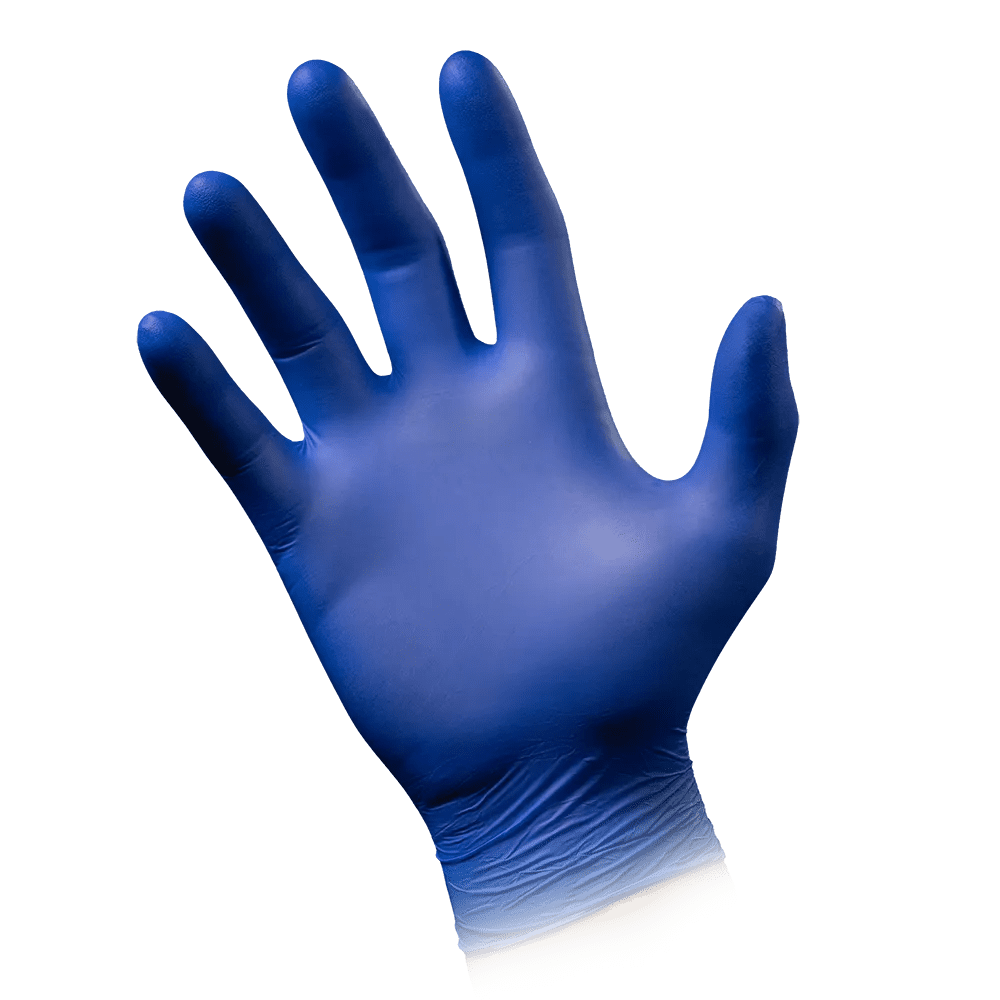
Coloured nitrile disposable gloves are especially popular – for example in black, pink, turquoise, orange or green. These are ideal for colour-coding within hygiene plans, for visual separation of different zones or for sectors such as tattoo, beauty or food production.
Go directly to the category: Nitrile disposable gloves.
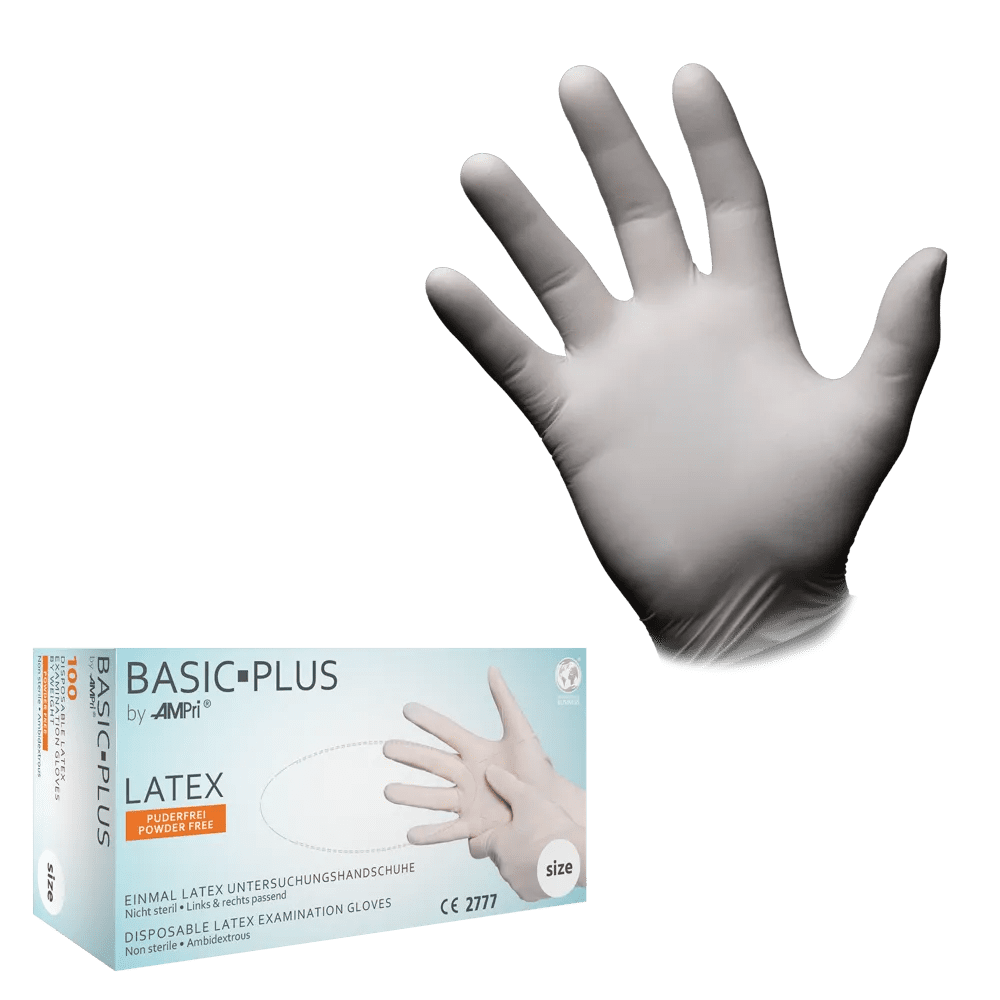
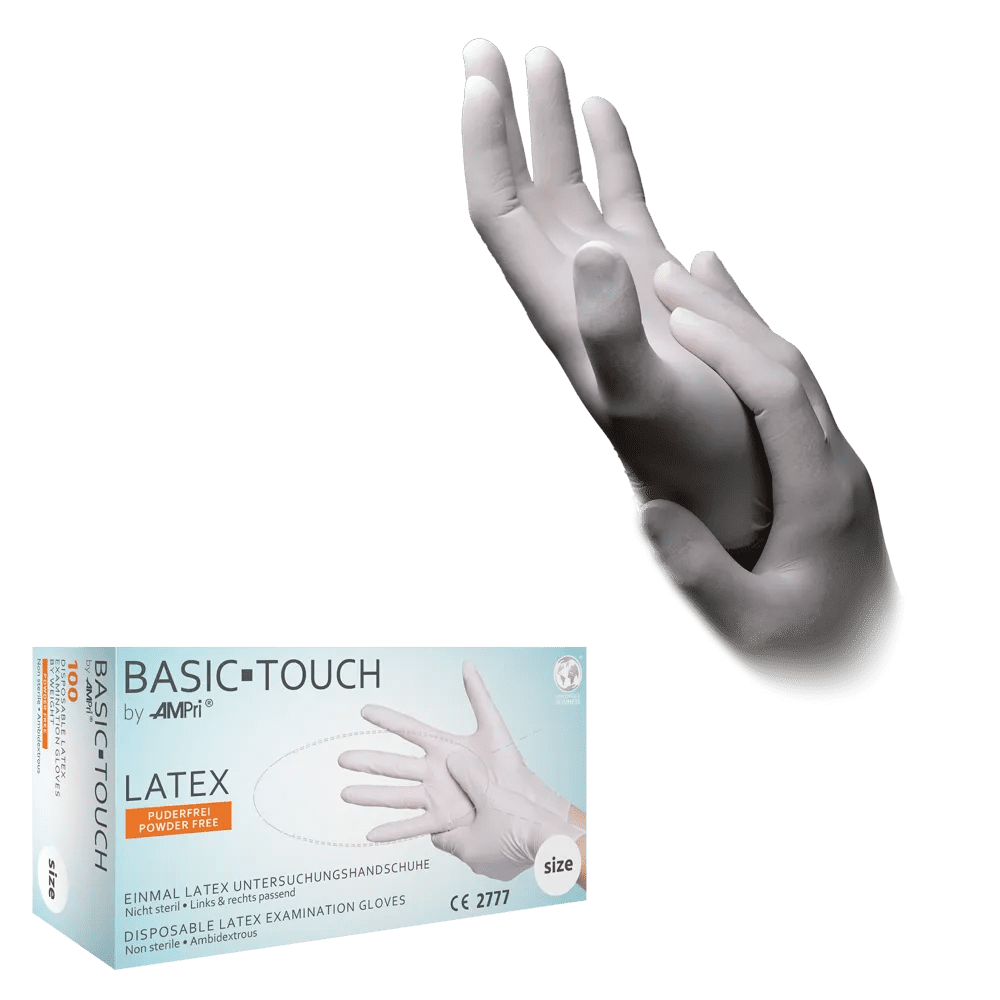
1.2 Latex disposable gloves – maximum elasticity and outstanding tactile feel
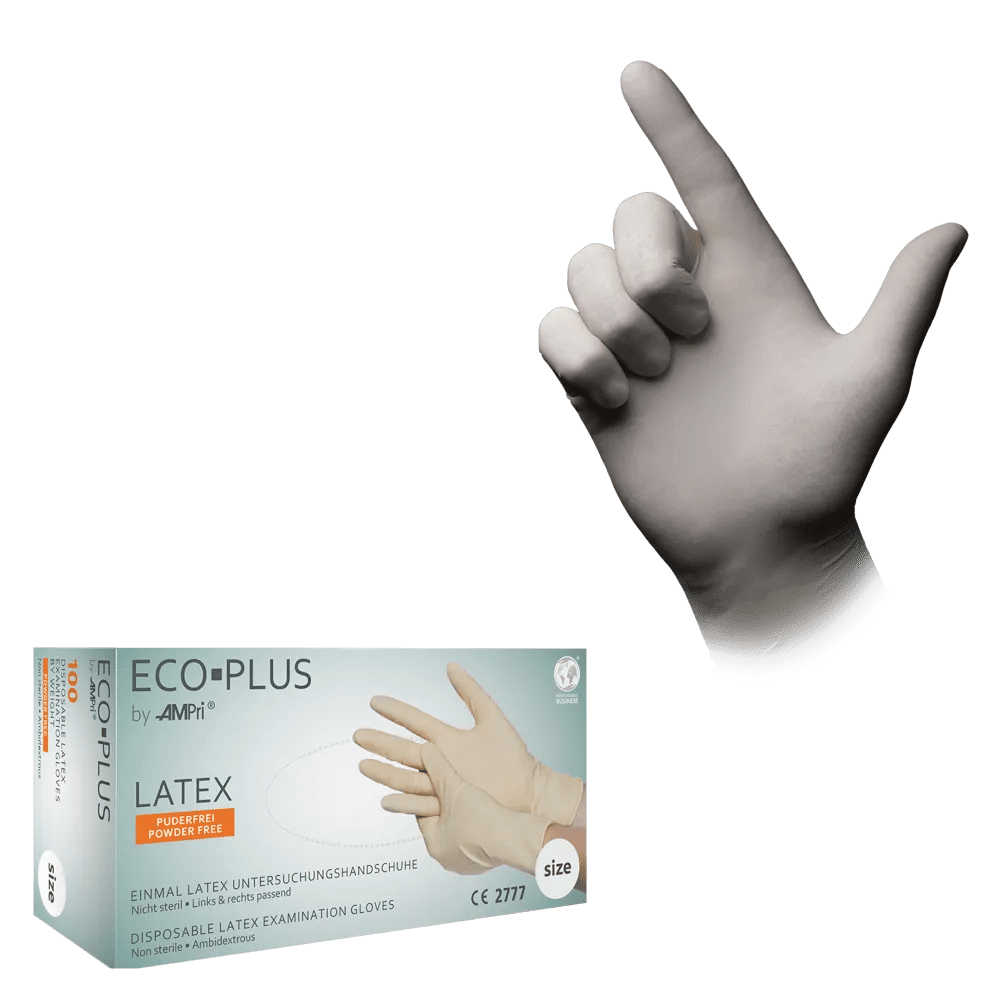
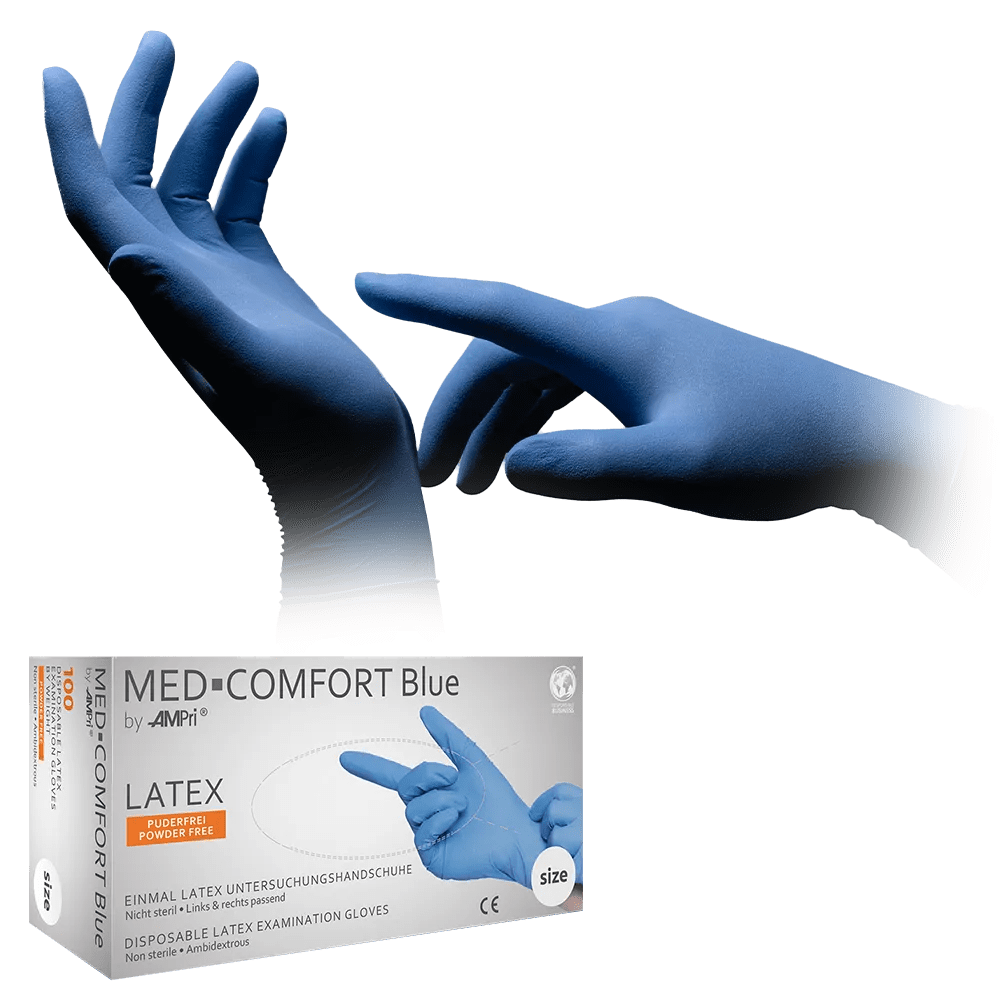
Latex disposable gloves are made from natural rubber and offer exceptionally good tactile sensitivity and an excellent fit. They fit like a second skin and are ideal for precision work.
- Properties: extremely elastic, very tear-resistant, outstanding fit
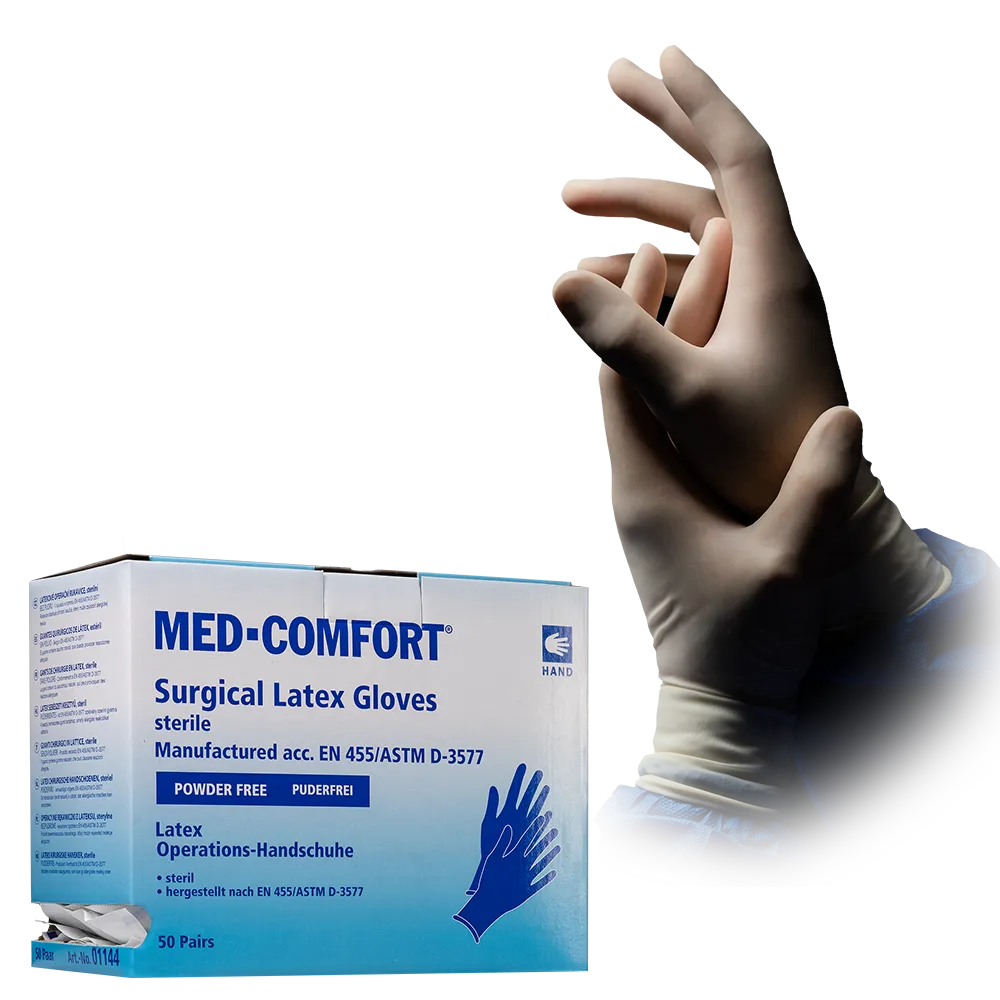
- Typical applications: healthcare, nursing, operating theatres (sterile surgical gloves), laboratories, workshops
- Benefits: best possible tactile sensitivity, very pleasant to wear
Please note: latex contains natural proteins that can trigger allergies. Allergy sufferers should opt for nitrile or Low Derma™.
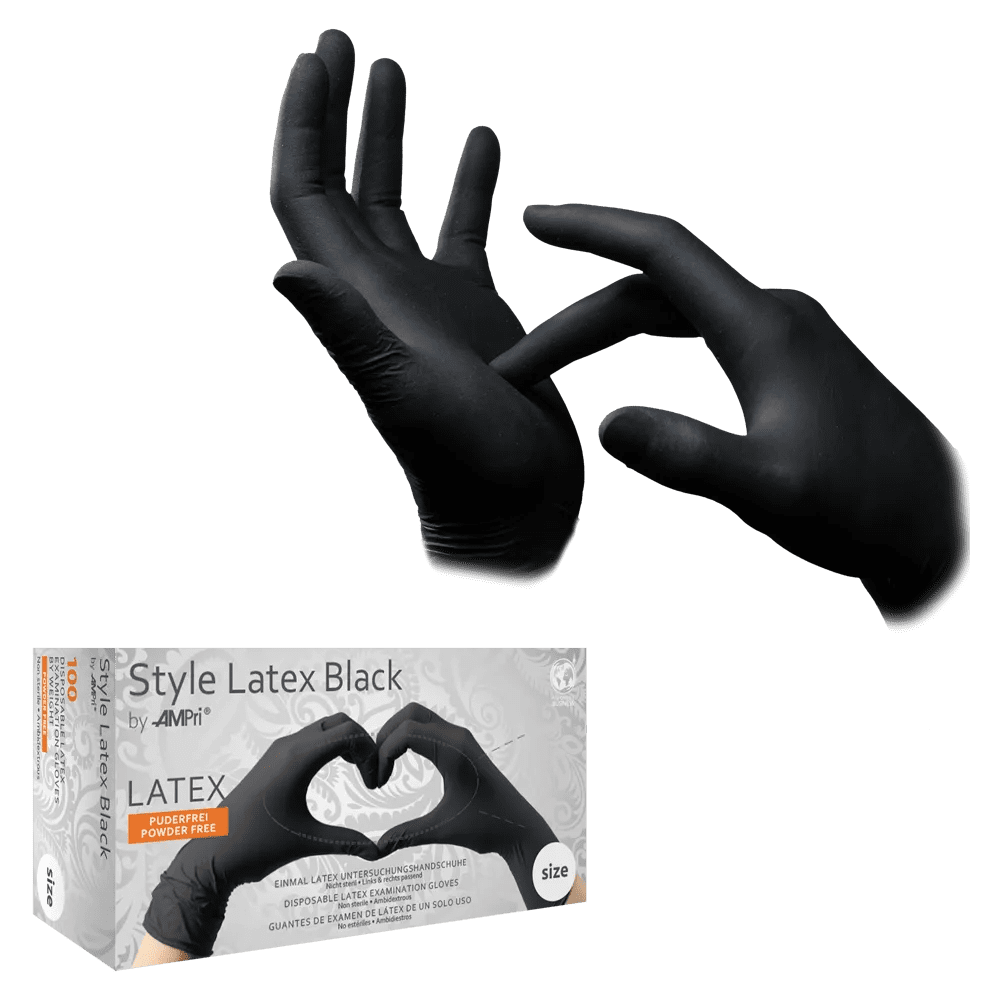
We also offer latex gloves in many colours – for example white, blue, black, green, red or pink.
Go directly to the category: Latex disposable gloves.
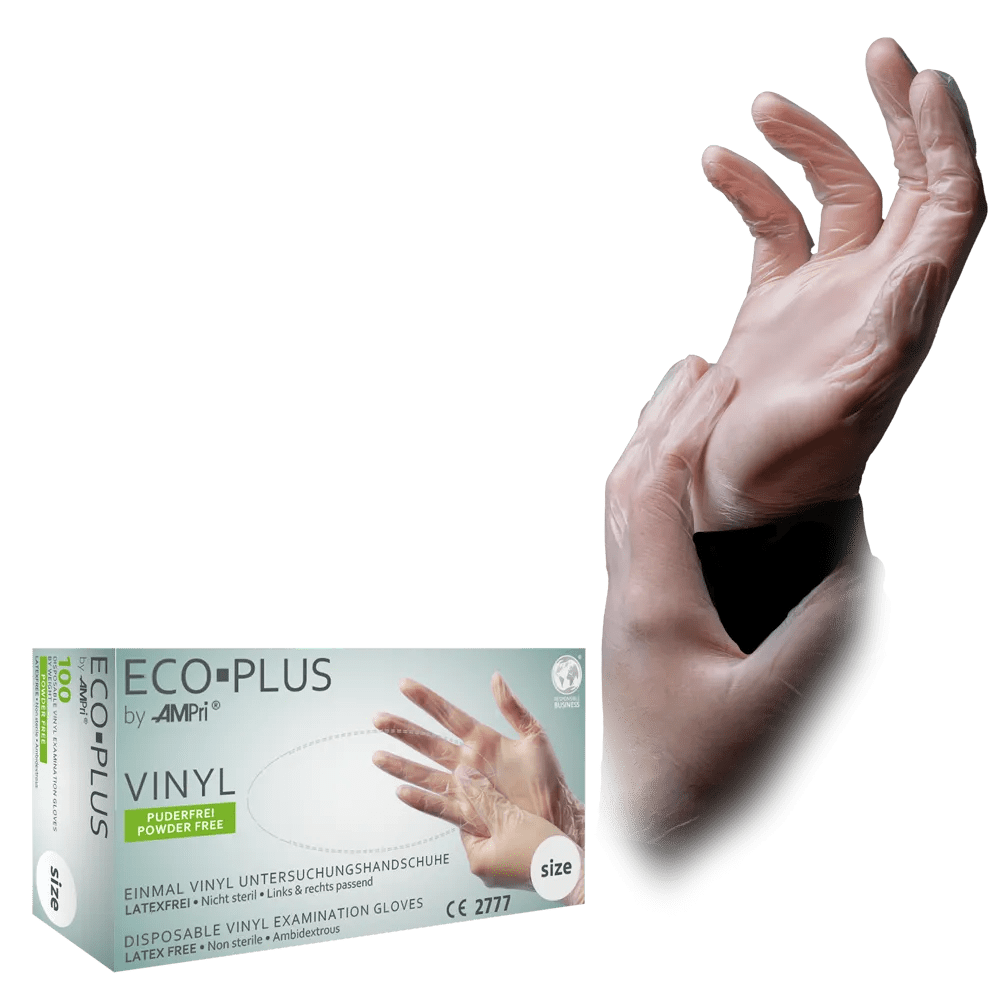
1.3 Vinyl disposable gloves – cost-effective solution for lower risk tasks
Vinyl disposable gloves are a cost-conscious alternative to nitrile or latex when only low risks are involved. Modern vinyl gloves are free from latex proteins and from critical plasticisers such as DEHP or DEHA.
- Properties: smooth surface, less elastic, latex-free
- Typical applications: light care activities, cosmetics, hairdressing work without chemicals, light cleaning duties, simple industrial processes
- Benefits: very good price-performance ratio, skin-friendly
For food contact, vinyl gloves are only suitable for non-fatty foods.
Go directly to the category: Vinyl disposable gloves.
1.4 TPE & PE disposable gloves – ideal for frequent changes and food contact
TPE (thermoplastic elastomers) and PE (polyethylene) disposable gloves are ideal for activities where gloves need to be changed very frequently or are only required for short working intervals. Both materials are latex-free and free from plasticisers.
1.4.1 TPE disposable gloves
- Properties: very smooth surface, soft, latex-free, odour-neutral
- Typical applications: food preparation, service counters, catering, light cleaning work
- Benefits: low cost, ideal for oily and fatty foods, rapid glove changes possible
Go directly to the category: TPE disposable gloves.
1.4.2 PE disposable gloves
- Properties: slightly rustling, somewhat stiffer, highly resistant to oils and fats, latex-free
- Typical applications: service counters, large-scale kitchens, catering, veterinary medicine (long PE gloves)
- Benefits: extremely economical, hygienic, ideal for very short periods of use
Go directly to the category: PE disposable gloves.
1.5 Special materials: vitrile & Low Derma™ – solutions for specific requirements
1.5.1 Vitrile disposable gloves
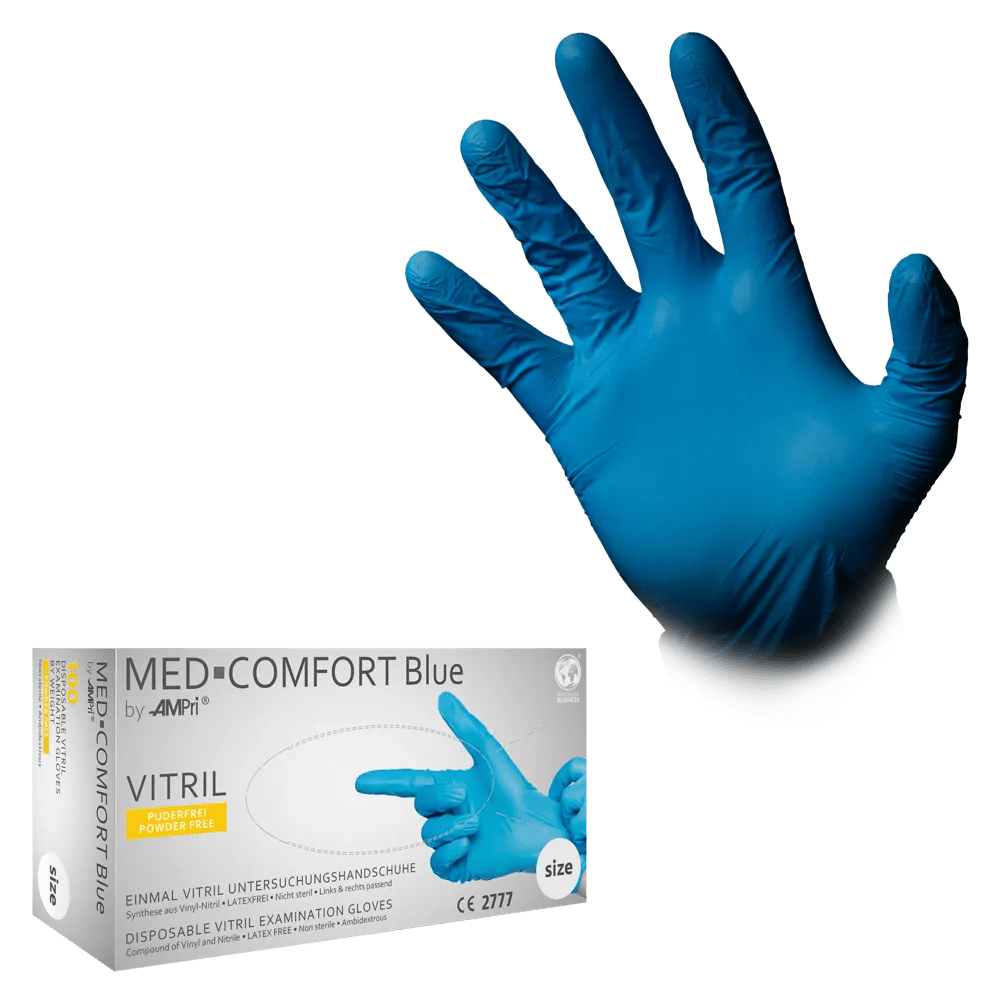
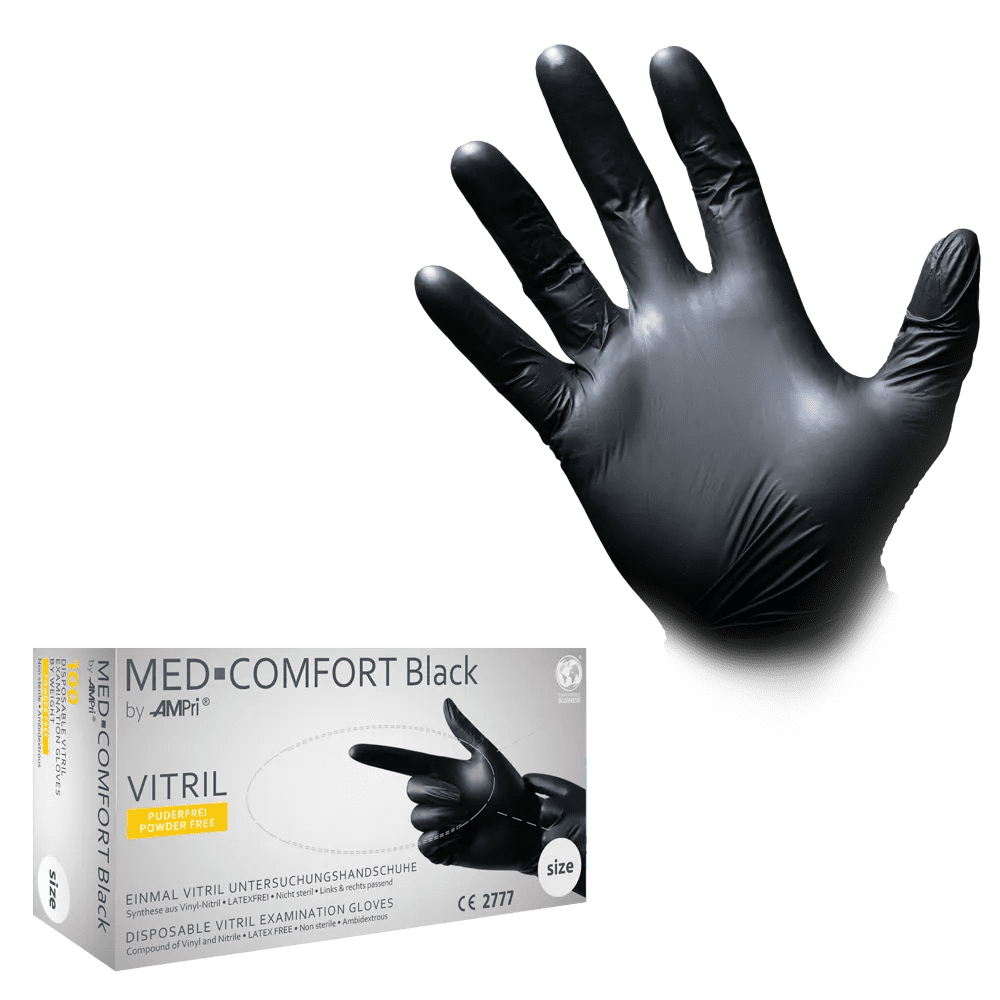
Vitrile disposable gloves combine the properties of vinyl and nitrile in an innovative, robust material blend. They are powder-free, odour-neutral and free from sensitising accelerators.
- Properties: more elastic than vinyl, stable, skin-friendly
- Typical applications: healthcare, nursing, industry, food areas (non-fatty foods)
- Benefits: very good alternative to latex, pleasant to wear, versatile
Go directly to the category: Vitrile disposable gloves.
1.5.2 Low Derma™ nitrile disposable gloves
Low Derma™ disposable gloves are the solution for hyper-sensitive and allergy-prone hands. They completely dispense with classic vulcanisation accelerators such as thiurams, thiazoles or carbamates and therefore reduce both type I and type IV contact allergies.
- Properties: accelerator-free nitrile technology, highly skin-friendly
- Typical applications: healthcare, nursing, dental, laboratories, activities with frequent glove changes
- Benefits: ideal for allergy sufferers, chemical-resistant, premium quality
Go directly to the category: Low Derma™ disposable gloves.
1.6 Coloured disposable gloves – colour-coding & sector-specific solutions
Coloured disposable gloves are now far more than just a visual highlight – they fulfil important functional roles in hygiene concepts and workflows. Clear colour-coding allows working areas and tasks to be cleanly separated. This increases process reliability and makes orientation easier for staff.
- Hygienic colour-coding: blue for food, black for tattoo/beauty, pink or purple in surgeries for rapid recognition.
- Separation of areas: colour systems prevent mix-ups – for example between cleaning zones and food production.
- Professional appearance: particularly in tattoo, beauty and hairdressing businesses, coloured gloves create a clear, high-quality look.
- Safety: blue gloves are standard in the food industry as they are easy to see.
At AMPri you will find one of the widest ranges of colours – especially in the area of nitrile disposable gloves (e.g. black, blue, pink, orange, purple, turquoise).
2. Areas of application for disposable gloves – which single-use glove for which sector?
Disposable gloves are used across a wide range of sectors – from healthcare and nursing through dental, tattoo, beauty and food processing to laboratories, industry and workshops. Each sector has its own specific requirements in terms of material, colour, standards and skin compatibility.
The following sector-specific sections provide quick access to suitable gloves and products – including direct links to our sector worlds.
2.1 Healthcare & nursing – the highest demands on hygiene & protection
In medical settings, disposable gloves are essential for the safety of healthcare professionals and patients alike. Single-use gloves must comply with DIN EN 455 and ensure a high level of impermeability.
- Standard: nitrile disposable gloves.
- For intensive or high-risk tasks: 01196 – MED-Comfort High Risk.
- For allergy sufferers: Low Derma™.
Sector overview: Cleaning & care | Dental
Categories: Nitrile gloves | Latex gloves | Low Derma™
2.2 Dental sector – colourful, grippy & precise disposable gloves
Dentists work in the highly sensitive oral cavity. Disposable gloves must fit firmly, withstand high loads and at the same time match a modern practice image.
- Recommendation (coloured): nitrile gloves in pink, Clean Ocean blue or platinum grey.
- Optional colour matching: face masks in identical colours for a consistent practice appearance.
- Preferred material: nitrile (grippy, latex-free, robust).
Examples from practice environments:
- Pink nitrile: ideal for dental teams using colour-coding.
- Clean Ocean: modern, calming blue.
- Platinum: elegant grey, very popular in high-end practices.
Sector world: Dental
Categories: Nitrile gloves
2.3 Elderly care & care homes – safe disposable gloves for changing tasks
Care staff frequently switch between different tasks throughout the day. Flexible materials, good skin compatibility and rapid glove changes are therefore crucial.
- Nitrile: ideal for lotions, oils and contact with bodily fluids.
- Vinyl: suitable for supportive tasks without chemicals.
- Low Derma™: perfect for staff who change gloves particularly often.
Sector world: Care & cleaning
Categories: Nitrile | Vinyl | Low Derma™
2.4 Laboratory – chemical protection & high tear resistance
In laboratories, disposable gloves must be robust and resistant to chemicals, oils and hazardous substances. Standard nitrile is often not sufficient here.
- For chemicals, high-risk & laboratory work: 081307 – SolidSafety High Risk Pro.
- For routine tasks: powdered or powder-free premium nitrile variants.
- Standards: EN ISO 374.
Sector world: Chemicals & laboratory
Category: Nitrile gloves
2.5 Tattoo & piercing studios – professional black disposable gloves
Tattoo and piercing studios generally use black disposable gloves – they look professional, disguise ink and fit perfectly with studio aesthetics.
- Recommendation 1: black latex gloves – very elastic, high grip.
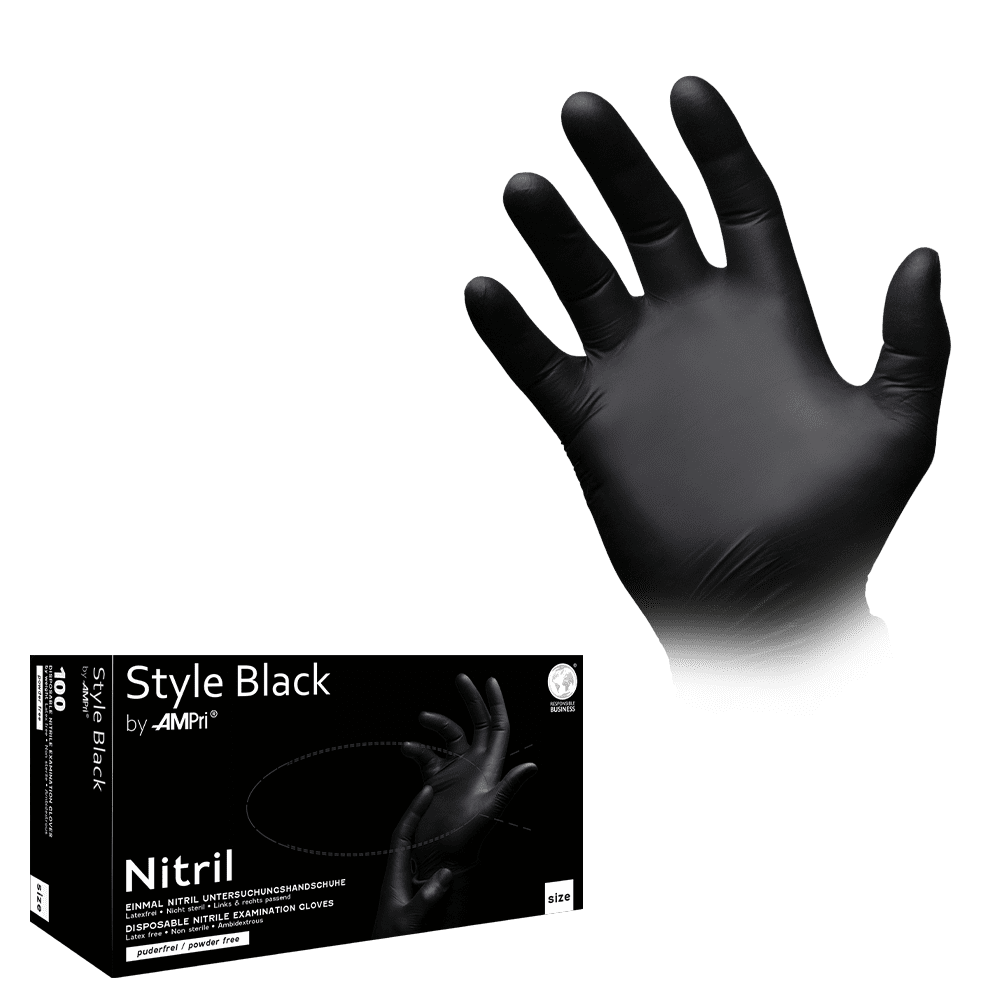
- Recommendation 2: black nitrile gloves – latex-free, chemical-resistant, extremely robust.
- Note: vinyl is not suitable for tattoo work.
Sector world: Tattoo & body art
Categories: Nitrile gloves | Latex gloves
2.6 Cosmetics & beauty – coloured disposable gloves for modern studio design
Beauty and nail studios work extensively with solvents, dust from filing and pigments – which is why high-quality nitrile gloves are indispensable. In addition, colour accents play an important role.
- Top recommendation for beauty: 118-300 – Peppermint Rosie (modern “peppermint” turquoise and pink in one box, popular in nail & beauty studios).
- Other colour variants: pink, purple, black – to match studio aesthetics.
- For stronger chemicals: 081307 – SolidSafety High Risk Pro.
Sector world: Beauty & cosmetics
Categories: Nitrile gloves
2.7 Hairdressing – protection from colour & bleach
Hairdressing products such as dye, toner or bleach can be very harsh on the skin. Nitrile gloves are the best option here.
- Recommendation: black or coloured nitrile gloves.
- For less intensive work: vinyl gloves.
Sector world: Beauty & hairdressing
2.8 Food industry – blue & resistant disposable gloves
In food production the glove colour must be clearly recognisable – which is why blue disposable gloves are standard.
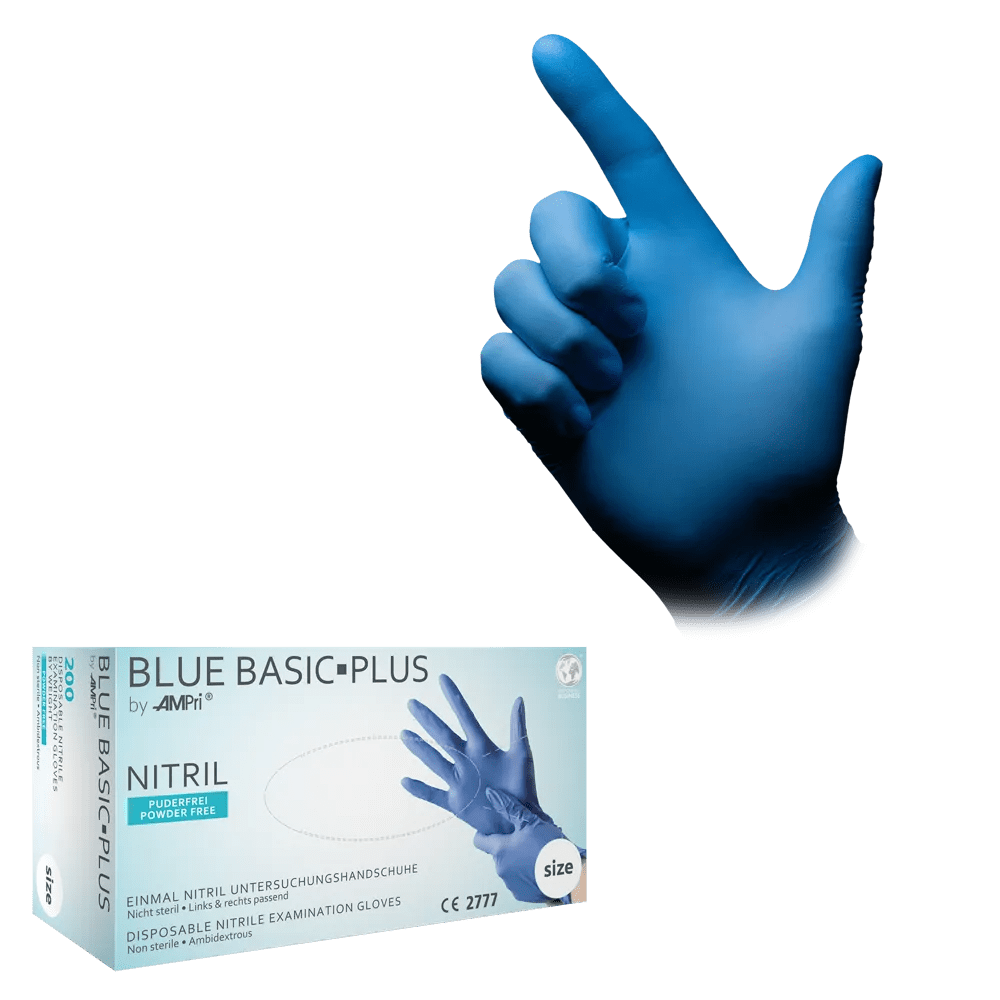
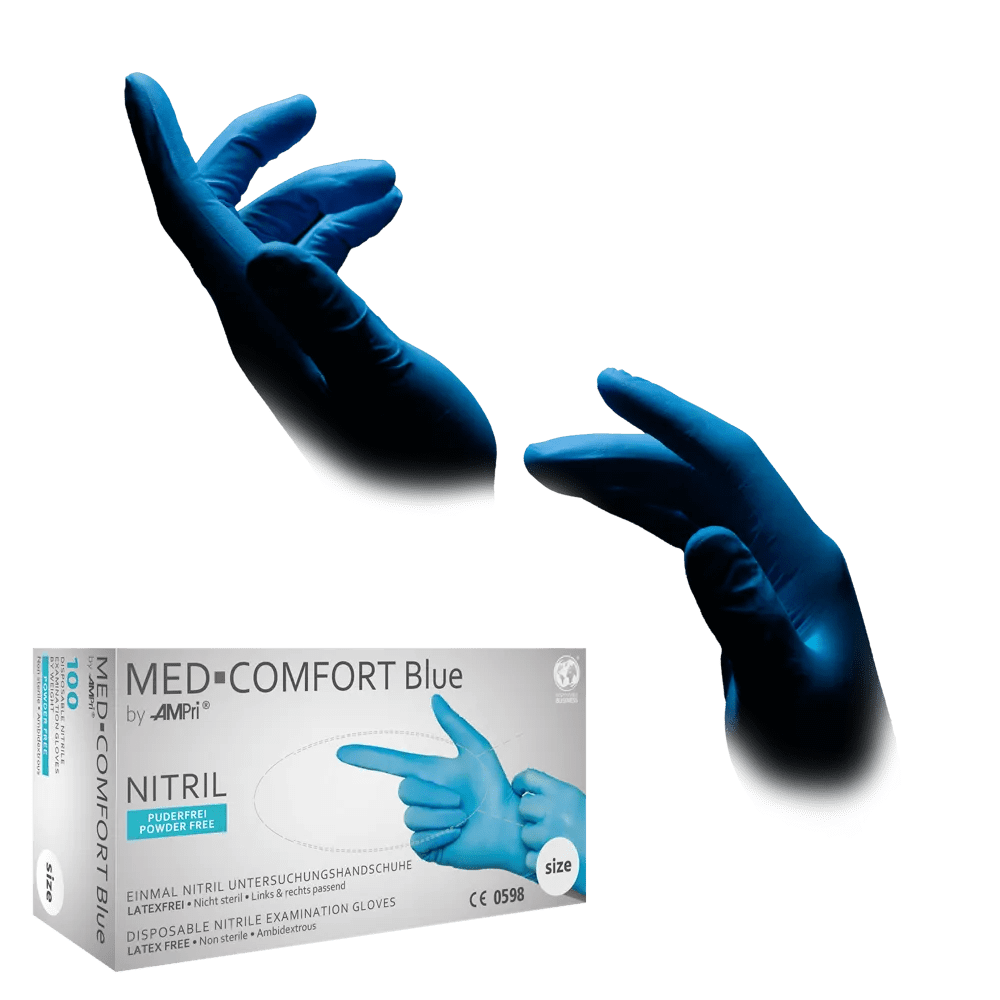
- Recommendation: blue nitrile gloves.
- TPE/PE: ideal for counters & sales areas.
- Vinyl: only for non-fatty foods.
Sector world: Food & catering
2.9 Catering & kitchen areas – rapid changes & high hygiene
In catering, disposable gloves must allow quick changes, be hygienic and reliable.
- Nitrile: suitable for all foods.
- PE/TPE: ideal for rapid changes at the counter.
Sector world: Food
2.10 Workshop & technical trades – oil-resistant & robust gloves
Automotive and machinery workshops work regularly with oil, grease and dirt – staff therefore require highly durable disposable gloves.
- Recommendation (strong & robust): AL-001 – ALPHA.
- Nitrile: ideal for oily and greasy work.
- Latex: good for precision tasks.
Sector world: Workshop
2.11 Contract cleaning – protection from cleaning agents & moisture
Cleaning staff work with cleaning and disinfectant solutions on a daily basis.
- For aggressive agents: 081307 – SolidSafety High Risk Pro.
- For light cleaning: vinyl.
Sector world: Contract cleaning
2.12 Industry & manufacturing – disposable gloves for every work step
Depending on the task, different material thicknesses and protection classes are required.
- For chemicals & hazardous substances: 081307 – SolidSafety High Risk Pro.
- For versatile tasks: nitrile.
- For high precision: latex.
Sector world: Industry
3. Quality, standards & specifications for disposable gloves
For disposable gloves to provide reliable protection in medical, commercial and industrial environments, they must comply with specific standards. These standards define how impermeable, tear-resistant, durable and safe single-use gloves must be. At the same time, they help you select the right glove for your application – whether you are a reseller or an end user.
3.1 Sterile vs non-sterile disposable gloves
Sterile and non-sterile single-use gloves do not differ in terms of material, but in terms of their level of sterility & packaging process.
Sterile disposable gloves
- are individually packaged in a sterile form
- used for surgery, invasive procedures, wound care, dialysis and sterile work
- subject to stringent sterilisation processes
- often made of latex (sterile surgical gloves) or synthetic alternatives
Suitable category for surgical applications:
Sterile surgical gloves from AMPri
Non-sterile disposable gloves
- for routine medical examinations, nursing, food handling, industry & cleaning
- used as classic protective and examination gloves
- available in nitrile, latex, vinyl, PE or TPE
Recommended categories:
Nitrile gloves | Vinyl gloves | TPE gloves
3.2 Powdered vs powder-free disposable gloves
In the past, disposable gloves were often powdered to make them easier to put on. Today, powder-free variants are predominantly used – for good reasons.
Powder-free disposable gloves (today’s standard)
- no contamination of surfaces or food
- ideal for the food industry, catering, healthcare & nursing
- for latex: lower risk of allergic reactions
Powdered disposable gloves
- easier to put on (for wet or damp hands)
- may promote allergies in latex models
- not permitted in healthcare & food processing
Recommendation: For almost all applications, powder-free nitrile, latex or vinyl gloves are the safest choice.
3.3 Key standards: EN 455 & EN ISO 374
Disposable gloves are either medical devices, PPE (personal protective equipment) or comply with both categories. The following standards are decisive:
EN 455 – medical examination gloves
Defines the requirements for gloves used in healthcare. The standard assesses:
- Part 1: impermeability (AQL value)
- Part 2: physical properties (tear resistance)
- Part 3: biological safety (including protein content in latex)
- Part 4: shelf life
- Part 5: extractable chemical residues
If you are looking for a medical glove → always check for EN 455.
EN ISO 374 – chemical protection & protection against micro-organisms
This standard is critical for laboratories, industry, cleaning and hazardous substance areas.
- Type A: high chemical resistance (at least 6 test chemicals)
- Type B: medium resistance (at least 3 test chemicals)
- Type C: basic protection (at least 1 test chemical)
Typical applications: laboratories, industrial cleaning, food production, tattoo work, medical areas involving disinfectants.
Our highlights for demanding applications:
- 081307 – SolidSafety High Risk Pro (chemicals, laboratory, industry – tested in accordance with EN 374)
- 01196 – MED-Comfort High Risk (suitable for healthcare & cross-sector use – very high tear resistance)
3.4 AQL value – how impermeable is a disposable glove?
The AQL value (Acceptable Quality Level) indicates how many micro-holes in the material are permissible. The lower the value, the more impermeable the glove.
| AQL 1,5 | Standard in healthcare, nursing & food sectors |
| AQL 0,65 | Very high protection, laboratories & high-risk applications |
| AQL 4,0 | Basic protection |
For all high-quality medical and laboratory gloves, we recommend AQL 1,5 or better.
3.5 Quality levels – Standard, Classic & Premium
Disposable gloves differ not only in material, but also in quality, thickness, tear resistance and comfort. AMPri offers tried-and-tested quality levels:
- Standard: for simple cleaning & light care activities
- Classic: universally applicable, suitable for many sectors
- Premium: maximum tear resistance, high wearing comfort – ideal for healthcare, tattoo work, laboratories, industry
Examples of premium protection:
3.6 Glove length & wall thickness – when is which needed?
Alongside material and standards, glove length is also crucial.
Standard length (approx. 240 mm)
- for routine healthcare & nursing tasks
- for catering & food areas
- for beauty & tattoo work
Extra-long (up to 300 mm or more)
- for laboratories & chemical handling (forearm protection)
- for cleaning with aggressive agents
- for veterinary medicine and animal care
Wall thickness
- Thin (0,05–0,08 mm): high tactile sensitivity
- Medium (0,08–0,12 mm): universal
- Thick (0,12–0,20 mm+): high-risk, laboratory & industrial applications
3.7 Summary – what level do you need?
- Healthcare & nursing: EN 455, AQL 1,5, nitrile
- Dental laboratories: EN 455, coloured nitrile gloves (pink, platinum)
- Chemicals & laboratories: EN 374, e.g. SolidSafety High Risk Pro
- Tattoo: recommendation: black nitrile or latex gloves (appear cleaner when stained with ink)
- Food: recommendation: blue nitrile gloves (easily detectable)
- Industry: nitrile or high-risk products
4. Correct handling of disposable gloves – wearing time, application & disposal
Disposable gloves only provide reliable protection if they are used correctly, changed in good time and disposed of properly. Many everyday errors are due to gloves being worn for too long, incorrect removal or inadequate hand hygiene between uses. This section summarises what you need to consider – in medical, commercial and private settings.
4.1 How long may disposable gloves be worn?
Disposable gloves are designed for single use. Even high-quality models lose their protective effect after a certain period. Guideline values depend on material, activity and chemical exposure.
- General recommendation: change gloves after a maximum of 30 minutes.
- Medical intensive care (RKI): maximum 15 minutes wearing time.
- When using chemicals: never exceed the tested breakthrough time in accordance with EN ISO 374.
- Change immediately if: the glove is damaged, visibly soiled or saturated.
The longer a glove is worn, the higher the risk of micro-perforations and skin irritation due to moisture.
4.2 What should be considered when wearing disposable gloves?
For maximum protection, not only the right glove is important – behaviour when putting on and taking off the gloves, as well as during use, also plays a major role.
- Dry hands: only put disposable gloves on completely dry hands.
- Wait after hand disinfection: the alcohol must have fully evaporated.
- Frequent changes: if hands sweat heavily, change gloves more often.
- No rings or sharp edges: increase the risk of tearing.
- For sensitive skin: use skin-friendly alternatives such as Low Derma™.
4.3 Removing disposable gloves correctly – step by step
To avoid touching potentially contaminated outer surfaces, disposable gloves must be removed properly. Proceed as follows:
- Grasp the first glove on the outside at the wrist.
- Slowly pull it forwards so that it turns inside out and remains in your hand.
- With a clean finger, reach under the cuff of the second glove.
- Pull this glove forwards as well – the glove already removed will be wrapped inside it.
- Both gloves are now inside one another with the clean inner surface on the outside.
- Dispose of the bundle of gloves in the residual waste.
- Afterwards: wash or disinfect hands thoroughly.
This technique reliably prevents contamination of the hands.
4.4 Is it permitted to disinfect disposable gloves?
As a rule: disposable gloves should not be disinfected, but changed. Exceptions only apply in a few clearly defined cases, for example in healthcare settings where recommendations from the Robert Koch Institute (RKI) or the “Aktion Saubere Hände” initiative explicitly allow this.
Disinfection is only recommended if:
- several routine tasks are carried out on the same patient.
- several blood samples are taken in succession.
- no contaminating activities take place in between.
Disinfection is not recommended in the case of:
- tears, damage or visible soiling
- contact with chemicals
- switching between different patients
- food processing
Important: disinfectants can attack the glove material and significantly reduce its protective effect.
4.5 Correct disposal of disposable gloves
After use, disposable gloves must be disposed of in accordance with the requirements of the local waste management provider – regardless of whether they are made from nitrile, latex, vinyl or PE. As the gloves are not packaging, they may not be disposed of via recycling bags or bins.
alternative: Nature Gloves
For those who value an alternative, our Nature Gloves offer an innovative solution: these nitrile gloves are made from a specially developed nitrile formulation that has been tested for biodegradability according to ASTM D5526 (accelerated landfill test conditions).
- 118-069 – Nature Gloves (green) – biodegradable, latex-free, ideal for general applications & hygiene tasks.
- 118-108 – Nature Gloves (black) – same technology, popular in beauty, tattoo & service sectors.
Disposal in commercial environments
- After contact with hazardous substances: the disposal rules for the substance concerned apply.
- In the case of infectious material: gloves must be disposed of in accordance with the regulations of the local waste management provider.
- For laboratory chemicals: special disposal may be required.
Disposal in private households
- Always dispose of gloves in residual waste.
- If contaminated with blood, cleaning agents or bodily fluids: first seal in a bag.
For hygienic, rapid and low-contact glove removal, we recommend our glove dispensers & dispenser holders.
5. Dispensers & hygiene systems for disposable gloves
Disposable gloves must be removed in a hygienic, rapid and low-contact manner – particularly in high-traffic areas such as healthcare, food production, tattoo and beauty studios or workshops. Professional glove dispensers ensure that glove boxes are properly fixed in place, kept clean and always within easy reach.
AMPri offers a wide range of wall-mounted dispensers, dispenser holders and modular plug-in systems that can be flexibly adapted to any working environment. For resellers, these hygiene products are a meaningful range extension with strong demand.
5.1 What types of glove dispensers are available?
Depending on where they are used, dispensers differ in terms of material, type of mounting and the number of glove boxes they can hold.
Single dispensers
- for one glove box
- ideal for treatment rooms, tattoo studios, beauty studios, hairdressing workstations
- space-saving & hygienic
Example: Single dispensers made of acrylic or wire
Double & triple dispensers
- for different sizes or materials (e.g. S / M / L)
- recommended in surgeries, clinics & areas with many staff members
- greater flexibility at peak times
Multi-box dispensers: multi-compartment dispenser holders
Modular systems
- modular and expandable
- robust design for industrial areas & catering operations
- can be mounted flexibly on walls or workstations
Our modular systems: glove dispenser modules
5.2 Materials: acrylic, wire & stainless steel
Glove dispensers are made from different materials, which vary in terms of stability, appearance and ease of cleaning.
- Acrylic: lightweight, hygienic, ideal visibility of the box – perfect for studios & surgeries.
- Wire/metal: very robust, durable, suitable for workshops & industry.
- Stainless steel: premium solution, highly hygienic, easy to disinfect – ideal for healthcare & food sectors.
You will find all variants here: glove dispensers & dispenser holders
5.3 Benefits of a professional glove dispenser
A structured and hygienic workplace is a basic prerequisite for professional work. Glove dispensers contribute to this by:
- enabling rapid & low-contact glove removal → less contamination
- creating order & transparency → glove sizes are immediately visible
- improving efficiency → quicker glove changes in stressful situations
- raising hygiene standards → crucial in healthcare, food & tattoo environments
- ensuring a tidy workplace → professional impression for customers
5.4 Recommendations by sector
Here you can quickly find the right glove dispenser for your area:
- Healthcare & nursing: stainless steel dispensers, double or triple holders.
- Dental: wall-mounted dispensers for several sizes – e.g. S, M, L.
- Tattoo & beauty: acrylic single dispensers for a design-oriented look.
- Food & catering: stainless steel or wire, easy to clean.
- Workshops / industry: robust wire dispensers or modular systems.
- Cleaning teams: mobile or easy-access wall-mounted dispensers.
For an overview of all models: view all glove dispensers
5.5 Summary – why a glove dispenser is indispensable
- It ensures hygienic, low-contact glove removal.
- It keeps the workplace tidy & professional.
- It supports structured colour-coding and size organisation.
- It is a must-have in all hygiene-critical professions.
You will find all dispenser products here: glove dispensers & accessories.
6. FAQ – the 10 most frequently asked questions about disposable gloves
Here you will find answers to the most important questions about materials, applications, standards, shelf life and disposal of disposable gloves – concise and easy to understand.
- Pink / Purple: Beauty & cosmetics
- Clean Ocean Blue: Dental, medical
- Platinum Grey: Premium practices
- Black: Tattoo, hairdressing, gastronomy
- Green: Sustainable Nature Gloves
The information provided here has been compiled with the utmost care and to the best of our knowledge, and has been reviewed by our quality management team. Nevertheless, errors or omissions cannot be entirely ruled out. Liability for any content-related errors, omissions, or damages resulting from the use of this information or from external links is excluded to the extent permitted by law.