




















Regulation (EC) 1935/2004 is the European framework regulation for materials with food contact. It requires that no constituents be released to the food in quantities that could endanger health. Gloves that meet this requirement bear the glass-and-fork symbol and may be used with open food.
Food-grade gloves bear the glass-and-fork symbol in accordance with Regulation (EC) 1935/2004. Manufacturers additionally often state which food types the glove is suitable for, since fatty, acidic or alcoholic foods place different requirements on the material.
PE gloves are light and can be changed in seconds, so they are suitable for short, frequently changing tasks. Vinyl gloves fit more closely and suit activities with low mechanical stress. Nitrile gloves are tear-resistant and are frequently used when handling raw meat, fish and fatty foods. Which version is suitable for the respective application can be found in the product data sheet.
In the food sector, predominantly powder-free gloves are used, since no powder can transfer onto the food. Powder-free versions are now the standard for the kitchen and processing. Powdered variants hardly play a role in food applications any more.
In case of a latex allergy, latex-free materials such as nitrile, vinyl or PE are the right choice. These gloves are free of natural latex proteins and are widely used in food businesses. Nitrile offers the highest tear resistance here.
Disposable gloves are part of good hygiene practice and support the HACCP principles by preventing direct contact between the hand and open food. Clear change rules and a clean separation of working areas are decisive here, so that no germs are transferred between raw and ready-to-eat foods.
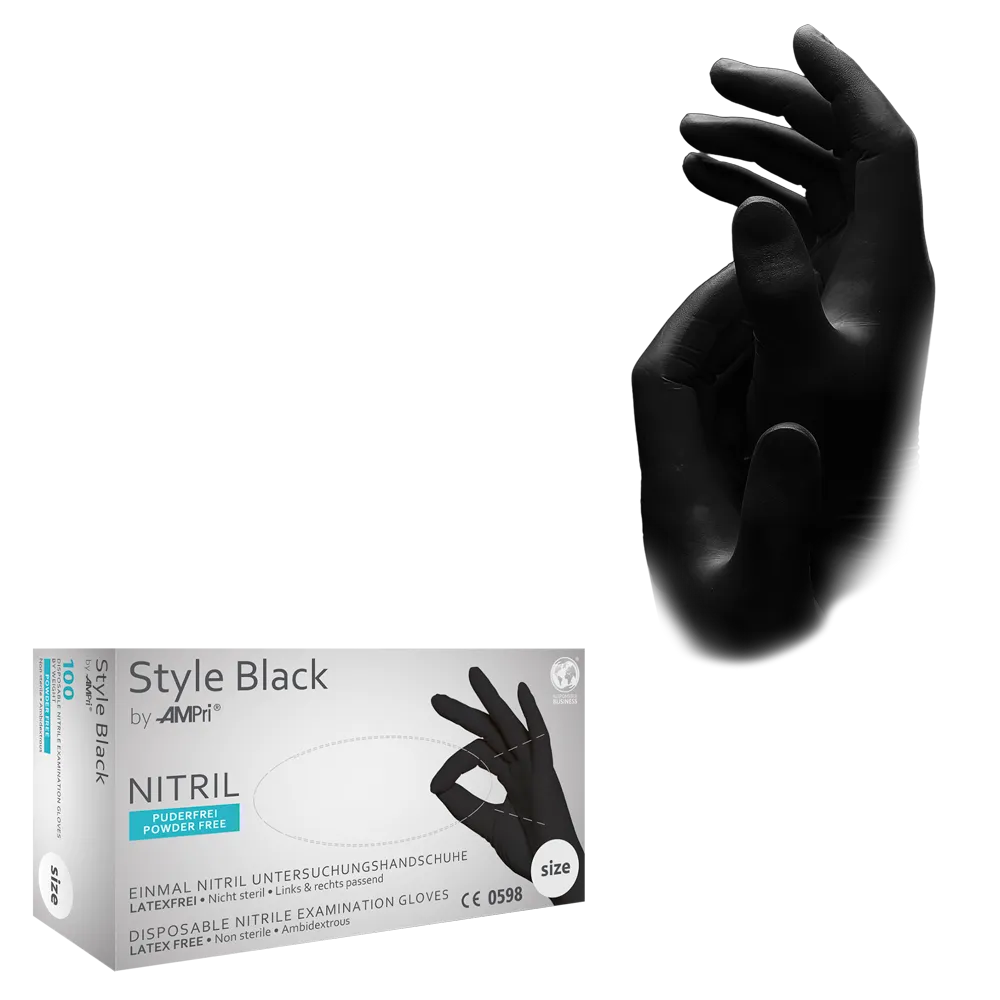
Colour coding helps to clearly separate working areas, for example raw and ready-to-eat foods. This makes it easy to check in everyday operations whether the right glove is being used in each area. Coloured nitrile gloves are particularly suitable for this.
A well-fitting glove is a prerequisite for safe working. Businesses should therefore keep a size range from XS to XL in stock, so that the right size is available for every employee. A glove that is too large or too small impairs tactile sensitivity and fit.
A change is always indicated when switching between raw and ready-to-eat foods, when the activity is interrupted, when the glove is damaged or when it is visibly soiled. Regular changes are more important than the longest possible wearing time.
Yes, disposable gloves are intended for single use. They are not cleaned and reused, but disposed of after use. This is the basis for the hygiene benefit in the food sector.
Disposable gloves are usually offered in dispenser boxes of 100 pieces and bundled in an outer carton. AMPri delivers staggered quantities from stock to specialist retailers, so that resellers can reliably cover the regular requirements of their customers.
As a wholesaler, AMPri supplies specialist retailers and resellers. Conditions are agreed on an individual basis. Specialist retailers get in touch via the contact form and receive an offer for their trade conditions.