

















The types under EN ISO 374-1 differ in the number of tested chemicals to which the glove withstands for at least 30 minutes each. Type A demonstrates resistance to at least six, Type B to at least three and Type C to at least one test chemical. Which type is suitable depends on whether the chemical actually in use is among the tested substances.
The breakthrough time indicates how long a glove material withstands a particular chemical before the substance penetrates the material layer. It is measured per test chemical and translated into protection classes from 1 to 6. For safe use, the breakthrough time must be longer than the planned contact duration with the chemical.
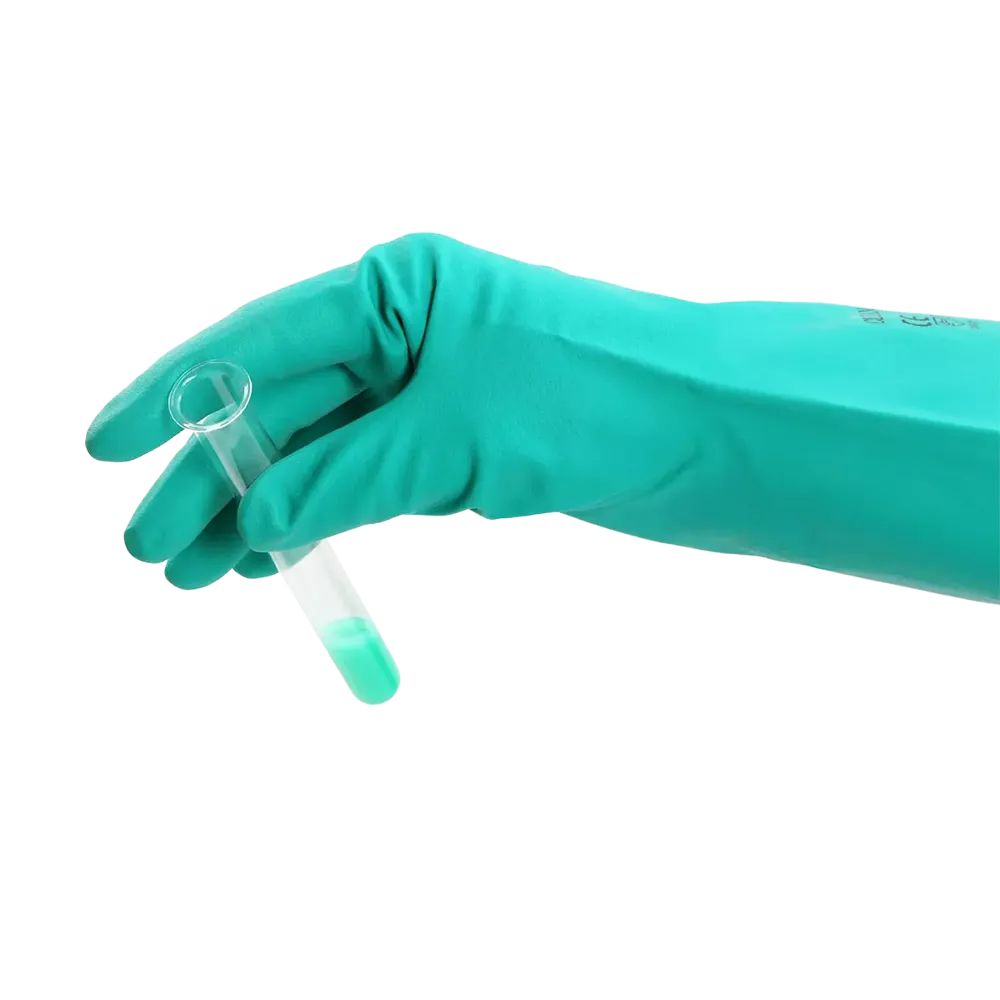
The basis is always the manufacturer's resistance table. It shows against which test chemicals in accordance with EN ISO 374-1 the glove has been tested and which breakthrough time it achieves. Nitrile covers many acids, alkalis and numerous solvents; for other groups of substances, special materials are more suitable.
Nitrile is a frequently used standard material in the laboratory with a broad test spectrum in accordance with EN ISO 374-1. Butyl, bromobutyl and Viton (fluoroelastomer) are special materials designed for other groups of substances and are often combined in multi-layer gloves. Which material is suitable for a specific substance must always be assessed on a case-by-case basis on the basis of the tested chemicals, the technical data sheet and the indicated breakthrough time; a blanket suitability for a named substance cannot be assured.
Gloves in accordance with EN ISO 374-5 provide demonstrated protection against bacteria and fungi. If the glove additionally bears the note "VIRUS", protection against viruses has also been demonstrated by a separate test procedure. A glove can be tested at the same time in accordance with EN ISO 374-1 against chemicals and in accordance with EN ISO 374-5 against microorganisms.
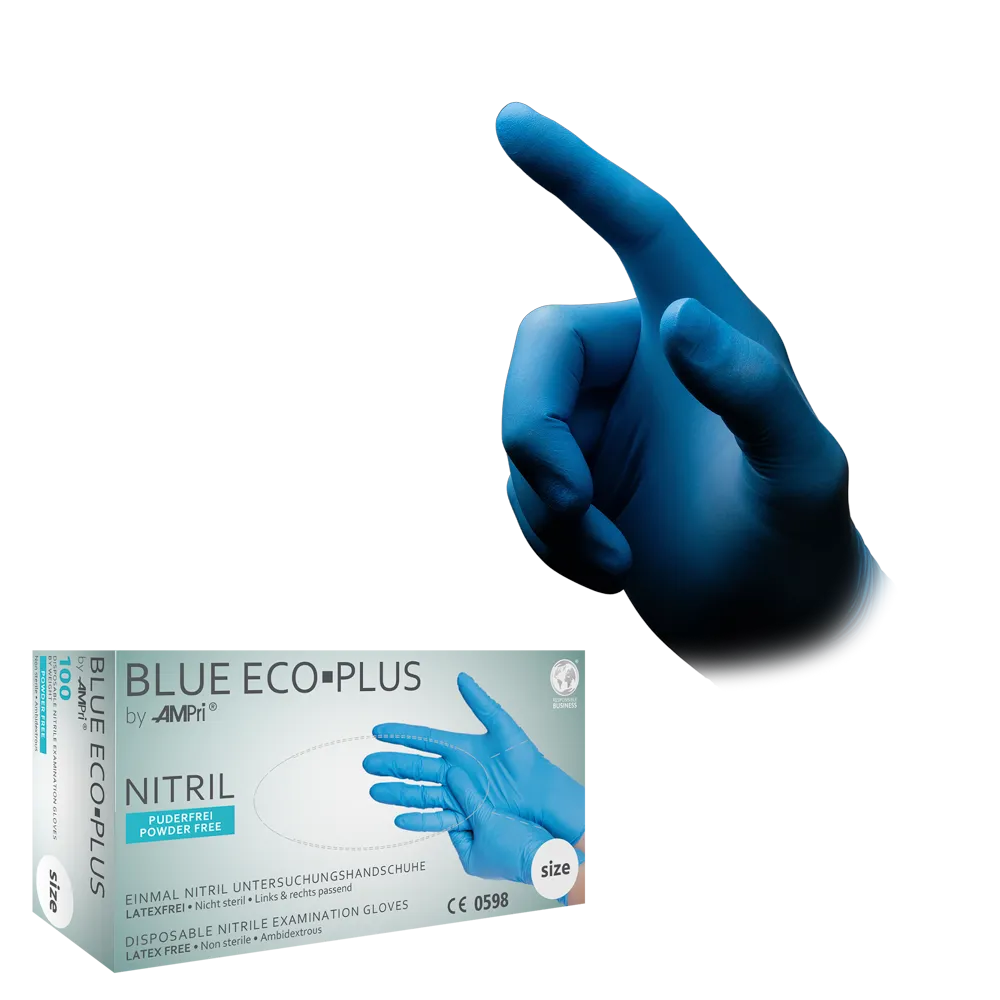
Thin single-use nitrile gloves are suitable for brief, alternating tasks with a high sense of touch and avoid cross-contamination between samples. Reusable chemical protection gloves are stronger, achieve longer breakthrough times and are used in cases of longer or intensive chemical contact. Often both variants are kept in stock in parallel.
Depending on the model, AMPri nitrile gloves are available in sizes XS to XXXL. The information on sizes and dexterity is based on EN ISO 21420. A suitable size preserves fine motor skills and reduces fatigue during precise work at the laboratory bench.
Gloves should be stored cool, dry and protected from direct sunlight in their original packaging. Heat, UV light and ozone can change the material over time. Observe the expiry date indicated on the packaging and store the goods so that older stock is used up first.
Chemical protection gloves are PPE of Category III and are subject to the PPE Regulation (EU) 2016/425. This means an EU type-examination by a notified body and ongoing monitoring of production. They bear the CE mark with the identification number of the notified body as well as the pictograms of the standards met.
Yes. Many nitrile examination gloves are certified at the same time as a medical device in accordance with the MDR (EU) 2017/745 and as an examination glove in accordance with EN 455. This makes it possible to cover a dual function of protection and medical suitability in diagnostics and examination.
As a wholesaler, AMPri delivers in practical pack sizes for resale. The common articles are available from stock. For your specific requirements and the appropriate packaging units, please get in touch with us – we will prepare a quotation for you with your dealer terms.
Specialist distributors and resellers order from AMPri at dealer terms. Get in touch via the contact form; we will advise you on the composition of your range, on quantity scales and on the associated technical documents and conformity certificates.