











Respiratory Protection
- Products
- About us
Respiratory Protection Masks & FFP2 Masks
- What is respiratory protection?
- FFP1, FFP2 and FFP3 explained simply
- Choosing respiratory protection masks by area of application
- Designs and features of respiratory protection masks
- Standards, filter classes and markings
- Practical limitations of respiratory protection
- Buying respiratory protection masks: what matters?
- AMPri product recommendations
- FAQ on respiratory protection masks & FFP2 masks
What is respiratory protection?
Respiratory protection masks form part of personal protective equipment (PPE) and are designed to protect the respiratory tract against harmful particles, aerosols or – depending on the system – gases and vapours as well. They are used across numerous sectors, including healthcare, trade, industry, cleaning and domestic environments.
Unlike simple hygiene masks, the focus of respiratory protection is not only on protecting other people, but above all on self-protection. In other words, the inhaled air is filtered so that harmful substances are prevented, as far as possible, from entering the lungs.
Difference between respiratory protection, face masks and fine dust masks
In everyday language, terms such as “face mask”, “FFP2 mask” and “respiratory protection mask” are often used interchangeably. From a technical perspective, however, there are clear differences:
| Term | Meaning | Protective effect |
|---|---|---|
| Face mask (surgical mask) | Medical face mask (e.g. in accordance with EN 14683) | Protection of others (protecting others from droplets) |
| Respiratory protection mask | Umbrella term for protective systems | Depending on the type, self-protection and/or protection of others |
| Fine dust mask | Usually a filtering half mask (FFP) | Protection against particles such as dust or aerosols |
| FFP2 mask | Standardised respiratory protection mask in accordance with EN 149 | Defined particle protection (self-protection and protection of others) |
A medical face mask is typically used in hospitals or care settings, whereas FFP masks (Filtering Face Piece) are specifically designed to protect against harmful particles – for example during sanding work, in dusty environments or for infection control.
What is a filtering half mask?
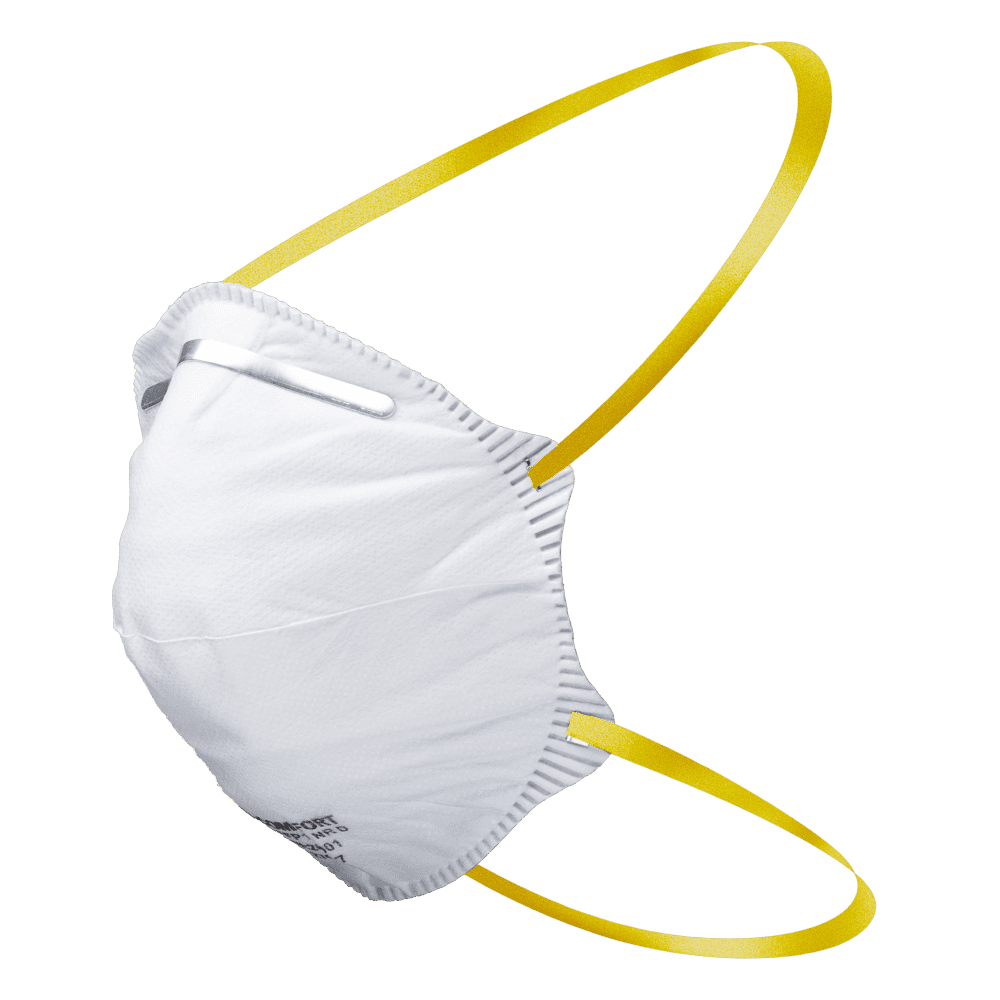
The most common form of respiratory protection is the filtering half mask. It covers the mouth and nose and consists of several filter layers that filter particles from the inhaled air.
Typical features:
- fits directly on the face (without a replaceable filter)
- disposable product (usually marked as “NR” = non reusable)
- lightweight and comfortable to wear
- available in various protection classes such as FFP1, FFP2 or FFP3
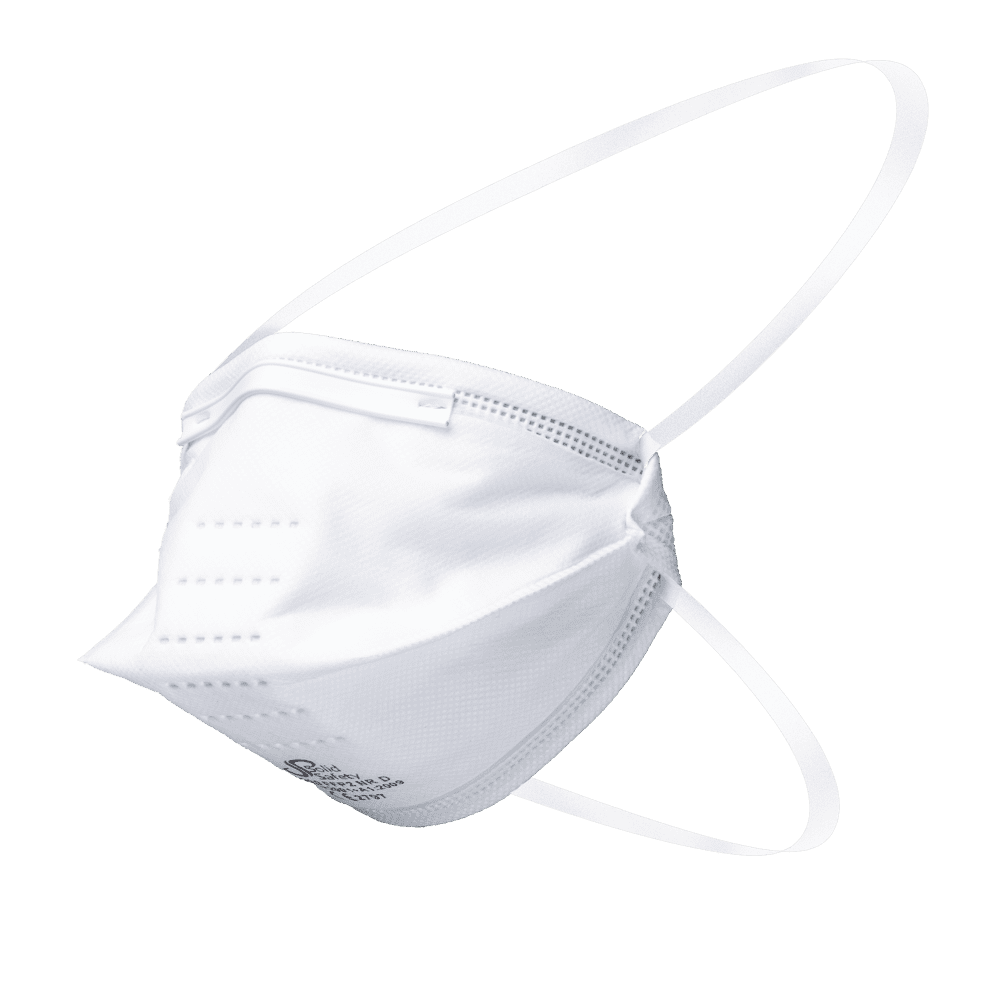
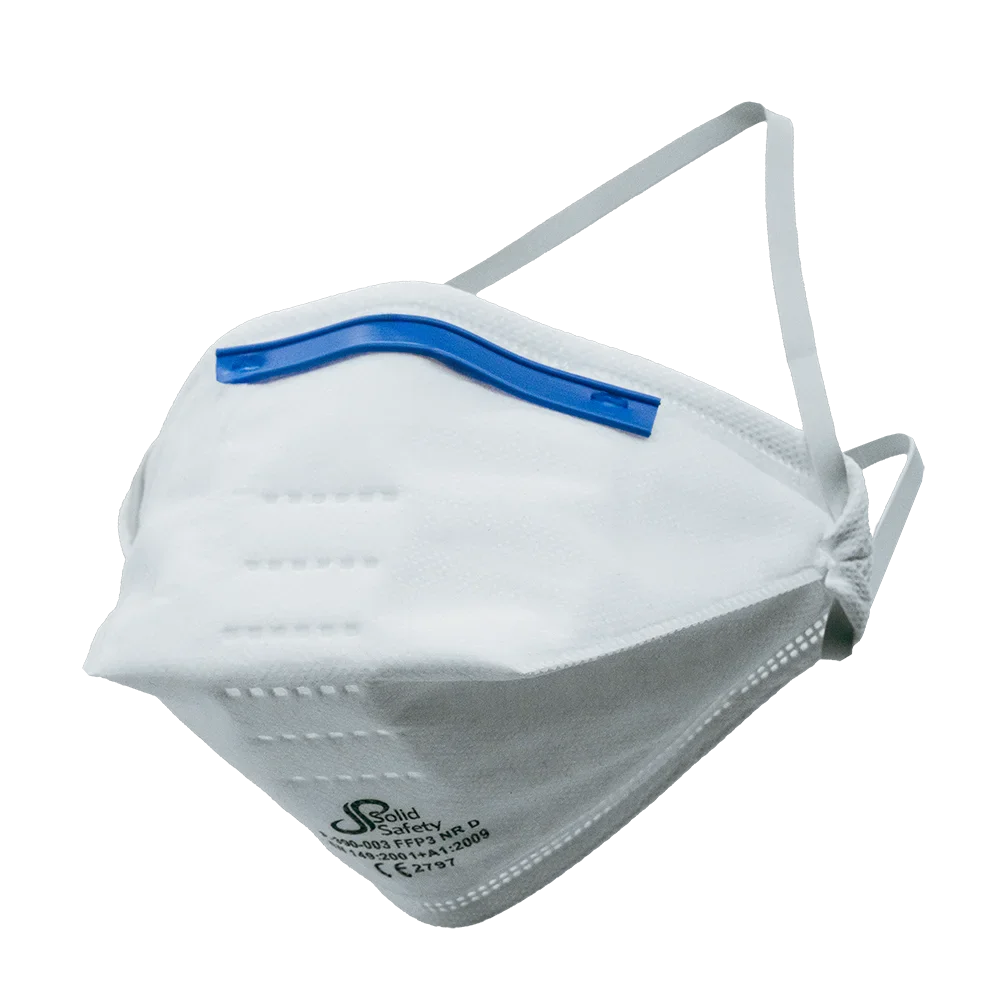
One example from the AMPri range is the SolidSafety FFP2 Mask (Item No. P-2600): flat-folded, without valve, individually wrapped and certified in accordance with EN 149 as PPE Category III.
What respiratory protection masks are intended for
Respiratory protection masks are used wherever the breathing air is, or may be, contaminated. Typical areas of application include:
- Trade & construction: sanding dust, wood dust, fine dust
- Industry & painting: particles, aerosols and in some cases vapours
- Remediation: mould or asbestos (special requirements apply here)
- Healthcare & care: infection control and hygienic applications
- Everyday use & consumer applications: protection against fine dust or pathogens
Depending on the application, a simple FFP1 mask may be sufficient – or higher protection classes or more complex systems such as half masks with filters or full-face masks may be required.
FFP1, FFP2 and FFP3 explained simply
The terms FFP1, FFP2 and FFP3 are encountered very frequently by users – especially when searching for the right respiratory protection mask. These designations refer to clearly defined protection classes under the European standard EN 149, which specify how effectively a mask filters particles from the inhaled air.
What does FFP mean?
The abbreviation FFP stands for Filtering Face Piece, i.e. a filtering half mask. These masks are made from multilayer filter material and are designed to retain solid and liquid particles (e.g. dust, aerosols) from the inhaled air.
It is important to note:
FFP masks are part of Personal Protective Equipment (PPE) and are subject to stringent requirements. Products must be tested and labelled accordingly (e.g. CE marking and EN 149 standard).
Differences between FFP1, FFP2 and FFP3
The three protection classes differ primarily in their filter performance and the maximum permissible penetration of particles:
| Protection class | Filter performance | Typical application |
|---|---|---|
| FFP1 | at least 80 % | Non-hazardous dusts, e.g. simple cleaning work |
| FFP2 | at least 94 % | Fine dust, aerosols, harmful particles |
| FFP3 | at least 99 % | Highly toxic substances, e.g. asbestos, mould spores |
The higher the class, the better the protection – although the requirements relating to correct fit and breathing resistance also increase.
Which protection class is suitable for which application?
The choice of the right respiratory protection mask depends heavily on the application. There is no universal recommendation, but the following guidance is typical:
- FFP1 masks
For simple tasks with low dust exposure, e.g. household tasks or light cleaning work. - FFP2 masks
The most common standard for many applications:
suitable for fine dust, sanding work, wood dust or infection control.
Also widely used in medical settings and everyday life. - FFP3 masks
For particularly critical areas involving harmful or carcinogenic substances, such as asbestos, mould or toxic dusts.
Additional legal requirements often apply here.
For many users – particularly in trade, care settings or everyday life – the FFP2 mask represents a sensible balance between protection and wearing comfort.
Choosing respiratory protection masks by area of application
The choice of the right respiratory protection mask depends to a significant extent on the respective area of application. Different hazards – such as fine dust, chemical aerosols or biological particles – require different protection classes and mask types. There is therefore no one-size-fits-all solution: the specific application is always decisive.
Respiratory protection against fine dust, sanding dust and wood dust
Activities such as sanding, sawing or drilling generate fine particles that can penetrate deep into the lungs. These include:
- fine dust from construction materials
- wood dust
- sanding dust from paints or metals
For these applications, FFP2 masks are generally the appropriate choice. They provide reliable protection against harmful particles while still being comfortable enough to wear – even over longer periods.
In cases of very high dust exposure or particularly fine particles, an FFP3 mask may also be advisable.
Respiratory protection for painting
Painting generates not only particles but also aerosols and, in some cases, vapours. A distinction must be made here:
- Simple painting work (e.g. aerosol spray cans) → FFP2 or FFP3 may be possible
- Professional painting using solvents → half masks with special filters are usually required
Important: traditional FFP masks primarily protect against particles – not reliably against gases and vapours. For professional applications, combined filter systems are therefore required.
Respiratory protection for mould
Mould spores are among the biological particles and can cause health complaints. Appropriate respiratory protection is particularly important during remediation work.
- For simple tasks: FFP2 mask
- For extensive remediation: FFP3 mask recommended
The higher the spore load, the more important high filter performance and a close-fitting mask become.
Respiratory protection for asbestos
Particularly stringent regulations apply where asbestos is concerned, as it involves highly hazardous, carcinogenic fibres.
- Minimum requirement: FFP3 respiratory protection mask
- Often required: more complex respiratory protection systems (e.g. half masks with P3 filters)
A simple FFP2 mask is not sufficient here. In addition, legal requirements and occupational safety guidelines must be strictly observed.
Respiratory protection in medical and hygienic environments
In medical settings, as well as in care, laboratory or hygiene-sensitive environments, both self-protection and protection of others are relevant.
Typical solutions:
- FFP2 masks for infection control
- Medical face masks for protecting other people
- In addition: other PPE such as face shields or protective clothing
The AMPri range includes FFP2 masks such as the SolidSafety FFP2 Mask (P-2600), which is designed without a valve and is therefore particularly suitable for applications where protection of others is also relevant.
Designs and features of respiratory protection masks
In addition to the correct protection class, the design and features of a respiratory protection mask also play a decisive role. Depending on the application, duration of wear and individual requirements, masks differ considerably in terms of fit, comfort and function.
Half masks, full-face masks and close-fitting full-face solutions
| Design | Description | Typical application |
|---|---|---|
| Filtering half mask (FFP) | Covers mouth and nose, without replaceable filter | Everyday use, trade, healthcare |
| Half mask with filter | Reusable mask with replaceable filters | Industry, painting |
| Full mask / full-face mask | Covers the entire face, including the eyes | Hazardous substances, chemicals, asbestos |
Filtering half masks (FFP1, FFP2, FFP3) are the most commonly used variant, as they are lightweight, cost-efficient and ready for immediate use. For more complex applications – for example involving gases or very hazardous substances – systems with replaceable filters or full-face masks are used instead.
FFP2 mask with or without valve
A key distinguishing feature is the exhalation valve:
- With valve
- makes exhalation easier
- reduces moisture and heat build-up
- increases wearing comfort during prolonged use
- no protection of others, as unfiltered exhaled air escapes
- Without valve
- filters both inhaled and exhaled air
- suitable for hygiene-sensitive areas and infection control
- somewhat higher breathing resistance
In professional environments – particularly in healthcare and care settings – FFP2 masks without a valve are frequently used, as in these contexts the protection of others is relevant in addition to self-protection.
Headbands or ear loops
The type of fastening affects both fit and wearing comfort:
- Headbands (2-strap system)
- run over the back of the head and neck
- ensure a better seal
- preferred for professional use
- Ear loops
- quicker to put on and take off
- comfortable for everyday use
- often provide lower contact pressure
For applications with increased sealing requirements – such as occupational safety – models with headbands are usually the better choice.
Black FFP2 masks and coloured variants
In addition to classic white masks, black or coloured FFP2 masks are now also available. These offer:
- visually appealing alternatives, e.g. for customer-facing roles
- use in sectors such as hospitality, cosmetics or tattoo studios
- the same protective function, provided the appropriate certification is in place
One point remains important: colour has no effect on protective performance – standards and certifications are what matter.
Respiratory protection masks for spectacle wearers
People who wear spectacles often face the problem of lenses steaming up. A suitable respiratory protection mask should therefore:
- have an adjustable nose clip
- fit closely to the face
- seal as tightly as possible
Additional solutions such as special mask designs or technologies (e.g. anti-fog concepts for medical masks) can significantly improve wearing comfort.
Standards, filter classes and markings
Anyone wishing to buy or use respiratory protection masks professionally should be familiar with the key standards, markings and filter classes. They provide reliable information on the level of protection a mask actually offers and the areas of application for which it is approved.
Particularly in B2B environments – for example purchasing, occupational safety or resale – this information is essential for legal certainty and product selection.
EN 149 and what the standard states
The key standard for filtering half masks in Europe is EN 149. It defines:
- the classification into FFP1, FFP2 and FFP3
- requirements relating to filter performance and tightness
- test procedures for breathability and leakage
Masks that comply with this standard are classified as Personal Protective Equipment (PPE) and bear CE marking.
Example from the AMPri range:
The SolidSafety FFP2 Mask (P-2600) meets the requirements of EN 149 and is classified as PPE Category III – meaning it is suitable for high-risk applications.
Filter classes for respiratory protection masks
In addition to the FFP classification, terms such as P2 or P3 filters also frequently appear. These refer to filter classes used in reusable mask systems.
| Designation | Meaning | Comparison |
|---|---|---|
| P1 | Low filter performance | similar to FFP1 |
| P2 | Medium filter performance | similar to FFP2 |
| P3 | High filter performance | similar to FFP3 |
These filters are typically used in half masks or full-face masks with replaceable filters – for example in painting work or when handling hazardous substances.
Markings such as NR, D and other information
Packaging for respiratory protection masks often contains additional abbreviations that provide important information:
| Marking | Meaning |
|---|---|
| NR (Non Reusable) | Disposable mask, not reusable |
| R (Reusable) | Reusable mask |
| D | Dolomite dust test passed (longer service life under dust exposure) |
A typical designation such as “FFP2 NR D” therefore means:
- FFP2 protection class
- disposable mask
- suitable for high dust exposure
This information is particularly relevant in professional use, for example in construction or industry.
Pictograms and important packaging information
In addition to written markings, pictograms and symbols also play an important role. At a glance, they provide information on:
- protection class (FFP1, FFP2, FFP3)
- standard (e.g. EN 149)
- wearing instructions and limitations
- storage conditions and shelf life
For buyers and users, it is important to interpret this information correctly – especially in safety-critical applications such as asbestos, mould or chemical exposure.
Practical limitations of respiratory protection
As important as respiratory protection masks are, they only provide reliable protection if they are chosen correctly, worn properly and used appropriately for the application. In practice, there are clear limitations that users should be aware of – especially in professional sectors such as construction, industry or healthcare.
Why wearers of facial hair need to take particular care with respiratory protection
A decisive factor in protective performance is the tight seal of the mask against the skin. Even small leaks can result in unfiltered air being inhaled.
This is precisely where facial hair becomes an issue:
- facial hair prevents full skin contact
- air can enter unfiltered at the edges
- the protective effect is significantly reduced
For this reason, the following applies in occupational safety:
For activities involving increased risk (e.g. fine dust, asbestos, hazardous substances), a tight seal is essential – facial hair and respiratory protection are only compatible to a limited extent.
Fit, seal and wearing comfort
Even without facial hair, the correct fit is crucial to the performance of a respiratory protection mask. Key factors include:
- accurate size and shape
- correctly adjusted nose clip
- even contact pressure from the straps
- no leakage at the mask edges
A common mistake is wearing the mask too loosely or adjusting it frequently during use. This can significantly impair the level of protection.
At the same time, wearing comfort also plays a major role:
Only masks that fit comfortably and allow good breathability are likely to be worn consistently – particularly during prolonged use.
When a simple FFP mask is not sufficient
FFP masks are adequate for many applications – but not all. Their limitations lie primarily in the following areas:
- Gases and vapours (e.g. solvents in professional painting)
- very high concentrations of harmful substances
- highly hazardous substances such as asbestos (FFP3 or above is often required here)
In such cases, other solutions are required, for example:
- half masks with replaceable filters (e.g. P3 filters)
- full-face masks with comprehensive face protection
- complex respiratory protection systems for professional occupational safety
Important: selection should always be based on a risk assessment – particularly in commercial environments.
Buying respiratory protection masks: what matters?
When purchasing respiratory protection masks – whether for professional use or personal needs – several factors play a decisive role. In addition to the protection class itself, fit, quality, standards and application are crucial in determining whether a mask will genuinely provide reliable protection in practice.
Particularly for buyers, resellers or commercial users, it is worth taking a close look at the details that influence safety, comfort and cost-efficiency.
Material, fit and skin comfort
A respiratory protection mask is often worn for extended periods. For this reason, material quality and wearing comfort are key criteria:
- soft, skin-friendly nonwoven materials
- multilayer filter structure for reliable protection
- flexible nose clip for an optimal fit
- comfortable contact pressure without pressure marks
A good fit not only ensures comfort, but is also decisive for the seal and therefore the protective effect. Particularly in professional applications, masks should fit the face neatly.
Individually wrapped or bulk pack
Depending on the application, packaging can also play an important role:
- Individually wrapped masks
- hygienic
- ideal for medical settings or use on the go
- easy distribution to staff or customers
- Bulk packs
- economical for businesses with high usage volumes
- less packaging material
- efficient for storage and procurement
One example from the AMPri range is individually wrapped FFP2 masks, which are particularly suitable for hygiene-sensitive areas of application.
For commercial buyers, practices and resellers
Additional requirements apply in B2B environments. The focus is not just on single purchases, but on reliable supply chains, compliance with standards and documentation.
Key criteria include:
- compliance with relevant standards (e.g. EN 149, CE marking)
- clear labelling (FFP2, NR, D etc.)
- consistent product quality
- reliable availability even for large volumes
- traceable documentation and certificates
As an experienced wholesaler, AMPri focuses on tested quality, certified processes and a stable logistics structure with high availability.
AMPri product recommendations
The selection of the right respiratory protection mask always depends on the specific application. AMPri offers a structured range of respiratory protection and hygiene products suitable for both professional users and everyday requirements.
Below you will find typical product recommendations within the Respiratory Protection Masks & FFP2 Masks category.
FFP2 masks for everyday use, healthcare and trade
SolidSafety FFP2 Mask
Item No.: P-2600
- certified in accordance with EN 149 (PPE Category III)
- without valve – suitable for self-protection and protection of others
- flat-folded for space-saving storage
- individually wrapped for high hygiene requirements
This FFP2 mask is ideally suited for use in healthcare, care, trade or everyday settings, particularly wherever reliable particle protection is required.
Complementary products for hygiene and face protection
MED-COMFORT Beard Masks
Item No.: 02040
- made from lightweight polypropylene nonwoven
- reduces contamination risks in the facial area
- ideal in combination with respiratory protection masks
- suitable for the food industry, care and hygiene
Beard masks are a useful addition, particularly in hygiene-sensitive areas or for users with facial hair.
Combination with additional face protection
SolidSafety Face Shield with Visor
Item No.: 02990
- transparent face protection made from PETG
- reusable and disinfectable
- elastic headband for a comfortable fit
- can be combined with respiratory protection masks
Face shields complement respiratory protection by also providing protection against splashing, droplets or mechanical impact.
Classification of the product selection
- FFP2 masks → standard solution for particle protection
- Complementary hygiene products → additional safety and cleanliness
- Face protection → enhanced protection where risk is elevated
For special applications – such as asbestos, painting or chemical vapours – more complex respiratory protection systems (e.g. half masks with filters) should also be considered depending on the risk assessment.
FAQ on respiratory protection masks & FFP2 masks
What is the difference between FFP2 and FFP3 masks?
FFP2 masks filter at least 94 % of particles from the air, while FFP3 masks filter at least 99 %. FFP3 therefore offers the highest level of protection and is recommended for particularly hazardous substances such as asbestos or mould.
When is an FFP2 mask sufficient?
FFP2 masks are sufficient for many applications, for example fine dust, sanding work, wood dust or infection control. They offer a good compromise between protection and wearing comfort.
Which respiratory protection mask is required for asbestos?
For work involving asbestos, at least FFP3 masks are required. In many cases, half masks with P3 filters or more complex respiratory protection systems are also prescribed. An FFP2 mask is not sufficient for this purpose.
Can FFP2 masks be reused?
Most FFP2 masks are marked “NR” (Non Reusable) and are intended for single use. Reuse is only possible to a limited extent and under specific conditions, but is generally avoided in professional environments.
What does “FFP2 NR D” on the packaging mean?
- FFP2 = protection class
- NR = disposable mask (not reusable)
- D = dolomite dust test passed (longer service life under dust exposure)
Are FFP2 masks with a valve better?
Masks with a valve offer greater wearing comfort, as exhalation is easier. However, they only protect the wearer, not the surrounding environment. For medical or hygiene-sensitive areas, masks without a valve are therefore generally used.
Which respiratory protection mask is suitable for painting?
For simple tasks, an FFP2 or FFP3 mask may be sufficient. For professional painting work involving solvents, however, masks with special filters against gases and vapours are required.
Which mask helps against mould?
For smaller tasks, an FFP2 mask is recommended; for heavier contamination or remediation work, an FFP3 mask is recommended as it offers higher filter performance.
Why is the correct fit of the mask so important?
Only if the mask fits tightly against the face can it filter effectively. Leaks allow unfiltered air to be inhaled – which significantly reduces the protective effect.
Can people with facial hair wear FFP2 masks?
Facial hair can significantly impair the seal. For higher-risk applications, a tight seal is necessary, which means users with facial hair may be restricted or require alternative solutions.
Which respiratory protection mask is suitable for spectacle wearers?
Models with a flexible nose clip and a good fit are particularly suitable, as they help reduce steaming of spectacles. A correctly adjusted mask significantly improves wearing comfort.
Where can FFP2 masks be purchased?
FFP2 masks are available from specialist retailers, online and from specialised suppliers such as AMPri. It is important to ensure tested quality, compliance with standards (EN 149) and clear labelling.