






Headgears & Head Protection
- Products
- About us
- white
- orange
- red
- blue
- yellow
- green
- red
- green
- yellow
- white
- blue
- white
- white/blue (on request)
- white/red
- white
- white/blue
- white/red
Head coverings for kitchens, hospitality and food areas
- What are head coverings for kitchens, hospitality and food areas?
- Which head covering is suitable for which area of use?
- Differences between chef caps, clip caps, bouffant caps and paper caps
- Hygiene, HACCP and requirements for head coverings in the kitchen
- Materials and properties
- Head coverings for different sectors
- Product recommendations from the AMPri range
- Buying guide: Which head covering should you choose?
- FAQ on head coverings, chef caps and hoods
What are head coverings for kitchens, hospitality and food areas?
Head coverings such as chef caps, chef hats, clip caps or bouffant caps are a key component of professional hygiene clothing and workwear in kitchens and food processing environments. Their primary purpose is to reliably cover hair and thereby prevent it from entering food, work surfaces or production processes.
Particularly in sensitive areas such as hospitality, large-scale kitchens, bakeries, catering or the food industry, hygiene regulations and quality standards are especially strict. In such settings, suitable head coverings are not merely recommended, but often mandatory – for example as part of HACCP concepts (Hazard Analysis and Critical Control Points, a system for hazard analysis and the control of critical points in food hygiene).
In addition to the hygienic aspect, head coverings also fulfil a functional and visual role: they ensure a uniform, professional appearance and, depending on the design, can significantly improve wearing comfort during day-to-day work.
What types of head coverings are available?
Various types of head coverings have become established in professional settings, each meeting different requirements depending on the area of use:
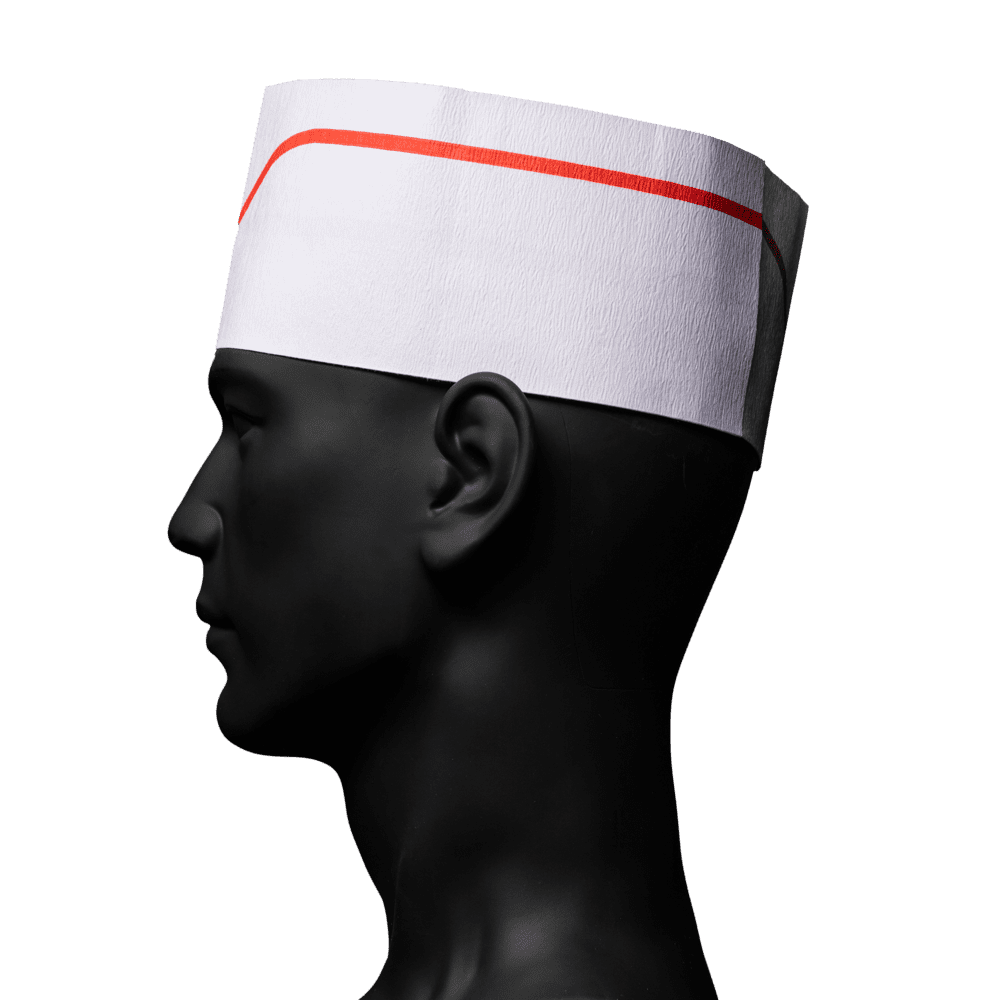
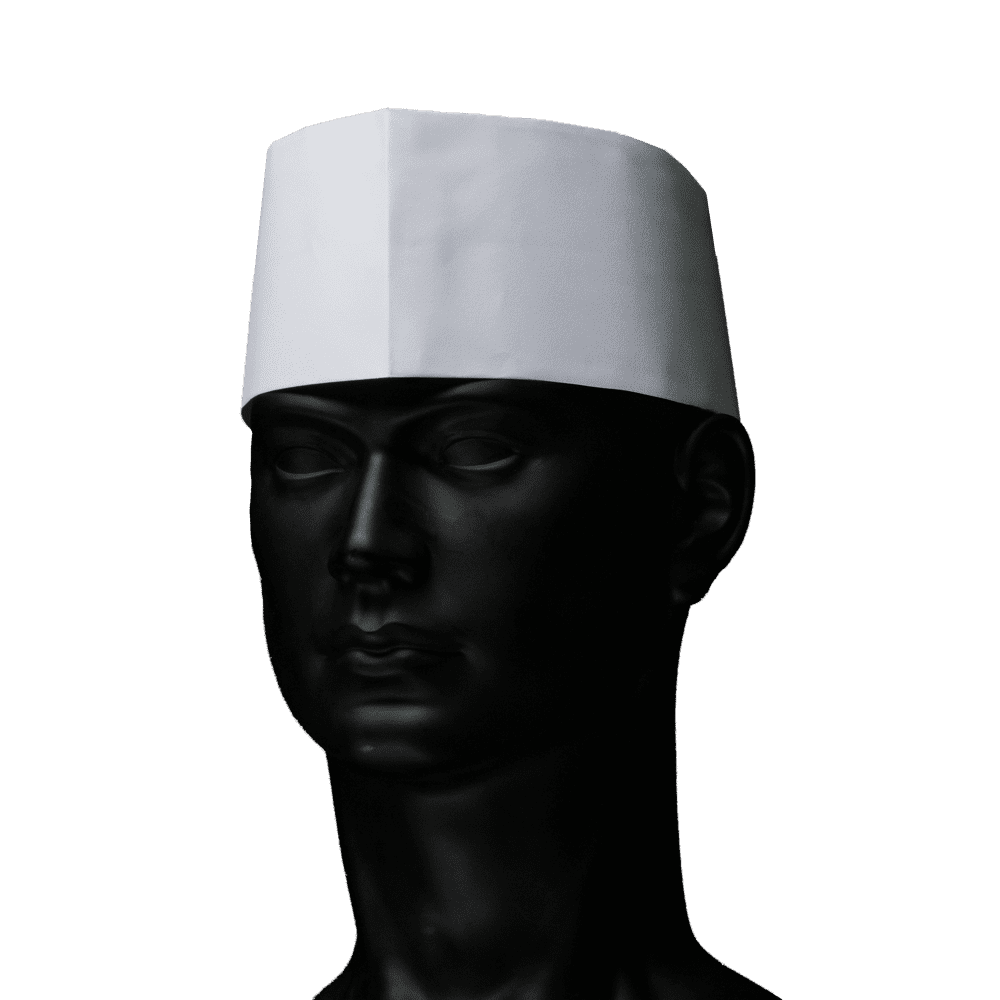
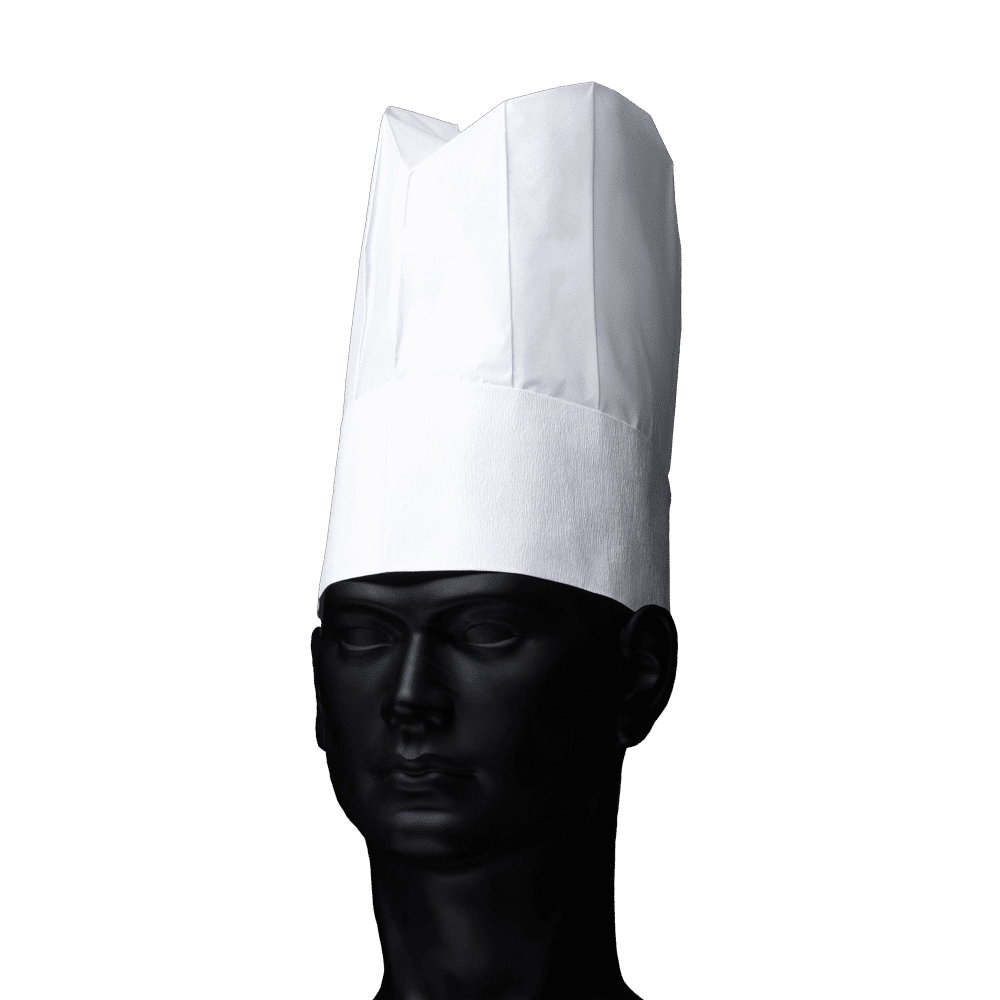
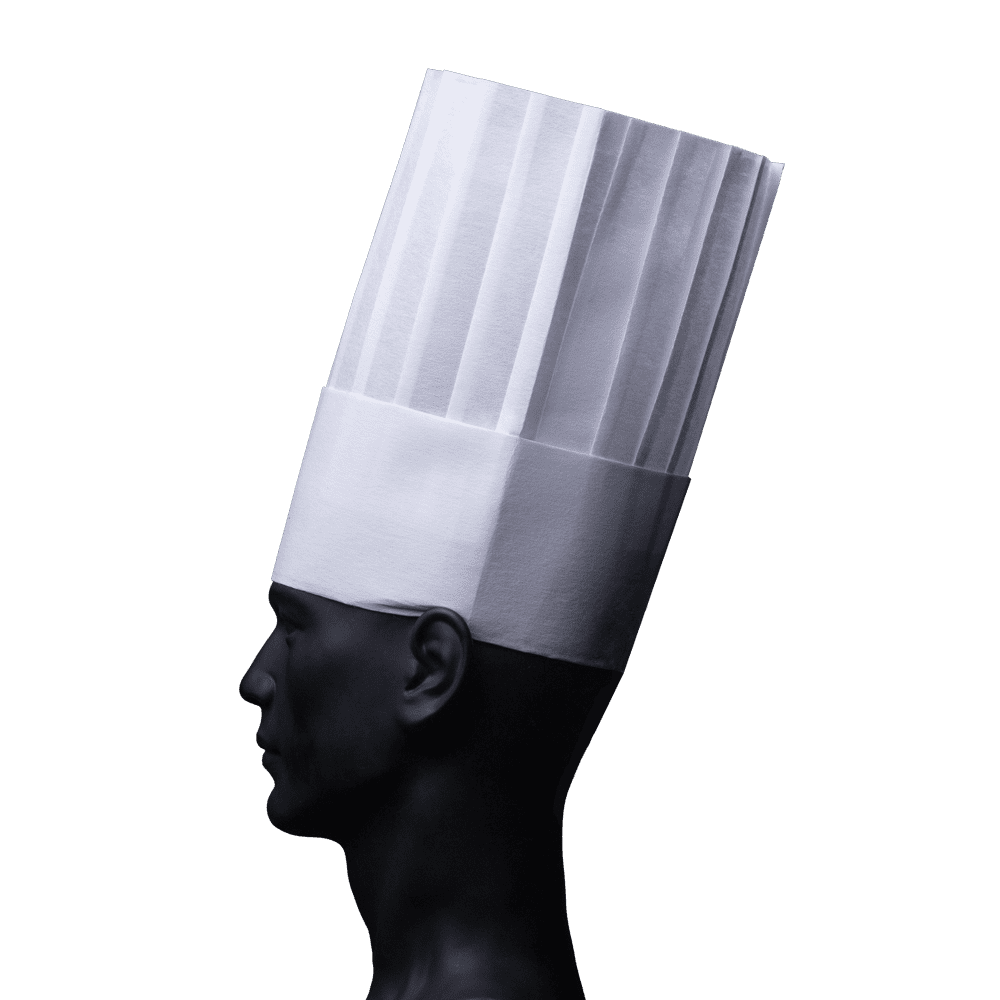
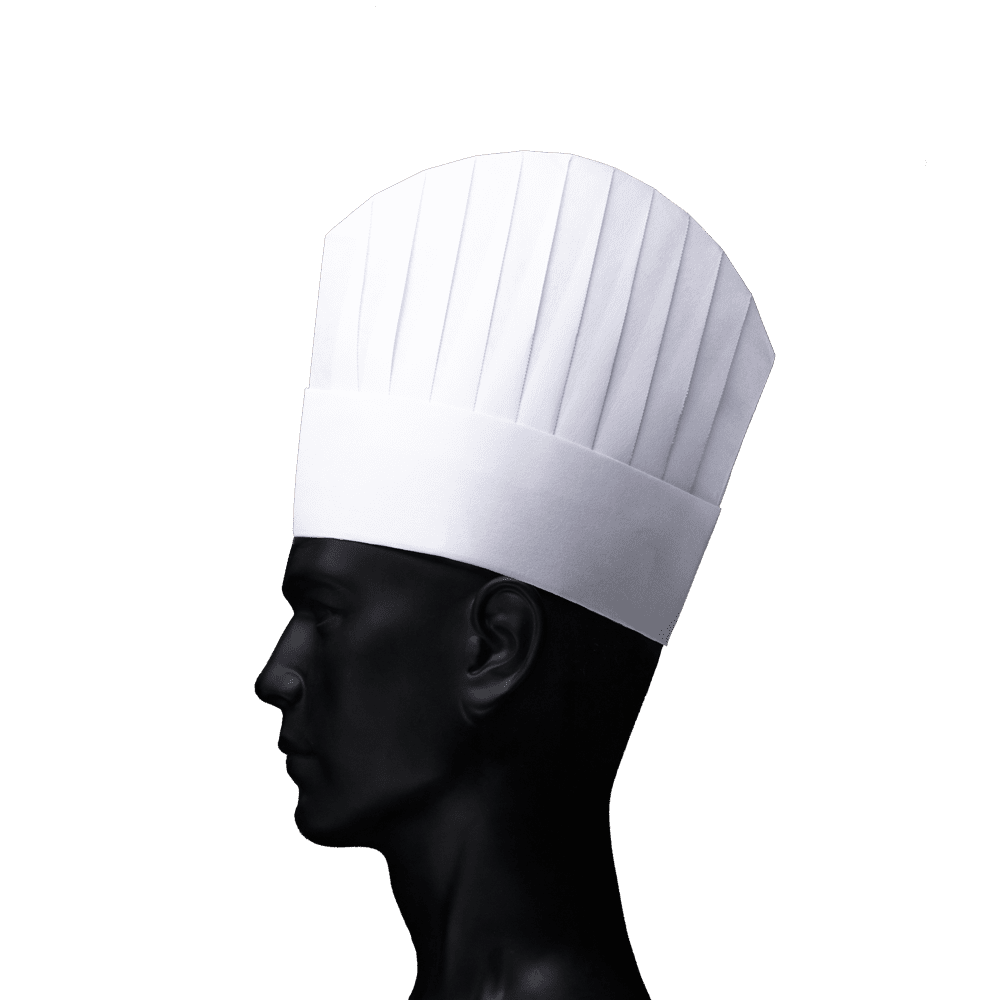
- Chef caps and chef hats: A classic form of headwear in hospitality, often tall and pleated (“French chef cap”), symbolising tradition and professionalism.
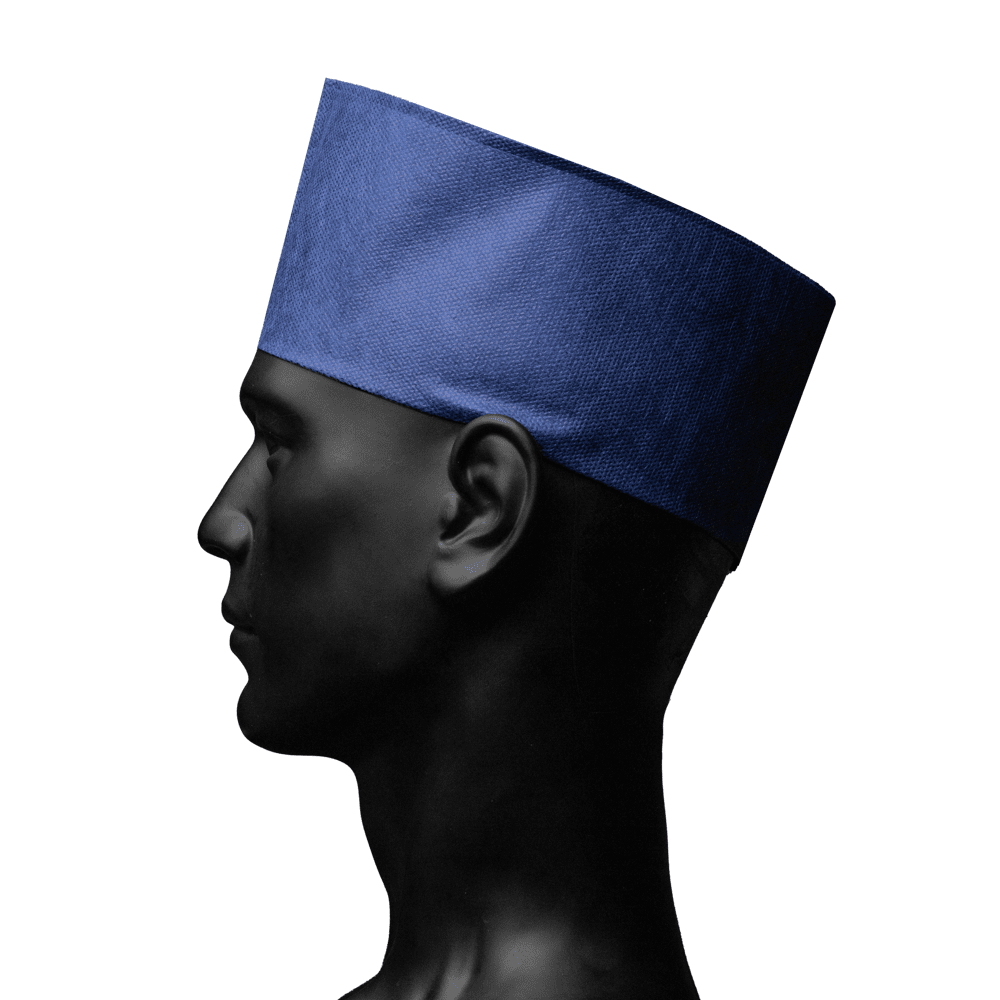
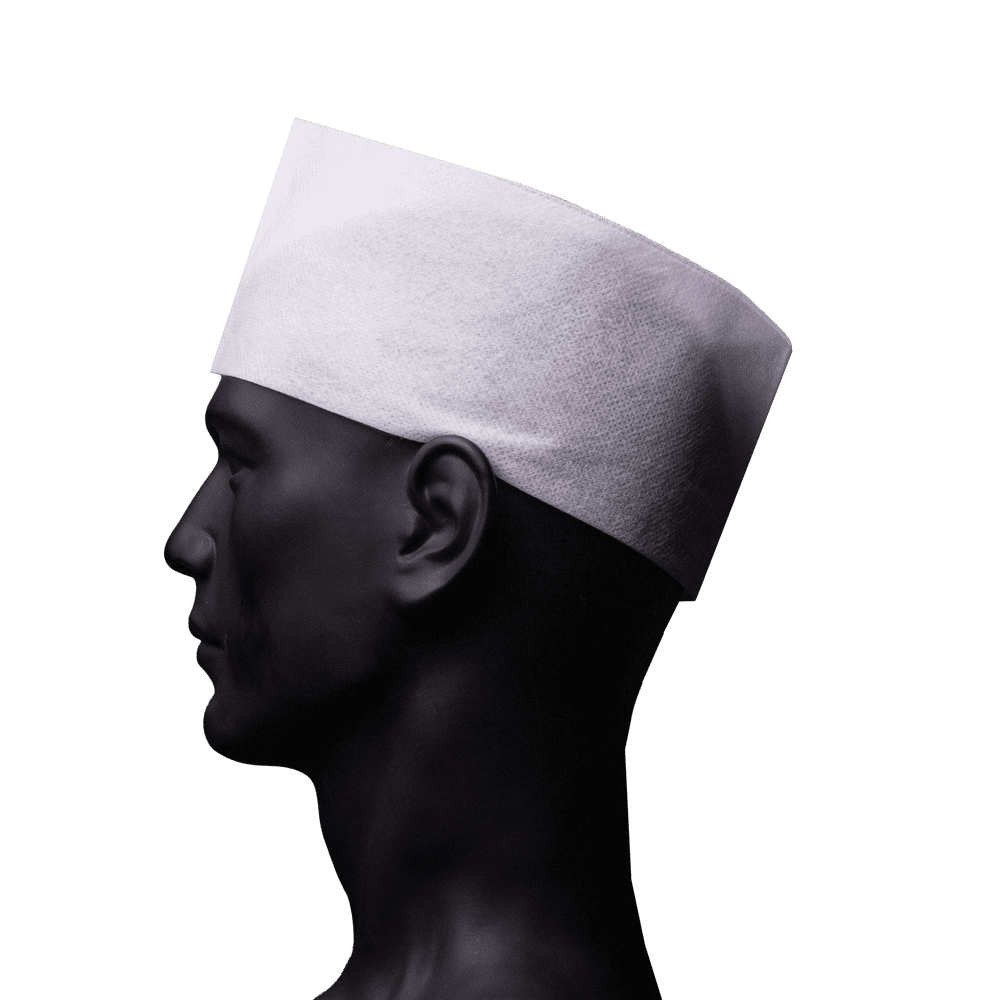
- Paper caps and baker’s caps: Flatter variants, frequently used in service, bakeries or sales areas.
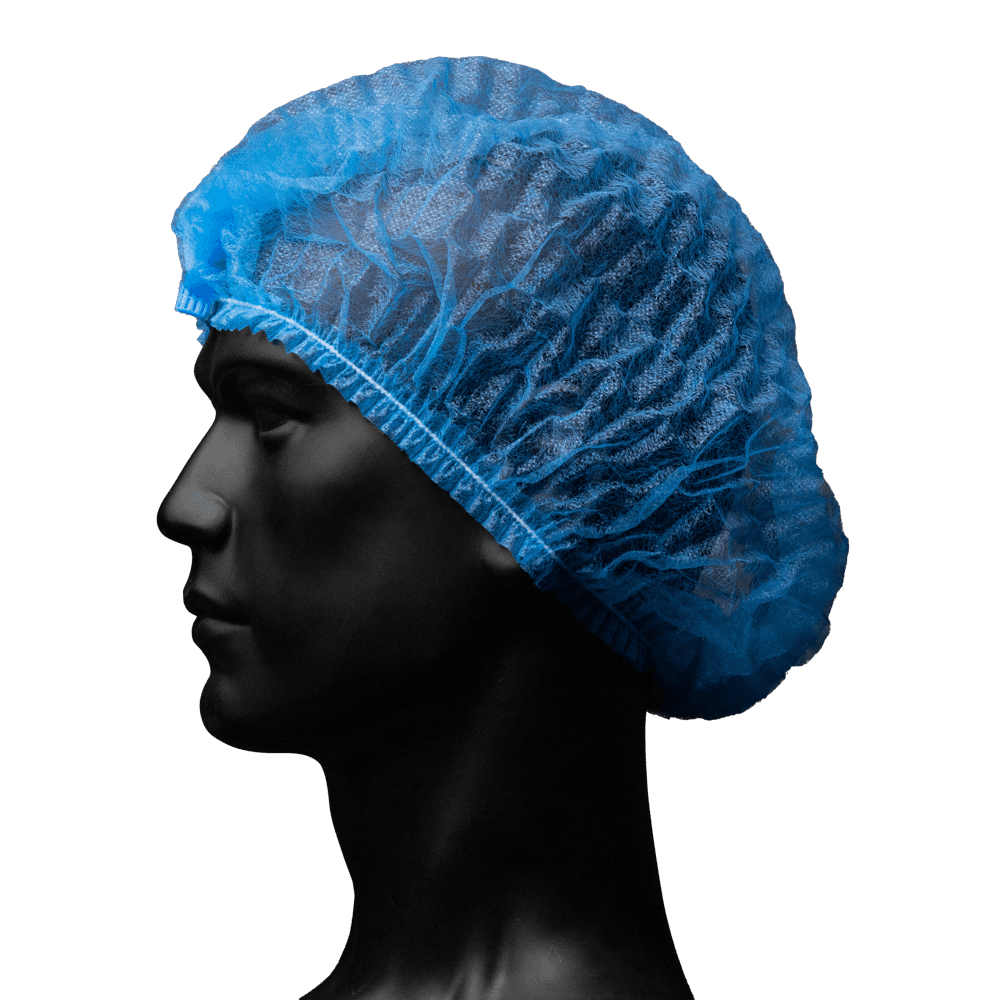
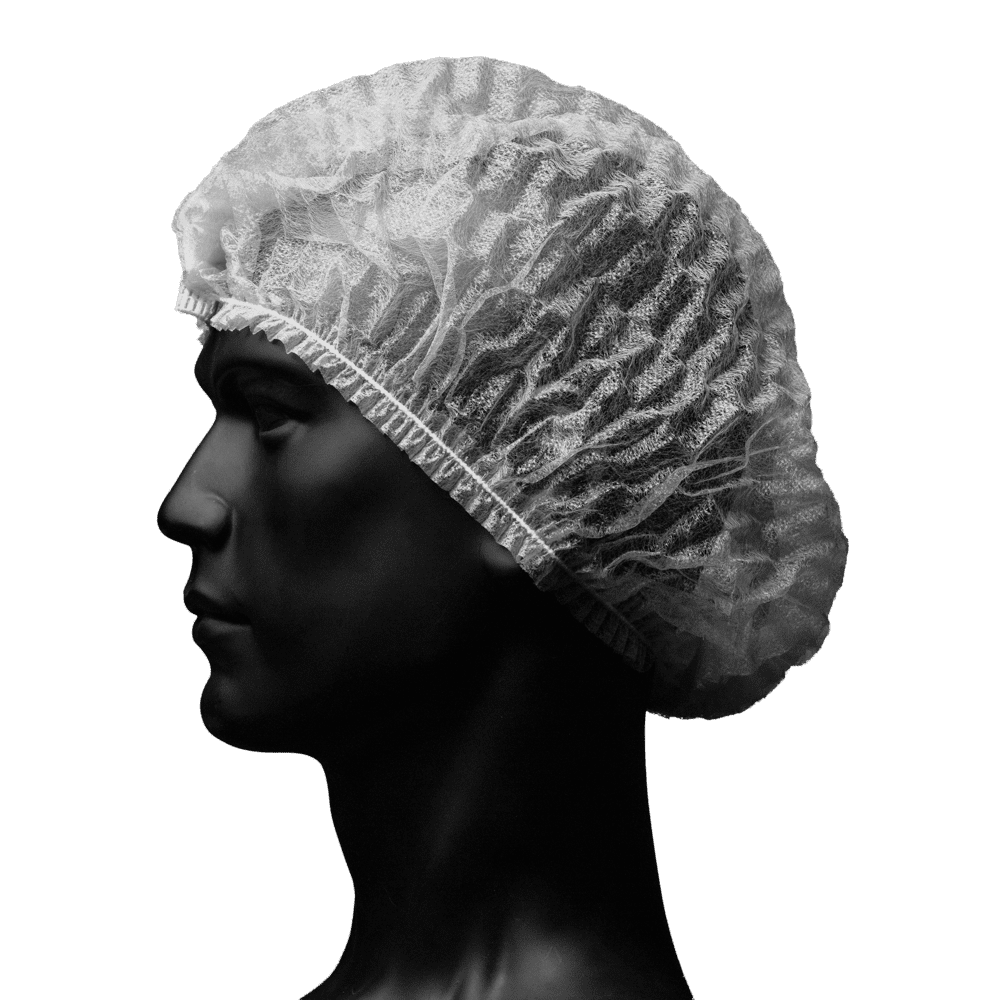
- Clip caps: Particularly practical for disposable use, compactly packed and ready for immediate use – ideal for hygiene areas with frequent staff changes.
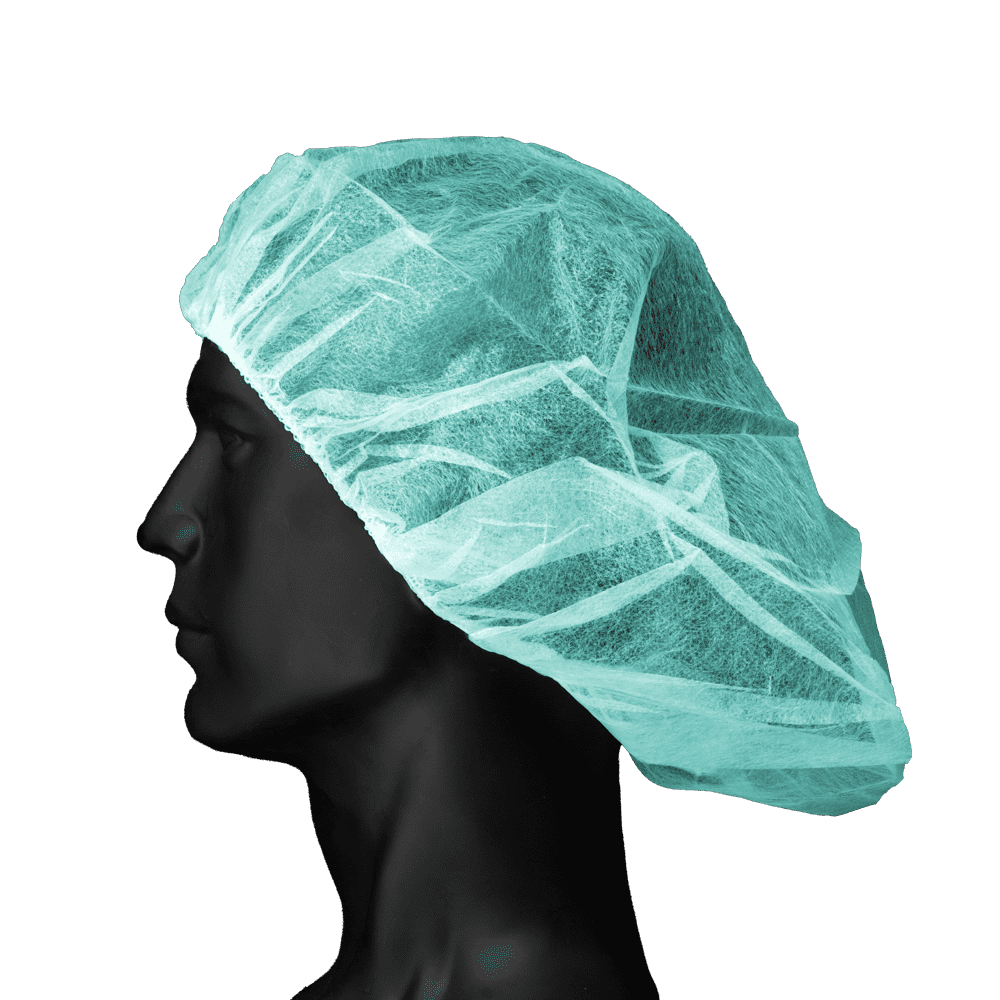
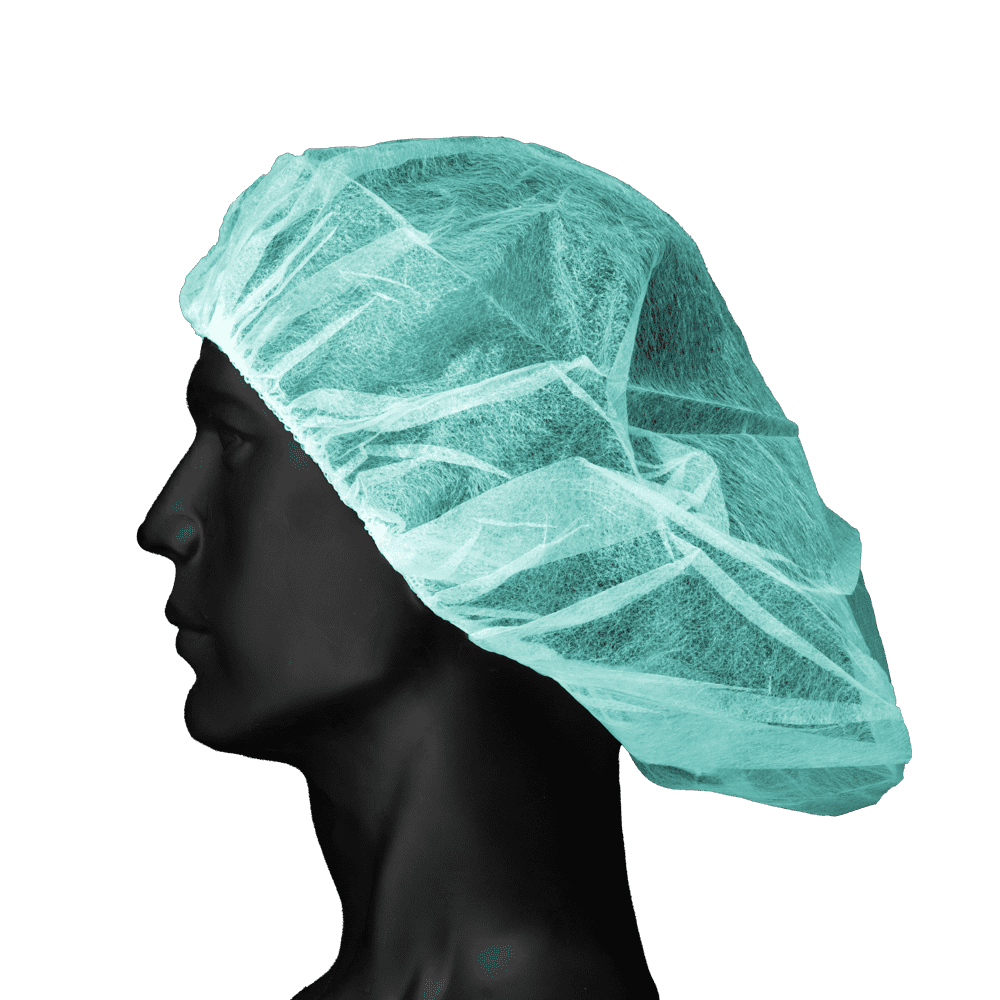
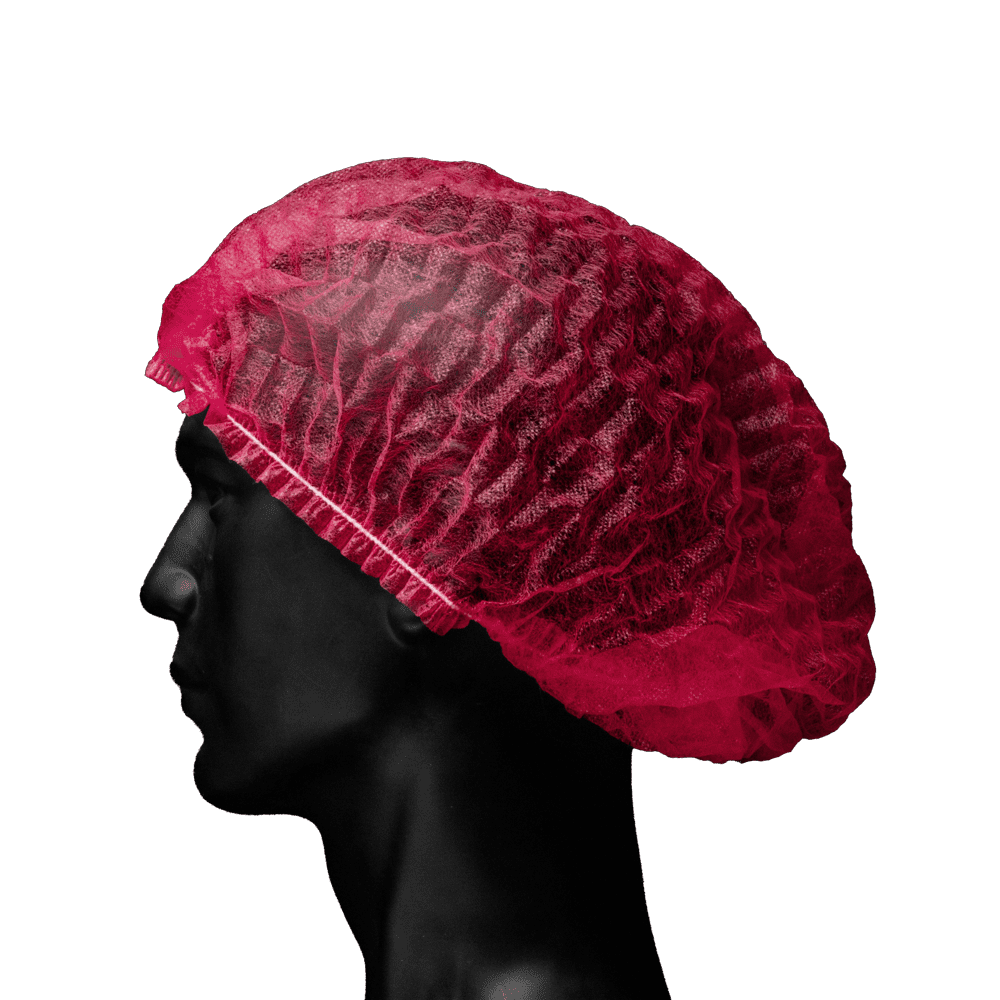
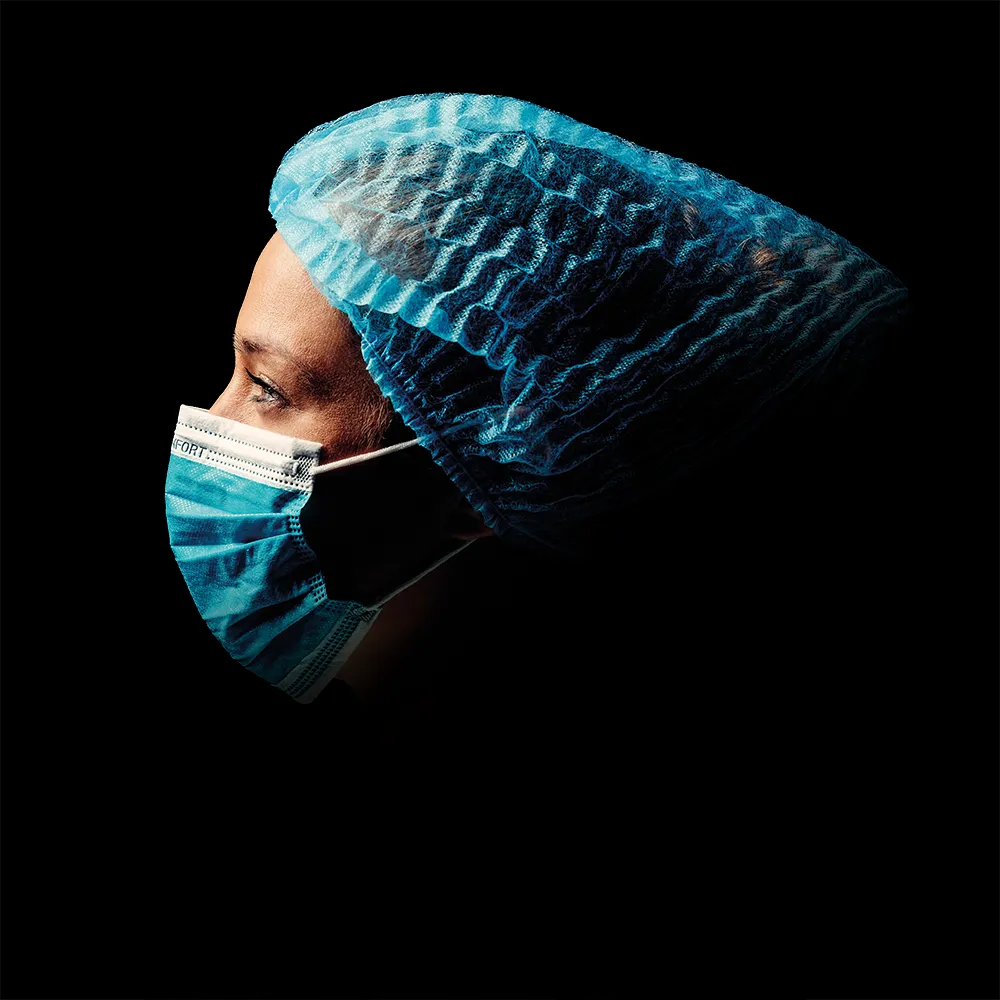
- Bouffant caps: High-volume caps with plenty of space for long or voluminous hair, commonly used in food production.
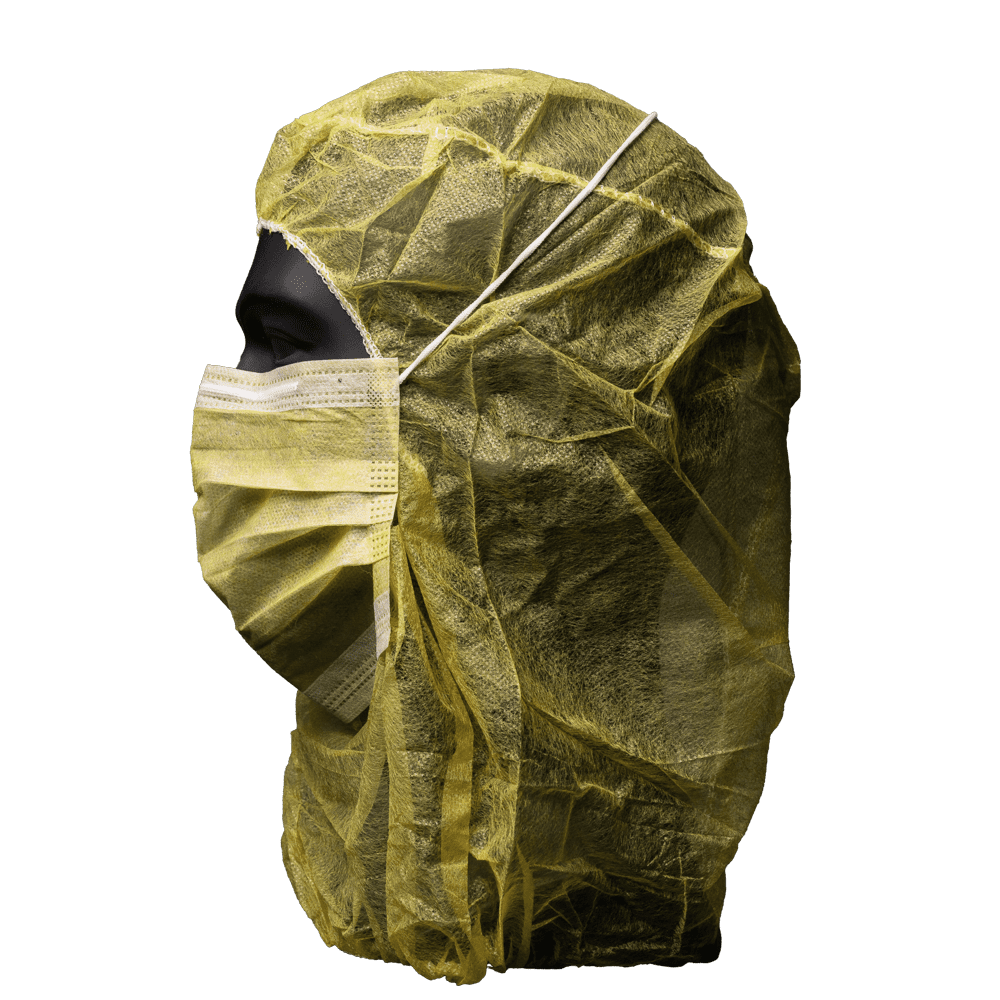
- Astronaut caps: Provide additional protection for the head, neck and, in some cases, the facial area – suitable for particularly sensitive hygiene zones.
- Nonwoven hairnets: A lightweight alternative for simple applications or as an additional layer under other head coverings.
This variety makes it possible to choose the right solution for every sector and every intended use.
Why is head covering important in hygiene-sensitive areas?
The main reason for wearing head coverings is protection against contamination. Hair can transfer germs, dirt or skin particles and therefore poses a hygiene risk – especially when handling open food or sensitive products.
A suitable head covering:
- reduces the risk of hair ending up in food,
- supports compliance with statutory hygiene requirements,
- improves product safety in food processing,
- contributes to a professional appearance.
In many businesses, head covering forms part of the prescribed protective clothing, similar to disposable gloves or aprons. Modern disposable head coverings made from materials such as polypropylene nonwoven are particularly popular because they are lightweight, breathable and hygienic, making them ideal for everyday use.
Which head covering is suitable for which area of use?
The choice of the right head covering for kitchens, hospitality or food production depends heavily on the specific area of use. Different working environments place different demands on hygiene, wearing comfort and visual appearance. For this reason, it makes sense to distinguish specifically between chef caps, clip caps, bouffant caps and specialised hygiene solutions.
Whereas traditional hospitality settings often place emphasis on a professional appearance, industrial food processing primarily focuses on hygiene assurance and full hair coverage.
Chef caps and chef hats for hospitality and kitchen staff
Chef caps and chef hats – often also referred to as French chef caps – are the classic choice in the kitchen. They are used mainly in restaurants, hotels and catering businesses.
Typical features:
- representative, professional appearance
- often height-adjustable or size-adjustable
- made of paper or nonwoven, usually as a disposable product
- ideal for open kitchens and customer-facing environments
This type of head covering traditionally stands for competence and order in the kitchen and is often worn by head chefs or by staff working in visible areas.
Clip caps for food production and hygiene zones
Clip caps are the practical standard solution for many hygiene areas. They are supplied in a compact folded form and unfold into a full cap when opened.
Typical areas of use:
- food production
- large-scale kitchens with high staff turnover
- cleaning, care and laboratory settings
Advantages:
- quick to put on and hygienically packed
- space-saving to store
- lightweight and breathable
- cost-efficient for disposable use
Clip caps are particularly useful wherever many people require short-term access to hygiene-sensitive areas.
Bouffant caps for high-volume hair coverage
Bouffant caps offer significantly more volume than clip caps and are ideal for people with long or thick hair.
Typical characteristics:
- generous cut for full hair coverage
- secure fit thanks to elasticated edging
- often made of polypropylene nonwoven
- comfortable to wear, even for extended periods
They are used primarily in the food industry, but also in medical or care settings where maximum coverage and comfort are required.
Astronaut caps for particularly sensitive hygiene areas
Astronaut caps go one step further: they cover not only the head, but also the neck and, in some cases, part of the face.
Areas of use:
- particularly sensitive production areas
- near-cleanroom environments
- food processing with the highest hygiene standards
Advantages:
- near-complete shielding from hair and skin particles
- often combinable with an integrated face mask
- high hygiene standard
These head coverings are used whenever contamination risks must be reduced to a minimum.
Paper caps, baker’s caps and bistro caps for sales and service
Paper caps, baker’s caps and bistro caps are flatter types of head covering frequently used in sales or service environments.
Typical areas of use:
- bakeries and confectioneries
- snack bars, street food and catering
- counter and service staff
Properties:
- lightweight and comfortable to wear
- subtle, neat appearance
- often suitable for custom printing (e.g. for branding)
They combine hygiene requirements with an attractive look, particularly in customer-oriented areas.
Differences between chef caps, clip caps, bouffant caps and paper caps
Not every head covering meets the same requirements. Depending on the area of use, chef caps, clip caps, bouffant caps and paper caps differ significantly in shape, function and hygiene performance. For purchasers and users alike, it is therefore crucial to understand these differences in order to select the right solution for the relevant requirement.
Shape, fit and wearing comfort
The shape of the head covering has a significant impact on wearing comfort and everyday practicality:
| Head covering | Shape & fit | Wearing comfort |
|---|---|---|
| Chef cap / chef hat | Tall, often pleated, size-adjustable | ★★★★☆ (airy, but noticeable) |
| Clip cap | Round, elasticated, close-fitting | ★★★★★ (lightweight & flexible) |
| Bouffant cap | Voluminous, plenty of space for hair | ★★★★★ (very comfortable) |
| Paper cap | Flat, lightly worn on the head | ★★★★☆ (lightweight, but less secure) |
Whereas chef caps tend to fit more loosely and are visually prominent, clip caps and bouffant caps offer a particularly secure fit thanks to elasticated closures. They are therefore ideal for longer wearing times or tasks involving a great deal of movement.
Hygiene performance and hair coverage
A key difference lies in the ability to cover hair completely – a decisive factor for HACCP-compliant working areas.
| Head covering | Hair coverage | Hygiene standard |
|---|---|---|
| Chef cap / chef hat | Partial | ★★★☆☆ |
| Paper cap | Partial | ★★☆☆☆ |
| Clip cap | Good | ★★★★☆ |
| Bouffant cap | Very good | ★★★★★ |
| Astronaut cap | Complete | ★★★★★ |
For open kitchens, a chef cap or paper cap is often sufficient, whereas in food production clip caps or bouffant caps are usually required. For particularly sensitive areas, astronaut caps offer the highest hygiene safety because they also cover the neck and parts of the face.
Impact in customer-facing situations and professional appearance
In addition to hygiene, external appearance also plays an important role – particularly in hospitality or sales:
- Chef caps and chef hats convey a traditional, high-quality and professional image
- Baker’s caps and paper caps create a neat but more understated appearance
- Clip caps and bouffant caps are functional and intended more for internal use
Especially in customer-facing areas, the right head covering can support the brand image and build trust. In production environments, however, functionality and safety are clearly the main priorities.
Hygiene, HACCP and requirements for head coverings in the kitchen
In hygiene-sensitive areas such as hospitality, food production or care settings, wearing suitable head coverings is not an optional part of workwear, but a key element of quality assurance. Whether chef cap, clip cap or bouffant cap – they play a major role in preventing contamination and complying with legal requirements.
Why head coverings are important in the kitchen
Hair poses a potential risk to food safety. Not only can it visibly enter food, but it can also transfer microorganisms or skin particles. A suitable head covering for the kitchen significantly minimises this risk.
Key functions at a glance:
- Prevents hair from entering food
- Reduces the spread of germs and particles
- Supports clean and controlled work processes
- Also protects staff from external influences (e.g. splashes)
Full hair coverage is particularly important when handling open food or performing sensitive production steps.
HACCP explained briefly
HACCP stands for Hazard Analysis and Critical Control Points – an internationally recognised system for analysing and controlling hazards in food processing.
Put simply, this means that businesses identify critical points in the production process where risks may arise – for example from hair, germs or foreign bodies – and define measures to prevent these risks.
Head coverings are a typical measure within HACCP concepts because they:
- represent a clear hygiene barrier
- are easy to implement
- contribute effectively to risk minimisation
Depending on the risk analysis, it may be mandatory for clip caps, bouffant caps or even astronaut caps to be worn.
What businesses should look for in hygienic head coverings
In order for head coverings to fulfil their function reliably, businesses should consider several factors when selecting and using them:
Full hair coverage
Bouffant caps or voluminous caps are particularly useful for long or thick hair.
Fit and secure hold
Elasticated cuffs or adjustable sizes ensure that the head covering remains securely in place even during movement.
Material and wearing comfort
Lightweight, breathable materials such as polypropylene nonwoven enable comfortable working – even over extended periods.
Disposable vs reusable
Disposable head coverings offer clear hygiene advantages, as they are discarded after a single use and no cross-contamination occurs.
Clear operational guidelines
Uniform rules within the business ensure that all staff comply with the same hygiene standards.
Materials and properties
The choice of the right head covering for kitchens, hospitality or food production depends not only on the shape, but also to a great extent on the material used. Properties such as breathability, tear resistance, skin compatibility and hygiene play a decisive role in everyday work.
Disposable head coverings from AMPri are made predominantly from specially developed materials that are optimally tailored to professional use.
Paper, nonwoven and polypropylene spunbond
In practice, three material types in particular have become established:
| Material | Properties | Typical use |
|---|---|---|
| Paper | lightweight, cost-effective, dimensionally stable | Chef caps, paper caps |
| Nonwoven (e.g. viscose) | soft, comfortable to wear, better air circulation | High-quality chef caps |
| Polypropylene spunbond | very lightweight, breathable, hygienic, lint-free | Clip caps, bouffant caps, astronaut caps |
Paper chef caps are particularly widespread in hospitality, as they combine a classic appearance with easy handling. Variants with an embossed structure or pleats (e.g. “French Style”) also provide added stability and a professional appearance.
Nonwoven materials offer greater wearing comfort because they are softer and adapt better to the shape of the head. They are frequently used for higher-quality or longer-worn head coverings.
Polypropylene spunbond (PP nonwoven) is the standard in hygiene-sensitive areas. It is especially lightweight, breathable and at the same time reliable in its barrier function. Many products such as clip caps or bouffant caps are made from this material, making them ideal for daily disposable use.
Lightweight, breathable, hygienic: key selection criteria
In addition to the material itself, certain product characteristics are crucial when making a selection:
Breathability
Good air circulation is especially important during longer wearing times in order to avoid heat build-up.
Weight and feel
Lightweight materials increase comfort and are better accepted in everyday work.
Skin compatibility
Soft, latex-free materials reduce skin irritation – especially relevant for sensitive skin.
Tear resistance and stability
The head covering should remain securely in place during movement and should not tear easily.
Lint-free quality
An important factor in food production in order to avoid foreign particles.
Disposable head coverings for professional use
In professional settings, disposable head coverings predominate because they offer clear hygiene advantages:
- no washing or reprocessing required
- minimised risk of cross-contamination
- consistently reliable hygiene standard at all times
- easy issue to staff or visitors
Disposable products are indispensable especially in areas with high hygiene requirements or changing personnel. They can be used quickly and disposed of safely after use.
At the same time, aspects such as sustainability and responsible sourcing are playing an increasingly important role. Businesses are paying greater attention to products being manufactured under fair conditions and to transparent supply chains – topics that are also taken into account at AMPri through standards and assessments such as EcoVadis.
Head coverings for different sectors
Head coverings are indispensable in many sectors – although the requirements differ considerably depending on the field of application. Whereas in hospitality appearance and comfort are often the primary focus, in the food industry the main concerns are hygiene, safety and full hair coverage.
The right choice plays a decisive role in ensuring that work processes are safe, efficient and compliant with standards.
Hospitality and large-scale catering kitchens
In restaurants, hotels and large-scale kitchens, chef caps, chef hats and paper caps are primarily used. In these settings, appearance plays an important role alongside hygiene.
Typical requirements:
- professional and uniform appearance
- comfortable wear during long shifts
- easy size adjustment
Especially in open kitchens or in direct guest contact, classic white chef caps or modern variants are an integral part of workwear.
Bakeries and confectioneries
In bakeries and confectioneries, baker’s caps, paper caps or lightweight caps are frequently used. These offer a good balance between hygiene and wearing comfort.
Special features:
- often a combination of function and traditional look
- lightweight materials for warm working environments
- subtle appearance in sales areas
Variants with custom branding or colours are also in demand here.
Food industry
In industrial food processing, hygiene regulations are particularly strict. Accordingly, clip caps, bouffant caps or astronaut caps are predominantly used here.
Key requirements:
- full hair coverage (including long hair)
- secure fit without slipping
- lint-free, hygienic materials
- disposable products to avoid contamination
Depending on the risk analysis within the HACCP concept, the type of head covering may be clearly specified.
Care, medical settings and near-cleanroom environments
Head coverings are also used in medical facilities or care-related areas, particularly where hygiene and infection control play a central role.
Typical products:
- Clip caps
- Bouffant caps
- Astronaut caps (for elevated requirements)
Here, the main focus is on protection against germs and particle transfer.
Catering, sales and counter areas
In catering or direct sales, lightweight and visually appealing head coverings are frequently used, combining hygiene and customer impact.
Typical solutions:
- Paper caps
- Bistro caps
- Lightweight chef caps
Requirements:
- neat appearance
- quick changeover when staff change
- comfortable fit even when frequently putting on and taking off
Product recommendations from the AMPri range
The choice of the right head covering depends greatly on the area of use. Below you will find a targeted selection of proven products from the AMPri range – reduced to the most important solutions for different requirements.
Clip caps (standard for hygiene & production)
MED-COMFORT Clip Caps, Polypropylene Spunbond
Item no.: 04020-M
- Lightweight and breathable for a high level of wearing comfort
- Hygienic disposable head covering for food areas
- Secure fit thanks to elasticated edge
- Ideal for production, care and large-scale kitchens
Bouffant caps (for long or voluminous hair)
MED-COMFORT Bouffant Caps, Polypropylene Spunbond
Item no.: 04010-M
- Generous fit for full hair coverage
- Particularly suitable for long or thick hair
- Pleasantly lightweight and breathable
- Ideal for the food industry and hygiene zones
Chef caps (classic for hospitality & kitchens)
TOP-COMFORT Chef Caps “French Style Classic”
Item no.: 03020
- Classic, tall chef cap with a professional appearance
- Embossed paper with laid pleats
- Size-adjustable for an optimal fit
- Ideal for hospitality, catering and front-of-house kitchens
This selection covers the most important areas of use: clip caps for hygiene, bouffant caps for maximum coverage and chef caps for a professional kitchen appearance.
Buying guide: Which head covering should you choose?
The right head covering for kitchens, hospitality or food processing depends greatly on the individual requirements of your business. In addition to hygiene requirements, factors such as wearing comfort, staffing structure and external appearance also play an important role.
There is no one-size-fits-all solution – but there are clear points of reference that make selection easier.
For small kitchens and hospitality
In traditional kitchen operations with manageable teams, chef caps or chef hats are usually the best choice.
They are particularly suitable when:
- a professional appearance is important
- staff work within guests’ view
- uniform workwear is desired
Classic white chef caps or modern variants combine hygiene with a traditional kitchen look.
For hygiene areas with high staff turnover
In areas with frequently changing staff – such as food production or catering – clip caps are particularly efficient.
Advantages:
- quick issue and easy handling
- hygienically packed individually or compactly
- cost-efficient where consumption is high
They are ideal when many people require short-term access to sensitive areas.
For businesses focused on a professional appearance
Where appearance is a priority alongside hygiene, chef caps, baker’s caps or paper caps are a suitable choice.
These variants:
- look neat and professional
- support the brand image
- can in some cases be customised (e.g. printed)
They are an excellent choice, particularly in sales, service or open kitchen environments.
For large head sizes, long hair or additional comfort
For staff with long, thick hair or increased comfort requirements, bouffant caps are the best solution.
They offer:
- particularly generous volume for full hair coverage
- high wearing comfort even during long periods of use
- secure fit without pressure
For maximum hygiene – for example in sensitive production areas – astronaut caps may also be a sensible alternative.
FAQ on head coverings, chef caps and hoods
Which head covering is mandatory in the kitchen?
That depends on the business and the hygiene requirements. As a rule, head covering is required that covers hair completely or at least to a large extent. In hospitality, chef caps are often sufficient, whereas in food production clip caps or bouffant caps are usually required.
What is the difference between a clip cap and a bouffant cap?
Clip caps are compactly folded, quickly ready for use and comparatively close-fitting. Bouffant caps offer significantly more volume and are particularly suitable for long or thick hair, as they provide more complete coverage.
Are chef caps sufficiently hygienic?
Yes, for many hospitality areas – especially where strict HACCP requirements do not apply. In more sensitive areas such as the food industry, chef caps alone are often not sufficient, as they do not fully cover the hair.
Which head covering is suitable for long hair?
Bouffant caps are the best choice here. They offer sufficient space and ensure that all hair is securely enclosed.
What does HACCP mean in relation to head coverings?
HACCP is a hygiene concept for preventing risks in food processing. Head coverings are one measure within this system to prevent contamination caused by hair or skin particles.
Are disposable head coverings better than reusable variants?
Yes, in hygiene-sensitive areas. Disposable products minimise the risk of cross-contamination because they are disposed of after a single use and are not reused.
Which materials are commonly used for head coverings?
Typical materials include paper (for chef caps), nonwoven or polypropylene spunbond. The latter is particularly lightweight, breathable and hygienic, which is why it is often used for clip caps and bouffant caps.
Are there head coverings for large head sizes?
Yes, many products are either stretchable (e.g. clip caps) or available in larger variants. Bouffant caps also offer more space and comfort thanks to their volume.
Can chef caps be custom printed?
Yes, paper chef caps and paper caps in particular can often be custom printed, for example with a logo or company design.
Which head covering is the most comfortable?
That depends on the application. Clip caps and bouffant caps are particularly lightweight and comfortable to wear, whereas chef caps are somewhat more structured but offer greater visual presence.