












Eye Protection
- Products
- About us
Eye Protection: Safety Spectacles, Goggles and Solutions for Spectacle Wearers
- What is eye protection and when is it required?
- What types of safety eyewear are available?
- Eye protection in different areas of use
- Which standards and certifications apply to eye protection?
- Safety eyewear for spectacle wearers – what should you look out for?
- How to choose the right eye protection
- Product recommendations and range overview
- FAQ on eye protection
What is eye protection and when is it required?
Eye protection includes all measures and products designed to protect the eyes reliably against external influences. This includes in particular safety spectacles, goggles and additional face protection solutions, which form part of personal protective equipment (PPE) in many working environments.
The eyes are among the most sensitive organs of the human body. Even small particles, chemical splashes or intense radiation can cause permanent damage. For this reason, suitable eye protection is not only advisable in numerous industries, but is often also required by law.
Typical hazards to the eyes
A wide range of risks can arise in day-to-day work. Particularly common are:
- Mechanical impacts such as dust, shavings or splinters
- Chemical hazards from liquids, acids or cleaning agents
- Biological risks such as germs or contaminated liquids
- Optical radiation such as UV radiation or intense light sources
Depending on the hazard, a different type of eye protection is required – from simple safety spectacles to tightly sealed goggles.
When is eye protection mandatory?
In many areas, eye protection forms part of personal protective equipment (PPE). Employers are required to provide suitable protective measures wherever there are risks to the eyes. The basis for this includes, among other things:
- the (EU) PPE Regulation for personal protective equipment
- the requirements of the DGUV (German Social Accident Insurance)
- industry-specific risk assessments
This means: as soon as a hazard cannot be ruled out, suitable eye protection must be worn – for example in industry, in laboratories or during cleaning work.
Eye protection in different areas of use
Eye protection is now used across many industries:
| Area | Typical requirements for eye protection |
|---|---|
| Industry & trades | Protection against shavings, dust and sparks |
| Laboratory & medical settings | Protection against chemicals and liquids |
| Cleaning & hygiene | Protection against splashes and cleaning agents |
| Food industry | Protection against contamination |
| Display screen work (PC) | Not classic PPE protection, but rather comfort or preventive solutions |
It is important to classify this correctly: while “PC eye protection” often refers to comfort solutions such as blue light filters, classic eye protection in occupational safety always means certified protective eyewear with a defined protective function.
Classification within the overall PPE context
Eye protection is a key component of modern occupational safety and is often combined with other protective equipment – such as masks or face protection. The AMPri range also shows that protective solutions are often conceived as a holistic head-to-toe concept.
A well-designed protection concept therefore takes into account not only individual products, but also the interaction between all relevant PPE components.
What types of safety eyewear are available?
Not every type of safety eyewear is suitable for every application. Depending on the hazard, working environment and wearing requirements, different designs are used. A basic distinction is made between safety spectacles, goggles and over-spectacles for spectacle wearers. In addition, face shields can extend eye protection.
Safety spectacles – the standard in occupational safety
Safety spectacles are the most commonly used form of eye protection. They resemble conventional spectacles and provide good basic protection against mechanical risks.
Typical features:
- Low weight and high wearing comfort
- Side protection against particles and dust
- Ideal for longer periods of wear
Areas of use:
Industry, trades, warehousing, light assembly work
Safety spectacles are particularly suitable where complete sealing is not required, but protection against flying particles is primarily needed.
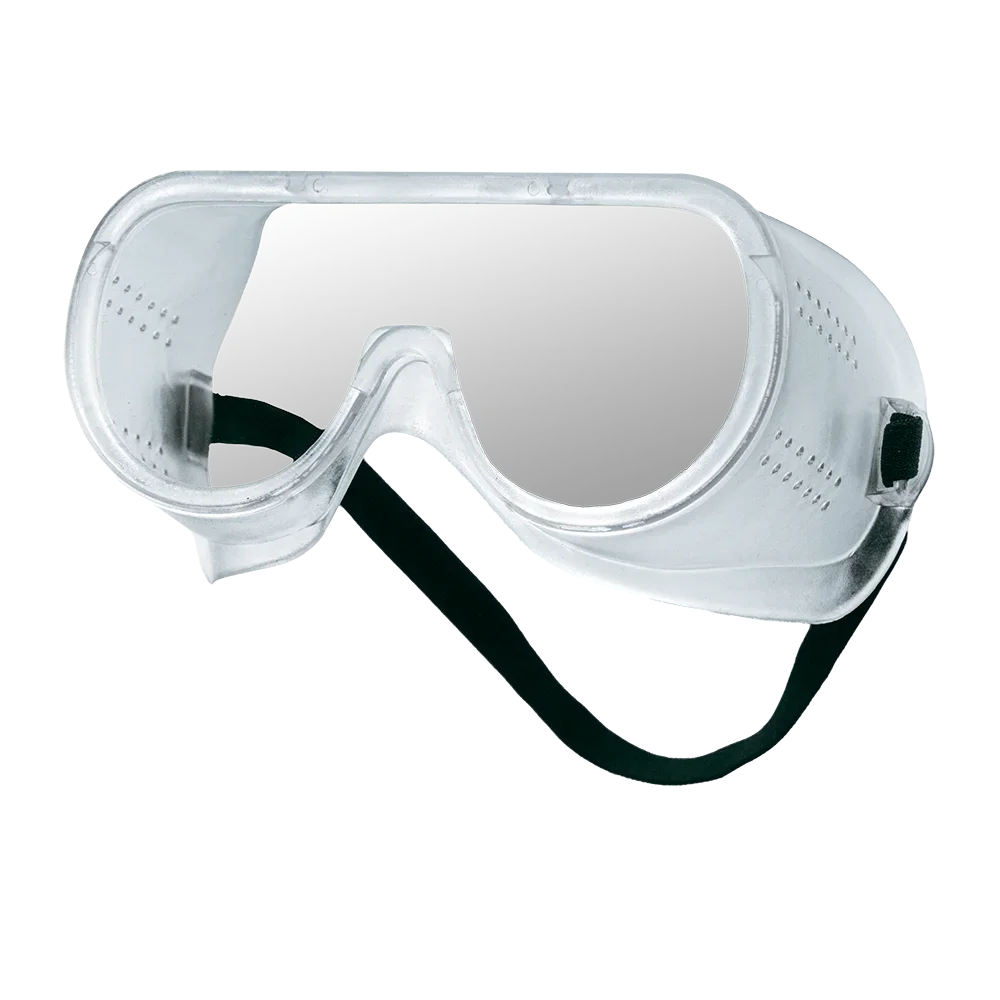
Goggles – maximum all-round protection
Goggles fully enclose the eye and therefore provide significantly greater protection.
Typical features:
- All-round seal through flexible sealing edges
- Protection against liquids, splashes and fine particles
- Often with indirect ventilation to reduce fogging
Areas of use:
Laboratory, chemicals, cleaning, medical settings, handling hazardous substances
Goggles are the right choice where comprehensive protection against liquids or gases is required.
Over-spectacles – eye protection for spectacle wearers
For people who already wear prescription spectacles, special over-spectacles are the most practical solution.
Typical features:
- Generous internal space for standard prescription spectacles
- Adjustable temples for a secure fit
- Combination of comfort and protective function
Areas of use:
All industries in which employees wear corrective eyewear
This category is particularly important because conventional safety eyewear often does not fit over ordinary spectacles, which would otherwise limit effective occupational protection.
Face protection as an additional measure
In addition to traditional safety eyewear, a face shield can also be used. This protects not only the eyes, but the entire face against splashes and particles.
The AMPri range includes, for example, face shields with a transparent visor, which can be used in addition to safety eyewear and provide an extended protective area.
Comparison of safety eyewear types
| Type | Protective function | Wearing comfort | Suitable for spectacle wearers | Typical application |
|---|---|---|---|---|
| Safety spectacles | Protection against particles | ★★★★★ | limited | Industry, trades |
| Goggles | All-round protection against liquids | ★★★☆☆ | limited | Laboratory, chemicals, cleaning |
| Over-spectacles | Particle and basic protection | ★★★★☆ | ★★★★★ | Universal, for prescription spectacles |
| Face shield | Additional face protection | ★★★★☆ | ★★★★★ | Medical settings, cleaning, industry |
Conclusion
Choosing the right safety eyewear always depends on the specific hazard. While safety spectacles are sufficient for many standard applications, goggles or additional protective solutions are required for higher-risk situations – such as in laboratories or where liquids are involved.
Eye protection in different areas of use
Requirements for eye protection vary considerably depending on the industry and activity. While basic protection against dust may be sufficient in some areas, other environments require closely fitting protective systems or combined solutions. Careful selection is therefore crucial for safety, comfort and compliance with standards.
Industry and trades
In industrial and trade environments, the primary focus is on mechanical hazards. These include flying shavings, splinters, sparks or dust particles.
Typical requirements:
- High impact resistance of the lenses
- Side protection against particles
- Low weight for extended wear
Safety spectacles are predominantly used here. Where there is heavy dust exposure or additional risks, a combination with goggles may also be advisable.
Laboratory and medical settings
In laboratories and medical environments, liquids, chemicals and biological risks play a central role. Even the smallest splashes can be dangerous.
Typical requirements:
- Tightly sealing eye protection
- Resistance to chemicals
- Low-fog visibility (e.g. through ventilation systems)
In these areas, goggles are the preferred choice, often in combination with other PPE such as masks or face protection.
Cleaning and hygiene
Cleaning work carries an increased risk from splashes of cleaning and disinfecting agents. These can irritate the eyes or cause permanent damage.
Typical requirements:
- Protection against liquid splashes
- Good cleanability of the eyewear
- Secure fit even during movement
Here, goggles or face shields are particularly suitable. Additional products such as face shields offer extra protection for the whole face, as also available within the AMPri range.
Food industry
In food processing, eye protection primarily serves to protect against contamination – both for the wearer and for the product.
Typical requirements:
- Hygienic materials
- Easy cleaning or disposability
- Combination with other protective clothing
Here, lightweight safety spectacles or over-spectacles are often used, depending on the working environment.
UV protection and specialised applications
In certain areas – for example outdoor work or work involving special light sources – additional UV eye protection is required.
Typical requirements:
- UV-filtering lenses
- Glare and light protection
- Combination with mechanical protection
It is important to note that UV protection is an additional feature, but does not replace conventional occupational protection provided by certified safety eyewear.
Display screen work (“PC eye protection”)
The term “PC eye protection” is often used in connection with blue light filter glasses. However, these primarily serve visual comfort and help reduce fatigue.
Classification:
- Not a classic component of PPE
- No protective effect in the occupational safety sense
- An additional measure for ergonomic working
For occupational safety, certified safety eyewear in accordance with applicable standards therefore remains decisive.
Conclusion: the area of use determines the choice
The right choice of eye protection always depends on the specific area of use. While safety spectacles are often sufficient in industry, more comprehensive protective solutions are required in sensitive areas such as laboratories or cleaning work.
A holistic approach – in other words, combining eye protection with other PPE – further increases safety and reflects modern requirements for occupational safety and hygiene.
Which standards and certifications apply to eye protection?
When it comes to eye protection, it is not only about comfort or fit, but above all about tested safety. Safety eyewear forms part of personal protective equipment (PPE) and must therefore comply with certain standards and legal requirements. These ensure that the products provide reliable protection when it matters most.
PPE Regulation and CE marking
The basis for eye protection in Europe is the PPE Regulation (EU) 2016/425. It governs the requirements that personal protective equipment must meet before it can be placed on the market.
Key points:
- Safety eyewear must carry CE marking
- It is classified into PPE categories depending on the level of risk
- Manufacturers must provide evidence of conformity and testing
CE marking shows that the product complies with European safety requirements and has been tested accordingly.
Key standards for safety eyewear
The following standards are particularly relevant for eye protection:
| Standard | Meaning |
|---|---|
| EN ISO 16321 | New core series of standards for eye protection, gradually replacing the former EN 166 |
| EN 170 | UV protection filters for safety eyewear |
| EN 172 | Sun glare filters for occupational use |
Put simply:
These standards define how resistant a type of safety eyewear is, what protective function it offers and for which areas of use it is suitable.
Understanding markings on safety eyewear
Safety eyewear is usually marked directly on the lens or frame. These markings provide important information about the level of protection.
Typical markings:
- Mechanical strength (e.g. protection against impact or particles)
- Optical class (quality of vision, important for extended wear)
- Filter levels (e.g. UV or sun protection)
For users, this means that the marking allows them to identify quickly whether a pair of safety glasses is suitable for the intended application.
DGUV and company-specific requirements
Alongside European standards, the requirements of the DGUV (German Social Accident Insurance) also play an important role in Germany.
These include:
- Rules on selecting suitable PPE
- Requirements for use and instruction
- Requirements for risk assessments
Based on these requirements, companies are obliged to assess which eye protection is necessary and to provide it.
Quality and traceability
A professional supplier provides comprehensive documentation for its products, such as:
- Declarations of conformity
- Technical data sheets
- Test reports from independent laboratories
AMPri also places great emphasis on tested quality and traceable standards – including certifications and transparent documentation throughout the entire supply chain.
Conclusion
Standards and certifications are not merely bureaucratic add-ons, but the basis for safe eye protection. They help users compare products objectively and ensure that they function reliably in day-to-day work.
Safety eyewear for spectacle wearers – what should you look out for?
For spectacle wearers, eye protection presents a particular challenge. Conventional safety eyewear is generally not designed to be worn over prescription spectacles. This can be uncomfortable and may also impair the protective function. For this reason, there are special solutions that combine safety with visual comfort.
Why standard safety eyewear is often not enough
Standard safety spectacles quickly reach their limits for spectacle wearers:
- Too little space for the prescription spectacles worn underneath
- Pressure points around the temples and nose area
- Reduced stability and poorer fit
- Restricted field of vision
This can lead to the safety eyewear not being worn correctly – meaning it cannot fully perform its function.
Over-spectacles as a practical solution
The most common and cost-effective solution is so-called over-spectacles. These are simply worn over the wearer’s own prescription spectacles and are specially designed for that purpose.
Typical features:
- Generous internal space for various spectacle shapes
- Extended or adjustable temples
- Side protection for additional safety
- Quick to put on and take off
Over-spectacles are ideal for workplaces where eye protection must be worn regularly, but not continuously.
Alternative: prescription safety eyewear
For areas of work where eye protection is required on a permanent basis, individually fitted prescription safety eyewear may be worthwhile.
Advantages:
- Optimum wearing comfort over long periods
- No slipping caused by double spectacle arms
- Full field of vision without restrictions
This solution is particularly useful in areas where precise work and continuous wear are required.
Important selection criteria
Several factors should be taken into account when selecting safety eyewear for spectacle wearers:
| Criterion | Practical significance |
|---|---|
| Fit | Sufficient space for the wearer’s own spectacles |
| Wearing comfort | No pressure on the nose or ears |
| Field of vision | As unrestricted an all-round view as possible |
| Compatibility | Combination with other PPE (e.g. masks) |
| Anti-fog protection | Important during prolonged use or physical work |
Especially when used together with masks or respiratory protection, this can otherwise quickly lead to fogged lenses – a frequently underestimated issue in everyday work.
Combination with other PPE
In many areas, eye protection is not worn in isolation. In medical or hygiene-related environments in particular, it is combined with:
- Masks or respiratory protective masks
- Face shields
- Protective clothing
This holistic approach is clearly reflected in the AMPri range, where various PPE components are coordinated with one another and can be used together.
Conclusion
For spectacle wearers, choosing the right safety eyewear is crucial for safety and acceptance in day-to-day work. Over-spectacles offer a flexible solution, while individually fitted safety eyewear provides maximum comfort.
How to choose the right eye protection
Choosing the right safety eyewear should always be based on the specific working conditions. A one-size-fits-all approach does not work for eye protection, as hazards, wearing requirements and duration of use can vary considerably. A structured approach helps to combine safety and comfort in the best possible way.
1. Assess the hazard correctly
The most important step is the risk assessment. This involves analysing the risks to which the eyes are exposed.
Typical questions:
- Is there a risk from particles or mechanical impacts?
- Can liquids or chemicals get into the eye?
- Are there dust, vapours or biological risks?
- Is additional UV or light protection required?
The answers determine whether simple safety spectacles are sufficient or whether goggles are required.
2. Select the appropriate design
Based on the hazard, the appropriate type of safety eyewear is selected:
| Hazard | Recommended protective solution |
|---|---|
| Dust, shavings, light particles | Safety spectacles |
| Chemicals, liquids | Goggles |
| Combination of different risks | Goggles + face protection |
| Spectacle wearers | Over-spectacles or prescription safety eyewear |
The right design ensures that the protection is not only available in theory, but also works reliably in everyday practice.
3. Take wearing comfort into account
Even the best safety eyewear will not be used effectively if it is uncomfortable. Especially during longer periods of use, ergonomic factors play a major role:
- Low weight
- Soft nose pads
- Flexible temples or headband
- Good ventilation to reduce fogging
A high level of wearing comfort increases user acceptance and therefore actual safety.
4. Check compatibility with other PPE
Eye protection is often worn together with other protective equipment. Compatibility is therefore important with:
- Masks or respiratory protective masks
- Face shields
- Head protection or hoods
Unsuitable combinations can lead to problems such as pressure points or fogged lenses. A coordinated overall system is crucial here – an approach that is also followed in the AMPri range.
5. Pay attention to standards and quality
Make sure that the safety eyewear:
- carries CE marking
- complies with the relevant EN standards
- has been tested for the intended area of use
Only then can it be ensured that the eye protection will meet the demands of everyday work.
6. Practical aspects in everyday use
In addition to protective function and comfort, practical factors also play a role:
- Easy cleaning where used frequently
- Scratch-resistant or anti-fog coating
- Availability and ability to reorder
- Cost-effectiveness where consumption is high
Especially in professional environments, it is important that products are reliably available and efficient to use.
Conclusion
Choosing the right eye protection is always based on a combination of hazard, area of use and wearing comfort. Anyone who takes these factors into account ensures that the safety eyewear not only complies with standards, but is also worn consistently in everyday work.
Product recommendations and range overview
The range of safety eyewear is broad – the key is to choose the right solution for the relevant area of use. In the field of personal protective equipment (PPE), AMPri offers a broad range that can be combined flexibly. Even though traditional safety eyewear may vary depending on the product range, typical product solutions can still be clearly categorised.
Safety eyewear for standard applications
For many working environments with low to medium risk, lightweight safety spectacles are the first choice. They provide reliable protection against particles while remaining comfortable to wear.
Typical features:
- Lightweight and ergonomic
- Good visibility thanks to clear lenses
- Ideal for longer periods of wear
Suitable for:
Industry, warehousing, trades, food environments
Goggles for enhanced protection
Where comprehensive protection against liquids or fine particles is required, goggles are used.
Typical features:
- All-round sealing
- Protection against splashes and chemicals
- Often with anti-fog function
Suitable for:
Laboratory, cleaning, medical settings, handling hazardous substances
Eye protection for spectacle wearers
For spectacle wearers, over-spectacles are a particularly practical solution. They can be worn easily over the wearer’s own prescription eyewear.
Typical features:
- Generous fit
- Good compatibility with other PPE
- Flexible in use
Suitable for:
All industries with changing requirements
Additional face protection
In higher-risk areas, a combination of safety eyewear and face protection is recommended. Face shields provide additional protection for the eyes, face and skin.
Example from the AMPri range:
SolidSafety face shield with transparent visor
- Art. No.: 02990
- Replaceable visor for extended use
- Suitable for disinfectants
- Autoclavable up to 134 °C
https://ampri.de/02990
This product is ideal as an addition to safety eyewear, especially for work involving splashes or infectious materials.
Combinations for different industries
| Industry | Recommended combination |
|---|---|
| Industry & trades | Safety spectacles or over-spectacles |
| Laboratory & medical settings | Goggles + face shield |
| Cleaning | Goggles or face shield |
| Food industry | Lightweight safety spectacles |
Holistic occupational safety
Eye protection is only one part of a comprehensive protection concept. In many areas, it is combined with other PPE, such as:
- Masks or respiratory protection
- Protective clothing such as gowns or aprons
- Face protection solutions
AMPri takes a holistic approach, with coordinated products for hygiene and occupational safety.
Conclusion
The right product choice always depends on the area of use. While simple safety eyewear is sufficient for many applications, additional solutions such as goggles or face shields should be used where the risk is higher.
FAQ on eye protection
When is eye protection mandatory?
Eye protection is mandatory whenever a risk to the eyes cannot be ruled out. The basis for this is the workplace risk assessment as well as the requirements of the PPE Regulation and the DGUV.
Which type of safety eyewear is right for my area of use?
That depends on the type of hazard. For dust or shavings, safety spectacles are often sufficient. For liquids, chemicals or splashes, goggles should be used. In many cases, a combination is also advisable.
What is the difference between safety spectacles and goggles?
Safety spectacles provide protection against mechanical risks such as particles and are particularly comfortable to wear. Goggles fully enclose the eye and also protect against liquids and fine aerosols.
Is there special safety eyewear for spectacle wearers?
Yes, so-called over-spectacles are worn over standard prescription spectacles. Alternatively, there is individually fitted prescription safety eyewear for permanent applications.
Do safety glasses fog up quickly?
That can happen, particularly during physical work or when used together with masks. However, many modern types of safety eyewear are equipped with anti-fog coatings or ventilation systems that reduce this significantly.
Are safety glasses also suitable for UV protection?
Some models offer additional UV protection. However, it is important that they still meet occupational safety requirements and are certified accordingly.
What does CE marking mean on safety eyewear?
CE marking shows that the safety eyewear complies with European requirements and has been tested. It is a prerequisite for the product to be used as personal protective equipment.
How long can safety eyewear be used?
That depends on the material, use and care. Damaged or heavily scratched eyewear should be replaced, as it may impair both visibility and protective function.
Can safety eyewear be cleaned and reused?
Yes, many types of safety eyewear are designed for repeated use and can be cleaned or disinfected. The manufacturer’s instructions should be followed in order to avoid material damage.
Is a face shield a substitute for safety eyewear?
No, a face shield supplements eye protection, but generally does not replace it completely. For comprehensive protection, a combination of safety eyewear and face shield is often recommended.
What role does eye protection play in hygiene and infection control?
In medical and hygiene-related settings, eye protection protects against infectious liquids and droplets. It is therefore an important part of a holistic protection concept.
How do I find the right safety eyewear for my company?
Selection should always be based on the risk assessment. In addition, wearing comfort, standards, compatibility with other PPE and cost-effectiveness all play an important role.