















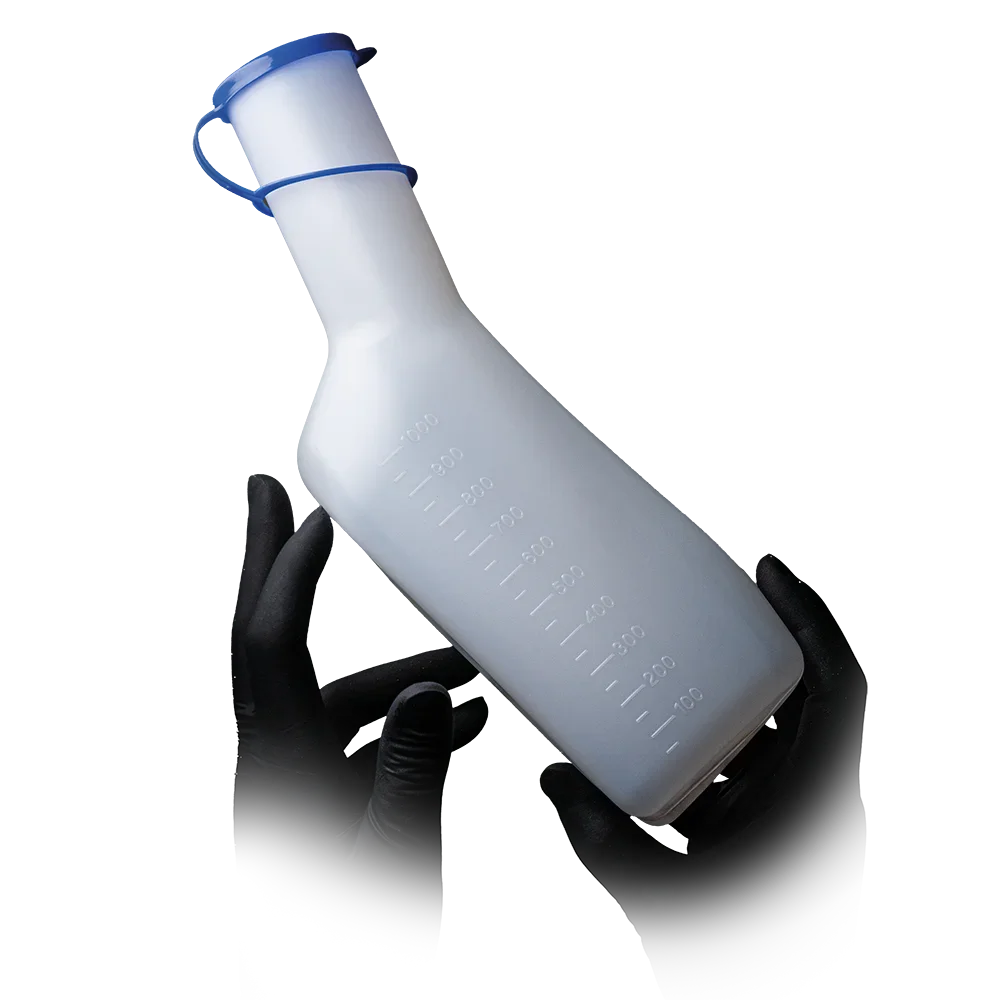
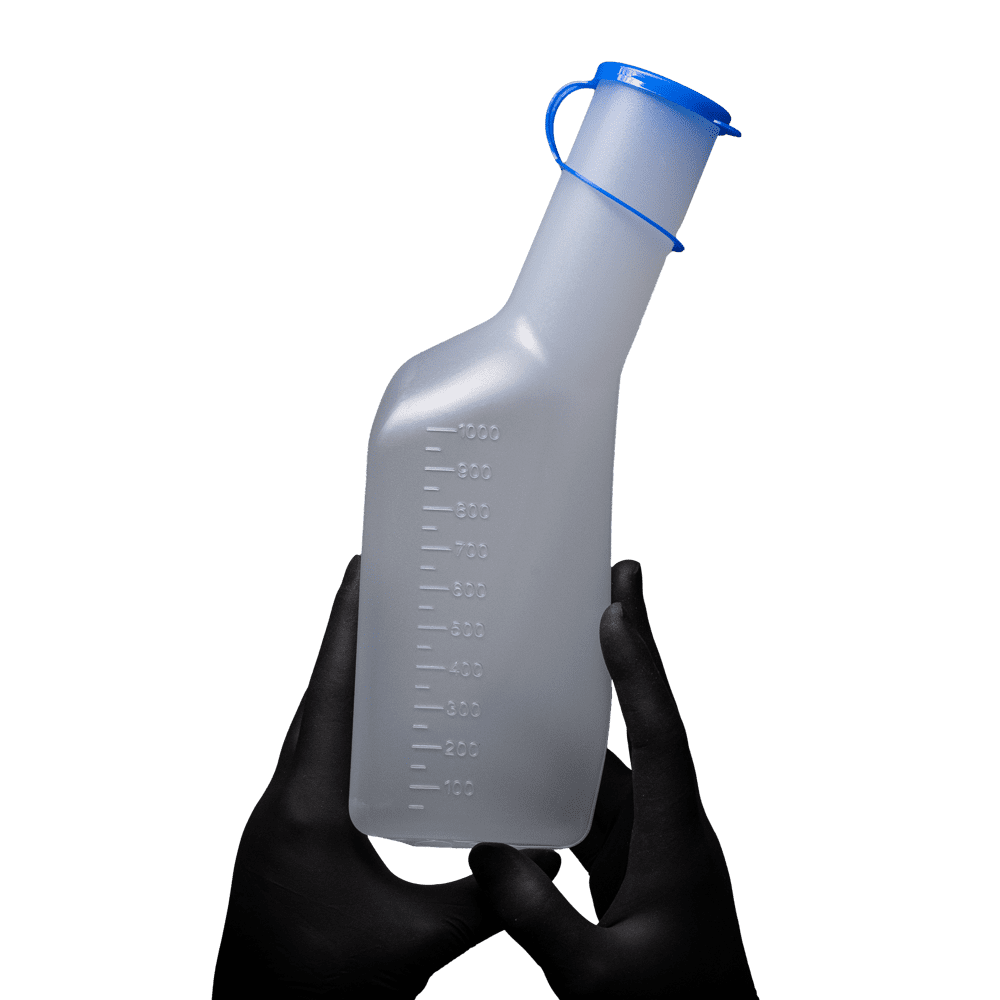

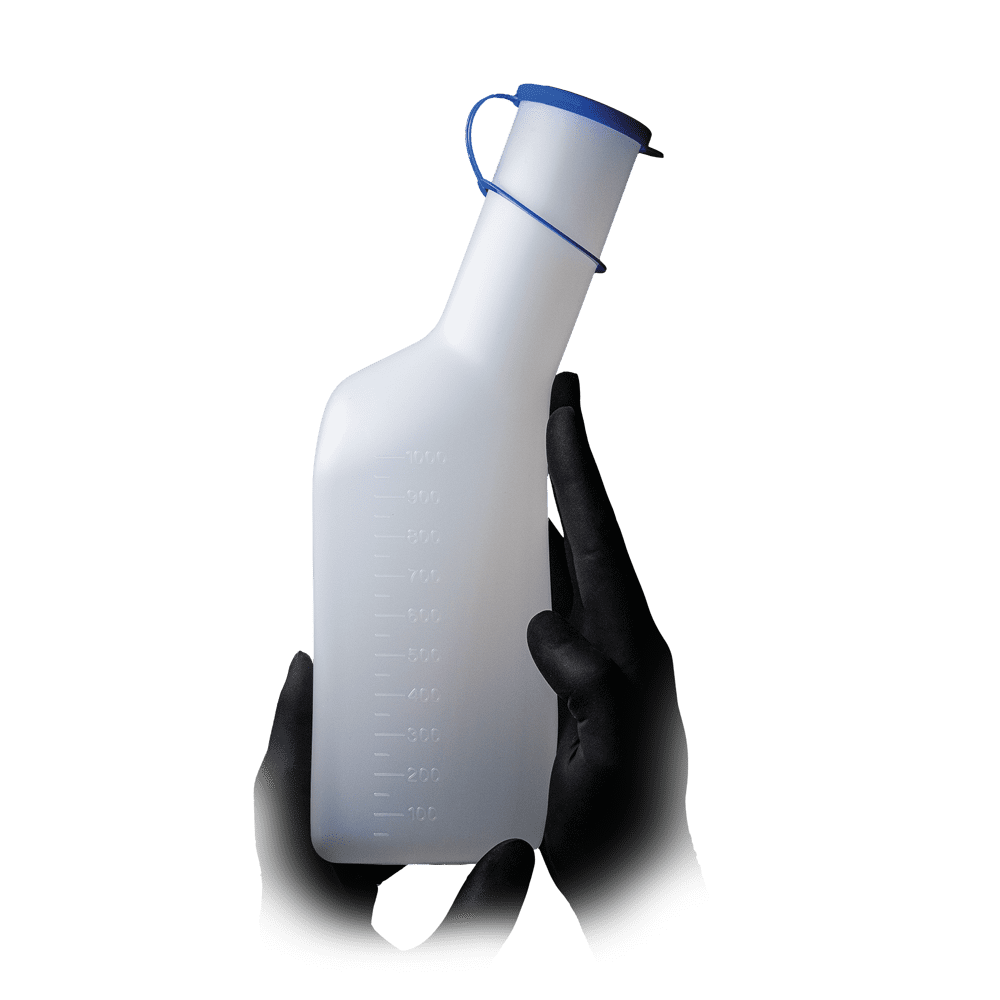


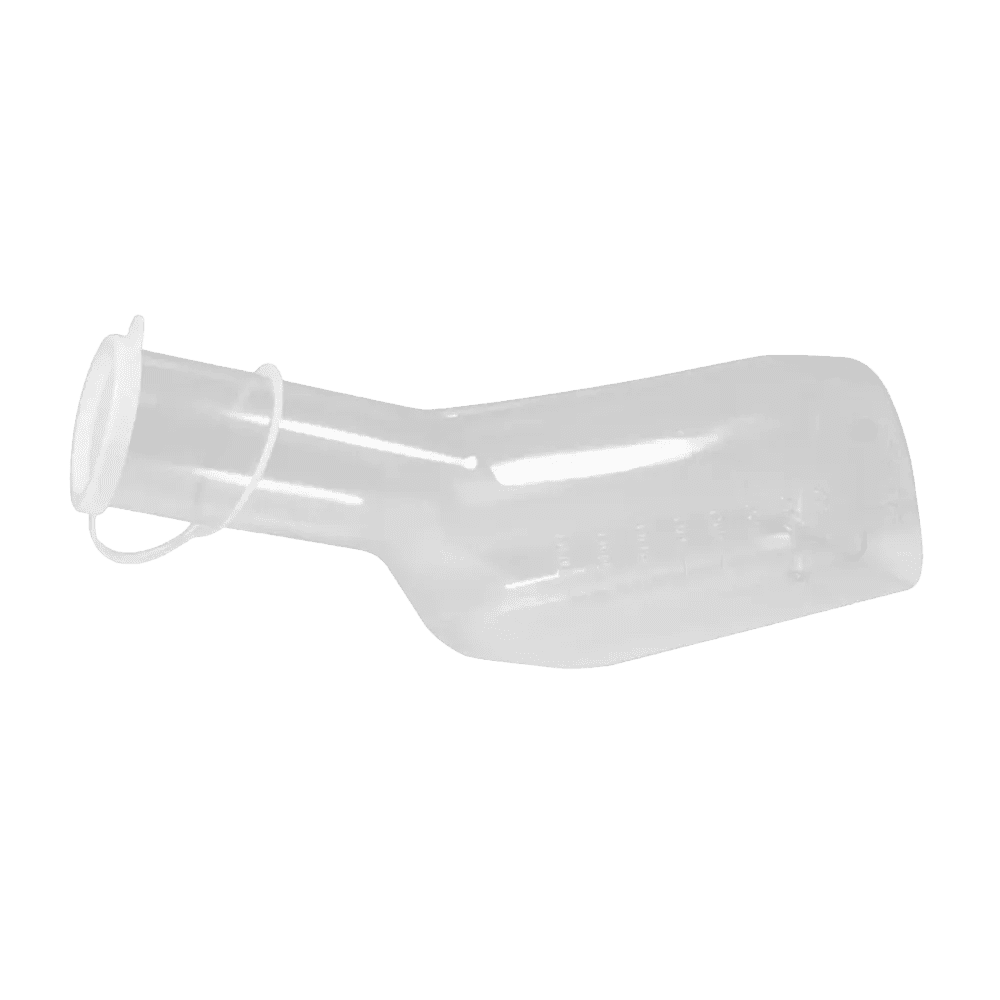

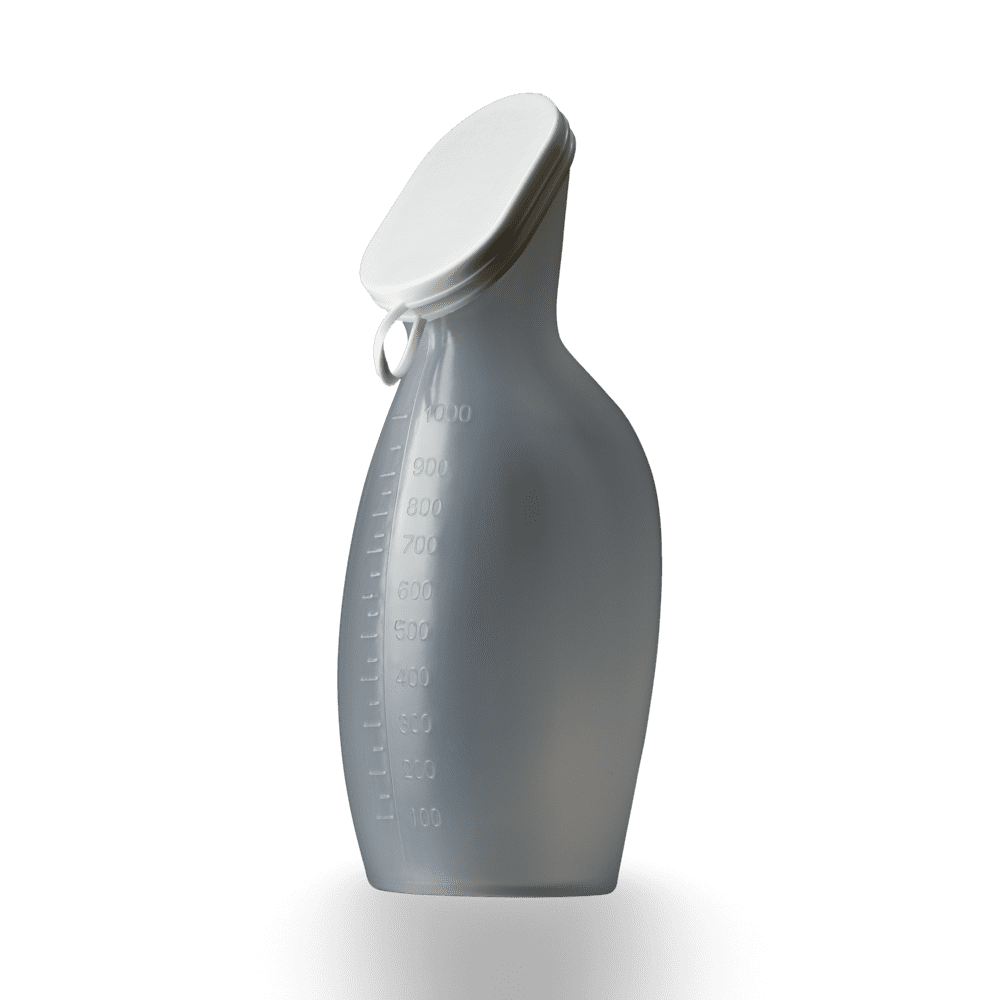
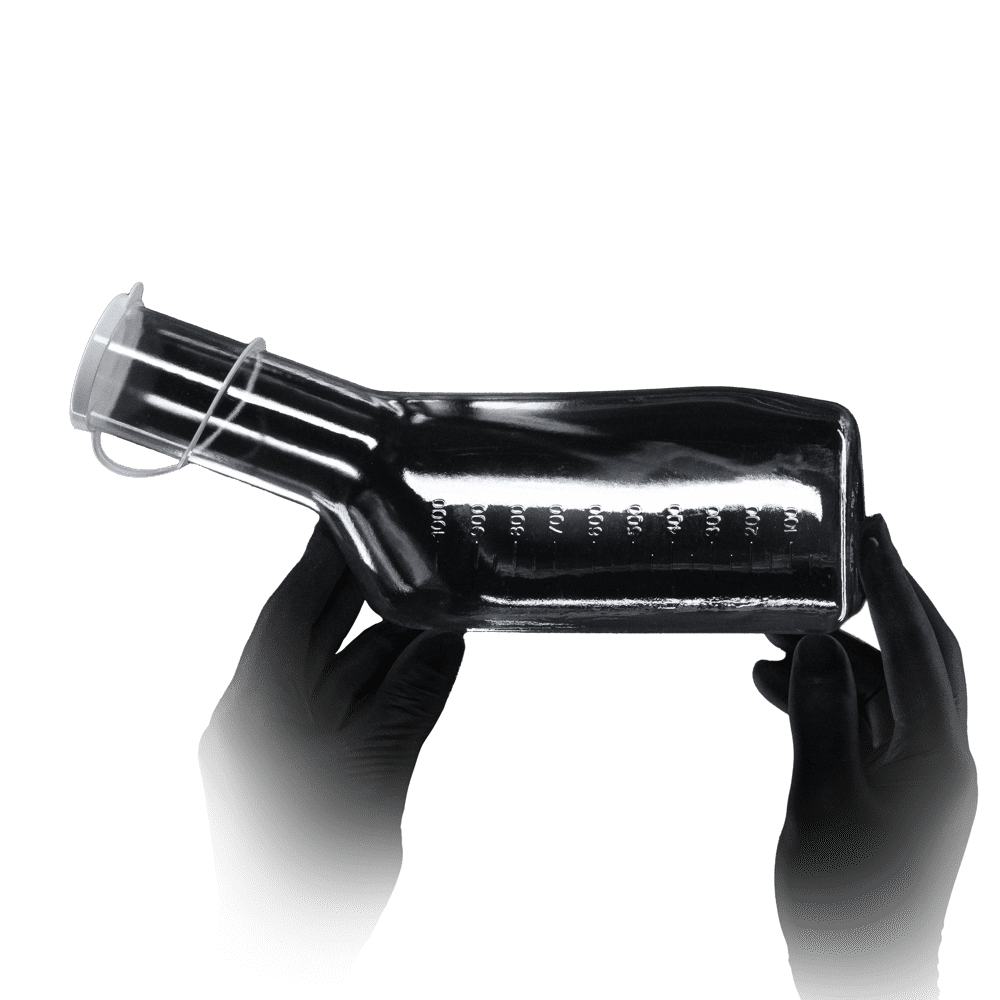


A urine bottle – in everyday nursing also colloquially called a pee bottle, urinal or male bottle – is a reusable nursing aid for discreetly collecting urine directly at the bedside, in a wheelchair or while on the move. It is used in hospitals, rehabilitation, outpatient care and the home environment whenever patients are unable to reach the toilet on their own. AMPri supplies urine bottles as professional ward supplies made of PP, PE, PVC and PC – gender-specific for men and women, autoclavable up to 130 °C (09281/PP, 09283/PC) or up to 90 °C (09282/PE), and with volume discounts for the medical trade. All models are available immediately; wholesale buyers benefit from tiered prices and transparent delivery times.
Table of contents
- What is a urine bottle? Definition, synonyms and differentiation
- Materials compared – PP, PE, PC and PVC
- Gender-specific variants – for men and women
- Areas of use – hospital, rehab, care, home, urine volume measurement
- Mobile use – on the move, patient transport, drivers, camping
- Application – how is a urine bottle used correctly?
- Hygiene, cleaning and reprocessing
- Accessories – holders, lids, cleaning brushes, sets
- Prescription and reimbursement
- Suitability by sector compared
- Procurement – B2B wholesale vs. pharmacy, medical supply store, Amazon
- Sources and further information
- Urine bottle FAQ
1. What is a urine bottle? Definition, synonyms and differentiation
A urine bottle is a cylindrical or oval collection vessel with a push-on or click lid, used in professional care to discreetly and hygienically collect urine at the bedside. Colloquially – above all in everyday nursing and in patient communication – the terms pee bottle, urinal, urine flask or simply male bottle are used in parallel; they always refer to the same reusable nursing aid for ward supplies. The term portable pee bottle denotes the mobile special variant, which we examine in detail in Section 5.
The urine bottle should be distinguished from closely related ward-supply aids: the bedpan is used to collect stool and urine while lying on the back, while the urine bag remains fixed to the patient and is filled via a catheter. The urine bottle, by contrast, is a free-standing, removable vessel – with or without graduation – that can be hooked into a ➡️ urine bottle holder on the bed frame. Anyone who confuses the terms risks incorrect orders in ward-supply wholesale; a clear vocabulary saves time and money.
The designs range from angular (typical for men's urine bottles with a long neck) to oval/curved (typical for women's models with an anatomically shaped opening). Volumes are usually between 750 ml and 1,000 ml; AMPri models offer a standard capacity of 1 litre, sufficient for a complete bladder emptying. Anyone wishing to buy urine bottles should clarify in advance: which genders are being supplied? Will the bottles be disinfected or autoclaved? Should a scale capture the 24-hour urine volume? These three questions determine the material choice and thus the price.
In a B2B context, urine bottles are often referred to as reusable products with a defined service life. They are not a single-use item – unlike, for example, bedpan pulp liners – but are reprocessed after each use and reused. Availability is therefore less a question of consumption than of inventory: AMPri keeps five- to six-figure quantities of all standard variants in stock at its Winsen (Luhe) warehouse, so that hospitals and care homes can order reliably even when demand rises at short notice.
2. Materials compared – PP, PE, PC and PVC
The material of a urine bottle determines weight, breaking strength, sterilisability and service life. AMPri offers four plastic variants; each material group covers a different usage profile. Polypropylene (PP) is the all-rounder: lightweight, autoclavable at 130 °C, chemically resistant to most VAH-listed surface disinfectants [1]. Polyethylene (PE) is more economical, somewhat softer and suitable for facilities where lower reprocessing temperatures (90 °C) are sufficient. Polycarbonate (PC) offers crystal-clear transparency – ideal for urine volume measurement at the bedside – with full autoclavability. Polyvinyl chloride (PVC) is heat-resistant up to 60 °C and is used above all in outpatient care.
| Material | Autoclavable | Weight | Transparency | Typical application |
|---|---|---|---|---|
| PP (polypropylene) | up to 130 °C | light | milky | hospital standard, men + women |
| PE (polyethylene) | up to 90 °C | light | milky | care home, outpatient care |
| PC (polycarbonate) | up to 130 °C | medium | crystal-clear | urine volume measurement |
| PVC (polyvinyl chloride) | up to 60 °C | light | crystal-clear | home care, patient transport |
The material choice directly influences the hygiene strategy: PP and PC models tolerate thermal disinfection in the bedpan washer (RKI-compliant, programme A1 per DIN EN ISO 15883) [4]; PE and PVC models are thermally reprocessed at a lower temperature. For wholesale, this means: PP variants are more durable and, in a total cost of ownership comparison, less expensive than repeatedly re-procured PE models despite their higher unit price. Anyone needing a full material comparison for procurement planning can directly compare our models ➡️ PP urine bottle for men (09281) and ➡️ PC urine bottle, transparent (09283).
3. Gender-specific variants – for men and women
Urine bottles are manufactured in gender-specific designs: the men's urine bottle has an elongated, angled neck with an oval opening – ergonomically designed for use while standing or lying down. The women's urine bottle has a wide, anatomically shaped opening with a bevelled edge that allows a tight fit against the body even when lying on the back. Both designs do not differ in capacity, but in the anatomy of the opening and the shape of the body.
The AMPri range for ➡️ urine bottles for men includes the PP variant 09281 (1 litre, milky, blue lid), the PE variant 09282 (weight-optimised for outpatient care) and the transparent PC variant 09283 for volume measurement. For women, we supply the 1-litre model ➡️ PP urine bottle for women 09271-F with an anatomically angled neck and a white PE lid. All models are available immediately and packed in bundles of 25 or cartons of 50.
Ward and care-service managers should consider both genders when planning their range – as a rule of thumb, a ratio of roughly 60% men's to 40% women's urine bottles applies, depending on the facility's patient profile. Geriatric facilities and women's clinics deviate from this upwards or downwards. For B2B wholesale discounts, a mixed order of both variants is recommended – AMPri calculates volume tiers based on the combined purchase of men's and women's urine bottles, so that the unit price falls significantly from 250 units upwards.
The women's urine bottle combines well with a ➡️ plastic bedpan and thus covers the entire spectrum of bed care. Anyone wishing to order both aids can contact the medical trade or AMPri directly as a wholesaler – the combination is frequently supplied as a package.
4. Areas of use – hospital, rehab, care, home, urine volume measurement
A urine bottle is one of the few nursing aids that covers almost every level of care – from the acute hospital to home nursing. In the hospital sector it is part of the basic equipment of every patient room in ward supplies, complemented by a ➡️ urine bottle holder on the bed frame. In rehabilitation facilities it supports patients during the mobilisation phase, when the way to the toilet is still too unsafe. Care facilities use urine bottles above all in night-time care to minimise the risk of falls.
In the home environment, urine bottles are used by chronically ill people, post-operative patients and after stroke rehabilitation. Home care services carry them as standard in their care kit because they are discreet, lightweight and quick to reprocess. Procurement takes place either via medical supply stores on prescription (see Section 9, Prescription and reimbursement) or through open sale in the medical trade – AMPri supplies pharmacies, medical supply stores and care services directly.
For volume measurement at the bedside, the transparent PC variant 09283 with graduation is used, because it allows direct visual control of the fill level without decanting. A clearly legible scale makes it easier to gain a quick overview – a point at which cheaper PE models are significantly weaker.
A growing field of application is palliative care: hospices and outpatient palliative services prefer urine bottles because of their discretion and easy handling. In this indication, the transparent men's variant is frequently ordered combined with a ➡️ urine bag holder, if a permanent catheter is also in use. As a medical trade supplier, AMPri offers both product groups from a single source – an advantage for purchasing departments that want to consolidate suppliers.
5. Mobile use – on the move, patient transport, drivers, camping
The mobile urine bottle – in the consumer and outdoor context frequently searched for colloquially as a portable pee bottle, urine bottle for drivers or camping urine bottle – is a relatively new usage variant that goes well beyond the classic hospital application. It is used on long car journeys, in patient transport, when hiking, boating or during outdoor activities where a toilet is not accessible. The mobile urine bottle is also an established aid for lorry drivers, police operations and military outposts.
The key requirements for mobile urine bottles differ from hospital use: they must be leak-proof and sealable, have a small pack size and ideally be odour-tight. For mobile applications, AMPri recommends the transparent PC variant ➡️ 09283 urine bottle, transparent with a white click lid – it is break-resistant, angular (easy to stow in the car) and offers visual control of the fill level.
In patient transport between hospital and rehabilitation facility, the urine bottle is a standardised piece of equipment – usually the PP variant 09281 for men, combined with a tight sealing cap. Emergency and patient transport services typically order from wholesale via ward-supply suppliers; AMPri delivers with short lead times directly from the Winsen (Luhe) warehouse. Volume discounts apply from 50 units upwards.
Important for camping and outdoor use: a urine bottle from the professional care sector is not a classic outdoor product, but a robust, autoclavable nursing aid. It is usually less expensive than specialised outdoor pee bottles from sports retailers. The decisive advantage: professional quality and availability at volume discount – not only as a single item, but directly as a bundle of 25 in wholesale from the medical trade.
6. Application – how is a urine bottle used correctly?
The correct application of a urine bottle is decisive for hygiene, comfort and patient safety. Care staff and relatives should observe four steps: preparation, placement, emptying and reprocessing. During preparation, the urine bottle is checked for cleanliness, integrity and correct reprocessing. Single-use gloves according to DIN EN 374 [5] are put on, the lid is opened and the bottle is held ready.
When placing the men's urine bottle, the penis is carefully inserted into the neck of the bottle so that a tight seal is formed. For patients with limited mobility, this is done in a lateral or half-sitting position. The women's urine bottle is placed firmly against the perineum with its wide opening – ideally in a slight lateral position with the legs bent. Important: the carer should always ensure discretion and provide a visual screen (bed sheet, curtain).
After emptying, the urine bottle is closed, removed from the patient and taken immediately for reprocessing. Spillage must be avoided at all costs – ideally transport takes place in a splash-protection tray or directly in the ➡️ urine bottle holder with lid 09280. Emptying takes place in the bedpan washer or in a sink designated for this purpose – never in the normal patient washbasin.
Common application errors that the medical trade regularly reports back: placing the bottle too late (risk of incontinence), a leaking seal (risk of splashing), failure to visually check the fill level (overflow on standard 1-litre models from about 800 ml). A brief training of the care staff considerably reduces these errors.
7. Hygiene, cleaning and reprocessing
The reprocessing of a urine bottle is a critical hygiene step and, in hospitals, is subject to the recommendations of the Commission for Hospital Hygiene and Infection Prevention (KRINKO) at the Robert Koch Institute [4]. The standard is thermal reprocessing in the bedpan washer (washer-disinfector, WD-P per DIN EN ISO 15883-3).
In everyday hospital practice, thermal reprocessing dominates: after use, the urine bottle is emptied, placed into the bedpan washer and a standard programme (A0 value ≥ 600, usually 85 °C for 1 minute) is started. PP, PE and PC models tolerate this load without problems. PVC urine bottles, on the other hand, can only be reprocessed up to 60 °C and are thermally reprocessed at a reduced programme temperature. The material label on the base of the bottle always clearly indicates the maximum reprocessing temperature.
Mechanical pre-cleaning with the ➡️ urine bottle brush 09289 is mandatory in order to remove biofilms. Thermal reprocessing in the bedpan washer remains the standard route for AMPri urine bottles.
Full sterilisation per DIN EN ISO 17665-1 [6] is not required in routine operation – urine bottles are considered non-critical nursing aids, as they only come into contact with intact skin or external mucous membranes.
8. Accessories – holders, lids, cleaning brushes, sets
The accessories for the urine bottle play a decisive role in everyday ward life: a well-functioning holder on the bed frame prevents tipping and thus the risk of splashing, the right replacement lid ensures tightness, and the correct cleaning brush keeps biofilms in check. AMPri bundles all accessories in the ➡️ urine bottle accessories category – available immediately and at a volume discount for wholesale customers.
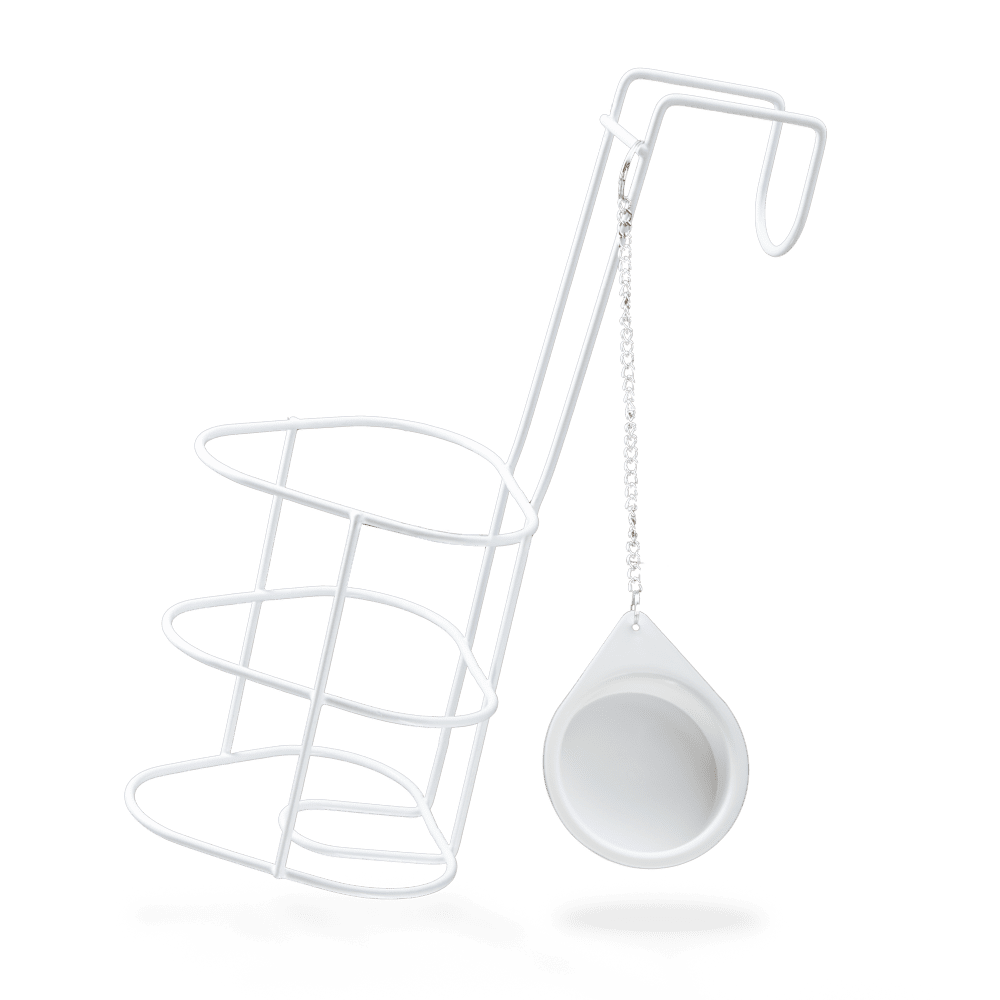
The central accessory component is the urine bottle holder: a PVC-coated metal frame that securely fixes the angular urine bottle to the bed or the patient transport frame. AMPri offers two variants: ➡️ urine bottle holder with lid (09280) for maximum hygiene with a firmly attached chain lid, and ➡️ urine bottle holder without lid (09280-ODK) for quick routine use in the hospital sector. Both fit all angular 1-litre plastic urine bottles.
The replacement lid is an often underestimated consumable: lids lose their tightness over time through material fatigue or are simply lost. The ➡️ PP lid for urine bottles, blue (09284-B) fits all AMPri standard bottles with a 62 mm ring diameter. Anyone reordering regularly should order lids in packs of 100 – this significantly reduces the unit price and secures availability for at least one quarter.
The ➡️ urine bottle brush 09289 made of polypropylene (37 cm total length, 55 mm brush diameter) is heat-resistant and autoclavable – important for mechanical pre-cleaning before machine reprocessing. In addition, AMPri offers holders for urine bags: the ➡️ urine bag holder 09287 and the ➡️ PP urine bag holder 09288. Both belong to the extended ➡️ ward supplies range and are frequently ordered by care wards together with urine bottles.
9. Prescription and reimbursement
In Germany, the urine bottle can, under certain conditions, be prescribed as an aid on prescription. The prerequisite is a medical prescription; the exact reimbursement arrangements are governed by the respective health insurer. We do not maintain a statutory health insurance (GKV) aid number for the AMPri urine bottles — private customers clarify reimbursement directly with their insurer or medical supply store.
In practice, the urine bottle is prescribed by general practitioners or specialists (urology, geriatrics) when there is a nursing indication: permanent mobility restriction, post-operative recovery. The prescription typically covers several units (care rotation) and is supplied by the medical supply store or the pharmacy. Reimbursement by the statutory health insurer takes place after approval – the insured person's own contribution is usually between 5 and 10 euros per quarter.
For the B2B sector – hospitals, care homes, outpatient services – the reimbursement question is not relevant anyway, since procurement takes place as ward supplies via the medical trade or directly from the wholesaler. Here, volume discounts, availability and the option of autoclavable reprocessing play the central role. AMPri supplies all urine bottles directly from its central warehouse in Winsen – as standard for any professional care purchasing.
A common misconception: the private pee bottle for use on the move (car, camping) is not an aid eligible for insurance cover. Anyone looking for a urine bottle for purely private mobility purposes without a medical indication buys it freely from the medical trade, the pharmacy or directly from wholesale. AMPri delivers, from a commercial order with a valid VAT ID, directly to care services, hospitals and specialist retailers. Do you need a recommendation on where, as a smaller end customer, you can reliably obtain our high-quality products in smaller packaging units? Feel free to call us: +49 (0) 4171 / 84 80-555 – we are happy to help.
10. Suitability by sector compared
The suitability by sector of a urine bottle depends on reprocessing options, patient profile and volume requirements. The following table compares the five most important fields of use and shows which AMPri models we recommend for each sector. All models are available immediately and at a volume discount for wholesale customers.
| Sector | Recommended model | Material | Reprocessing | Typical order quantity |
|---|---|---|---|---|
| Hospital / clinic | 09281 / 09271-F | PP | thermal 130 °C | 500–5,000 units |
| Rehabilitation facility | 09281 / 09282 | PP / PE | thermal 90–130 °C | 100–1,000 units |
| Care home / nursing home | 09282 / 09271-F | PE / PP | thermal (up to 90 °C) | 50–500 units |
| Home care | 09271-M / 09271-F | PVC / PP | manual cleaning | 10–50 units |
| Mobile use | 09283 | PC | manual cleaning | 1–25 units |
In the hospital sector, the PP variant dominates because it is autoclavable at 130 °C and is processed without problems in the bedpan washer. In rehabilitation care, a mixed order of PP and PE is often placed, because different patients require different reprocessing routes. Care homes and nursing homes prefer lightweight PE models for quick routine care, but frequently combine them with PP models for the night-time care of mobile patients.
Home care and mobile use almost always reach for PVC or PC models – PVC because of the low acquisition costs, PC because of the breaking strength and the transparent graduation. AMPri also supports mixed orders of several materials in one delivery – contact us at info@ampri.de if you are planning consolidated procurement for several sites. In ward-supply wholesale, such bundles are the standard way to combine volume discounts and short delivery times.
11. Procurement – B2B wholesale vs. pharmacy, medical supply store, Amazon
Anyone wishing to order a urine bottle in Germany has four main routes: (a) directly from the wholesaler or medical trade (B2B standard), (b) via the medical supply store with prescription billing, (c) via the pharmacy (single item or small quantities) and (d) via online platforms such as Amazon. Each route has its justification – the choice depends on volume requirements, delivery time and the desired service level.
B2B wholesale is the standard route for hospitals, care homes, rehabilitation facilities, outpatient services and patient transport companies. Here AMPri delivers directly from the central warehouse in Winsen (Luhe) – with tiered volume discounts from 50 units upwards and delivery times of 1–3 working days for stock items. The ➡️ complete urine bottle category can be viewed online; customer discounts are displayed automatically after logging in.
The medical supply store supplies private customers with a prescription and handles billing with the statutory health insurer. Advantage: no advance payment for the insured. Disadvantage: waiting time for the insurer's approval (sometimes 1–2 weeks). Pharmacies usually carry only individual standard models; for special requirements an order is placed, which takes a few days. Amazon and other online retailers often deliver urine bottles quickly, but without professional advice – for professional use in a hospital or care home this route is unsuitable.
For AMPri customers from the medical trade the following applies: direct ordering via the online portal or by telephone with B2B sales, immediate availability information, delivery commitments with a binding date. The volume discounts are transparent: an entry discount from 25 units, volume-dependent by agreement from 250 units. For large orders (5,000+ units), a direct enquiry to info@ampri.de is worthwhile – individual terms and express deliveries are frequently possible. The ➡️ ward supplies category bundles all relevant product groups for consolidated hospital procurement.
12. Sources and further information
The following sources are incorporated into the body text and serve as professional substantiation. All external links open in a new tab.
- VAH (Association for Applied Hygiene): VAH disinfectant list. Available online at https://vah-liste.de
- Robert Koch Institute (RKI): KRINKO recommendations on cleaning and disinfection. Available online at https://www.rki.de
- Beuth Verlag: DIN EN 374 – Protective gloves against dangerous chemicals and micro-organisms. Available online at https://www.beuth.de
- Beuth Verlag: DIN EN ISO 17665-1 – Sterilization of medical devices – Moist heat. Available online at https://www.beuth.de
13. Urine bottle FAQ
Answers to the most frequently asked questions about urine bottles can be found in the FAQ plugin below. If your question is not answered, contact us at info@ampri.de – we are happy to help with selection, volume discounts and delivery dates.
- Pink / Purple: Beauty & cosmetics
- Clean Ocean Blue: Dental, medical
- Platinum Grey: Premium practices
- Black: Tattoo, hairdressing, gastronomy
- Green: Sustainable Nature Gloves
The information provided here has been compiled with the greatest care and to the best of our knowledge and has been reviewed by our quality management. Nevertheless, errors or omissions cannot be excluded. Liability for errors in content, omissions or for damage arising from the use of the information or from external links is excluded – to the extent permitted by law.