


















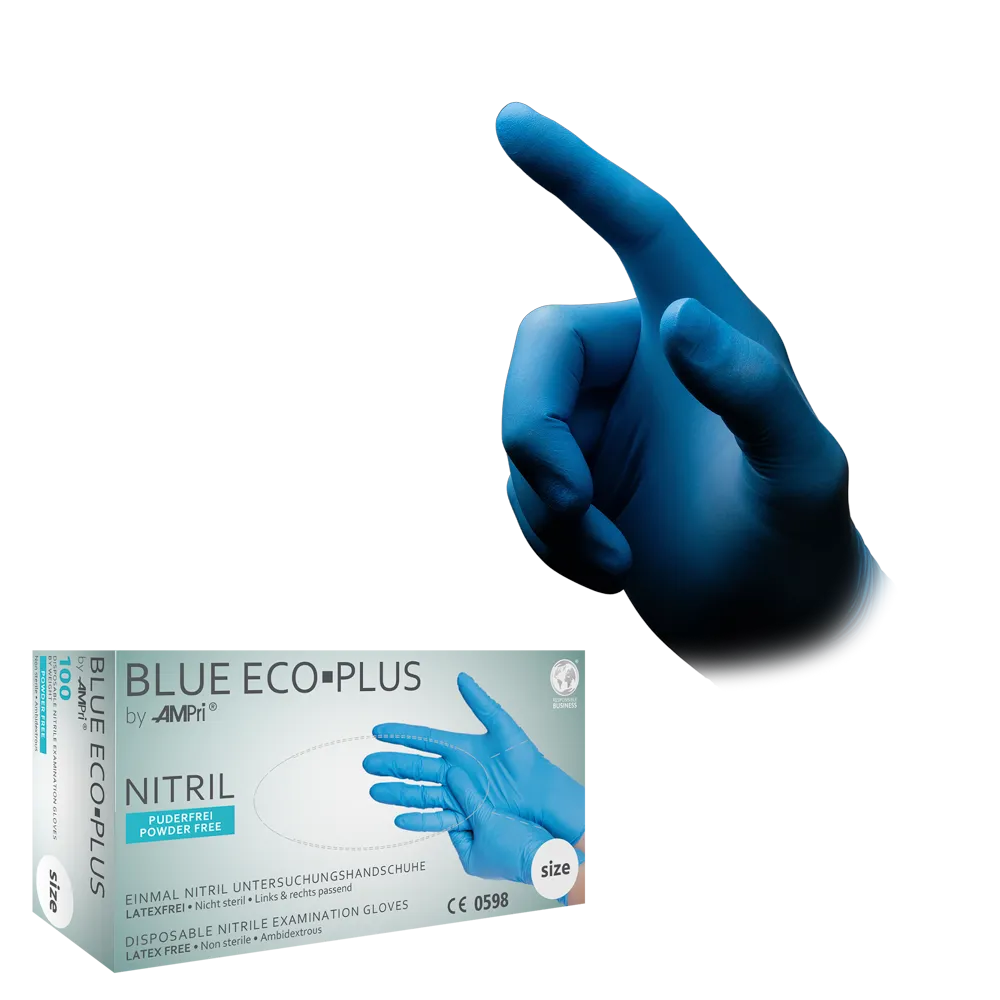

EN 455 is the European standard for medical disposable gloves. In four parts, it governs tightness, physical properties, biological safety and shelf life. For the veterinary practice, it ensures that the gloves serve as a reliable barrier between the hand and potentially infectious material.
Both materials meet the requirements of EN 455. Nitrile contains no natural latex proteins and is the first choice when latex allergies are to be avoided; it also offers good resistance to numerous chemicals. Latex impresses with high elasticity and pronounced tactile sensitivity. In practice, both variants are frequently kept on hand in parallel.
Powder could dry out the skin and act as a carrier for latex proteins, which increased the risk of allergies. Powder-free gloves are processed with chlorination or a polymer coating. This makes donning easier and is gentle on the skin of the practice team, which wears the gloves for numerous hours a day.
Nitrile gloves contain no natural latex proteins and are therefore a reliable alternative. If latex is preferred, powder-free variants with a low protein content are the gentler choice. This reduces the risk of sensitisation both for the practice team and for sensitive patients.
Long gloves with an extended cuff additionally protect the forearm and sleeve. They are suitable for examinations with an increased need for protection, for example in the gynaecology of large animals or during rectal examination. They thus complement the classic examination gloves for special applications.
In contact with blood, secretion, water or cleaning fluid, textured surfaces ensure a secure hold. A structure on the fingertips or across the entire gripping surface displaces liquid and improves the grip. This keeps instruments securely in the hand even in moist conditions.
Examination gloves are offered in several sizes from XS to XL. Since different hand sizes are represented in the practice team, keeping several sizes in stock is recommended. A well-fitting glove in the right size improves tactile sensitivity, grip and wearing comfort and prevents skin irritation.
Consistent single use interrupts the transmission routes of pathogens. After contact with an animal, the gloves are removed and disposed of before the next patient is treated. This prevents pathogens from being carried from animal to animal or onto surfaces and instruments.
Yes. Medical examination gloves are medical devices within the meaning of the MDR (EU) 2017/745 and bear a CE marking. They are tested according to EN 455. This documents their suitability for examination and treatment as well as their biological safety.
EN ISO 374-5 describes the requirements for protection against micro-organisms. For activities with an increased risk of infection, this protection can be relevant. In combination with the tightness test according to EN 455, it forms the basis for reliable infection protection in the practice.
A skin-friendly, powder-free and low-allergen glove reduces the risk of skin irritation and dryness. Since the practice team wears gloves for numerous hours, this has a direct effect on wearing comfort. In addition, regular skin care and the right size prevent irritation.
As a wholesaler, AMPri supplies specialist retailers and resellers. Through the Med-Comfort private label you receive a consistent range with stock availability and volume tiers. Request your individual trade conditions and suitable pack sizes – our team will be happy to prepare an offer tailored to your sales volume.