












Cold and Flu Season 2026/27: Current Situation, Transmission and Effective Protection
The 2026/27 cold and flu season is under way across Europe. In the UK, the UK Health Security Agency (UKHSA) reported low but variable flu activity for the week ending 1 November 2026, with RSV rising and COVID-19 falling[1]. UKHSA expects flu and RSV to increase further in the coming weeks[1]. In this article we summarise the current situation, explain the difference between a cold and flu, describe how flu spreads, and outline the protective measures recommended by health authorities. We close with practical tips for businesses, practices and care settings. Last updated: 9 November 2026.
Table of contents
- 1. Introduction: The 2026/27 season at a glance
- 2. The current situation in the UK
- 3. A look at Germany and Spain
- 4. Cold or flu? The differences
- 5. How flu spreads
- 6. Everyday protection
- 7. The flu vaccine: who is eligible on the NHS?
- 8. What businesses, practices and care settings can do now
- 9. Suitable products from AMPri
- 10. Frequently asked questions
- 11. Conclusion
- Sources
1. Introduction: The 2026/27 season at a glance
Every autumn the number of respiratory infections rises. People spend more time indoors, which makes it easier for respiratory viruses to spread. In everyday language almost every respiratory infection is called “flu”, but in the early weeks of the season colds caused by other viruses usually dominate. True flu, caused by influenza viruses, typically follows later.
2. The current situation in the UK
2.1 Flu, COVID-19 and RSV in numbers
According to UKHSA’s weekly winter virus surveillance for week 44 (26 October to 1 November 2026)[1]:
- Flu: activity was low and variable across indicators. Laboratory positivity rose to 7.6% (from 6.8%), hospital admissions to 2.83 per 100,000 (from 2.51).
- COVID-19: activity decreased to low levels. Positivity fell to 7.6% (from 8.1%), hospital admissions to 2.23 per 100,000 (from 2.58).
- RSV: activity increased to baseline levels. Positivity rose to 2.9% (from 1.6%), hospital admissions to 0.80 per 100,000 (from 0.57).
2.2 Flu vaccine uptake so far
UKHSA’s national surveillance report published on 5 November 2026 shows flu vaccine uptake among people aged 65 and over at 59.1% up to week 44, slightly below the same point last season (61.5%). Uptake among pregnant women was 31.1%, up from 29.7%[2].
3. A look at Germany and Spain
- Germany: In the week of 19 to 25 October 2026, around 5.2 million people in Germany developed a new acute respiratory infection, according to Robert Koch Institute data. Rhinoviruses and enteroviruses were the most frequently detected pathogens; influenza played only a minor role[5].
- Spain: Spain’s surveillance system SiVIRA recorded 475.9 acute respiratory infections per 100,000 inhabitants in primary care in week 44, with low intensity and flu test positivity of 6.4%[6].
4. Cold or flu? The differences
A cold usually starts gradually over one to two days and is generally mild. Flu symptoms, by contrast, come on quickly, within a few hours. According to the NHS, typical flu symptoms include a sudden high temperature, an aching body, feeling tired or exhausted, a dry cough, a sore throat, a headache and loss of appetite[4]. Flu is generally more severe than a cold.
The NHS advises people to seek urgent advice if they are 65 or over, pregnant, have a long-term condition or a weakened immune system, or if symptoms last longer than seven days[4].
5. How flu spreads
Flu viruses spread mainly through droplets released when people cough, sneeze or talk, and through hands that have touched contaminated surfaces and then the mouth, nose or eyes. According to the NHS, people are most likely to pass flu on in the first five days after becoming infected[4].
6. Everyday protection
6.1 Hand hygiene
Wash your hands often with soap and water[4]. In healthcare settings, care homes and wherever there is no sink nearby, hand sanitiser is a useful addition to hand washing.
6.2 Catch coughs and sneezes
Use tissues to catch coughs and sneezes and put used tissues in the bin as quickly as possible[4].
6.3 Stay at home when unwell
The NHS recommends staying at home and avoiding contact with other people if you have a high temperature, feel hot, cold or shivery, or do not feel well enough to go about your normal activities[4].
6.4 Surgical masks and respirators
- Surgical masks according to EN 14683 are medical devices. They retain droplets released when speaking, coughing or sneezing and therefore mainly protect other people.
- FFP2 respirators according to EN 149 are personal protective equipment (category III). As filtering half masks, they are designed to protect the wearer.
Which type is used in a facility is set out in its infection control policy.
7. The flu vaccine: who is eligible on the NHS?
The free NHS flu vaccine for 2026/27 is offered to adults including[3]:
- people aged 65 or over, including those who turn 65 by 31 March 2027,
- people aged 18 to 64 with certain long-term health conditions,
- pregnant women,
- people living in a care home,
- main carers of an older or disabled person, or people receiving Carer’s Allowance,
- people who live with someone who has a weakened immune system.
Frontline health and social care workers can get the vaccine through their employer. The last date to get vaccinated this season is 31 March 2027[3]. Children are covered by a separate programme.
8. What businesses, practices and care settings can do now
In GP surgeries, care homes, nurseries, shops and offices, staff, customers and patients meet in close quarters every day during the cold season. Now is a good time to review your infection control plan: Are hand sanitiser dispensers in the right places? Are hand-washing stations stocked with soap and disposable towels? Is there a clear rule on when masks are worn and who stays at home with symptoms?
Demand for hygiene products rises sharply once flu activity increases. Ordering masks, hand sanitiser and disposables in good time helps avoid shortages in the middle of the wave.
9. Suitable products from AMPri
- Surgical masks: medical face masks according to EN 14683, for example Type II with ear loops or Type IIR.
- FFP2 respirators: the SolidSafety FFP2 mask, a filtering half mask according to EN 149.
- Hand sanitiser: Safeline Hand Des Protect N, available in 150 ml, 500 ml, 1 l and 5 l.
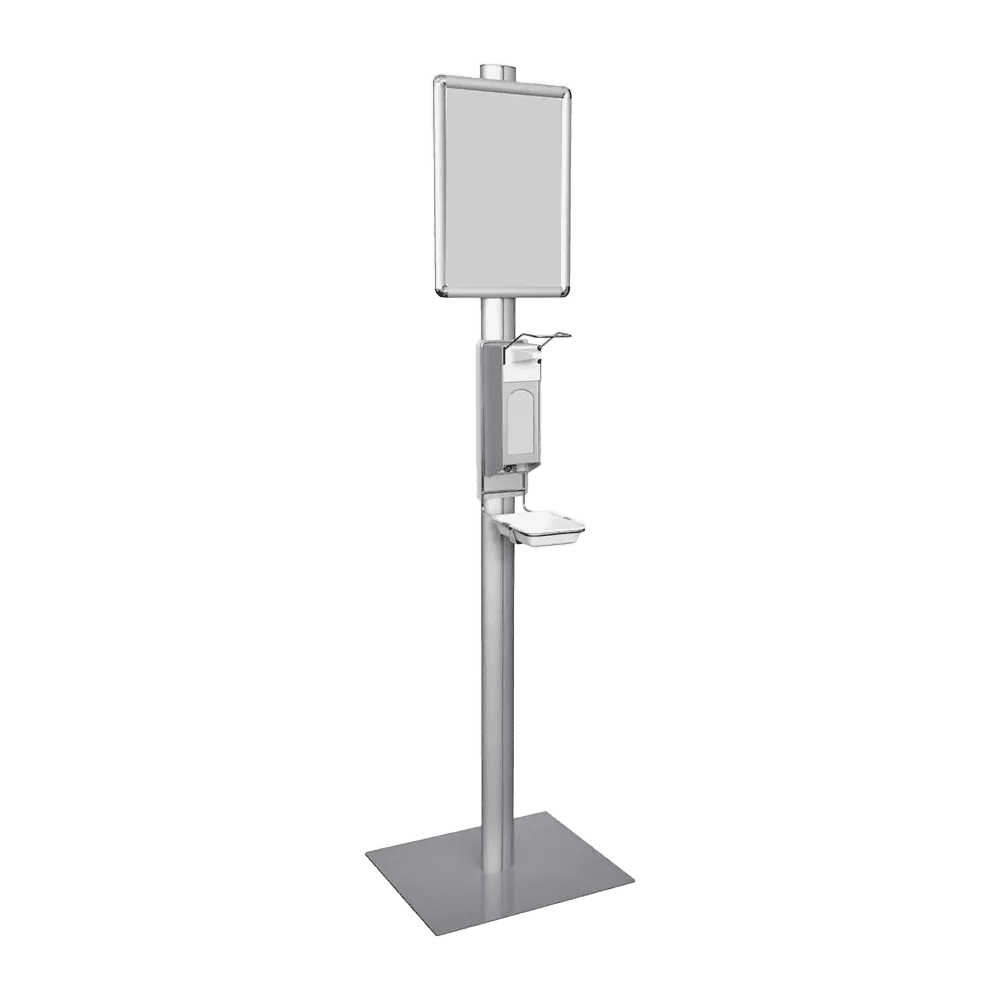
- Sanitising station: the mobile disinfection stand for entrance and waiting areas.
Need larger quantities or a specific item? Write to us at info@ampri.de.
10. Frequently asked questions
Has the 2026/27 flu season peaked yet?
No. As of early November 2026, UKHSA reported low flu activity, with increases expected in the coming weeks[1].
How long is someone with flu infectious?
According to the NHS, people are most likely to pass flu on in the first five days after infection[4].
Am I eligible for a free flu vaccine?
Adults aged 65 or over, people aged 18 to 64 with certain long-term conditions, pregnant women, care home residents and carers are among those eligible. Check the NHS website for the full list[3].
What is the difference between a surgical mask and an FFP2 mask?
A surgical mask (EN 14683) is a medical device that mainly protects others. An FFP2 mask (EN 149) is personal protective equipment designed to protect the wearer.
11. Conclusion
The 2026/27 season has started with high numbers of respiratory infections and still low flu activity. Washing hands, catching coughs and sneezes, staying at home when unwell and getting vaccinated if eligible remain the most important steps. Businesses and care settings should use the coming weeks to check their hygiene plans and stock levels.
Sources
- [1] UK Health Security Agency – “Latest UKHSA weekly winter virus surveillance data” (5 November 2026) – Link
- [2] UK Health Security Agency – National flu and COVID-19 surveillance report: 5 November 2026 (week 45) – Link
- [3] NHS – Flu vaccine – Link
- [4] NHS – Flu – Link
- [5] Apotheken Umschau – “Erkältungssaison 2026/27” (data from the Robert Koch Institute, updated 30 October 2026) – Link
- [6] Instituto de Salud Carlos III – SiVIRA weekly report, week 44/2026 – Link
All sources accessed on 9 November 2026.
Related products