












Leaf Blowers and Noise in the UK: Is There a Sunday Ban? Rules, Complaints and Protection
Every autumn, leaf blowers are out in force, and so are the complaints from neighbours. Unlike Germany, where a federal regulation sets fixed hours for leaf blowers, England has no general legal ban on using a leaf blower on a Sunday or at particular times of day. Instead, garden noise is dealt with through the law on statutory nuisance[1]. In this article we explain how the rules work, what councils can do, how product labelling applies, what employers must consider and how to protect yourself when using a leaf blower. Last updated: 9 November 2026.
Table of contents
- 1. Introduction: Why leaf blowers cause disputes
- 2. Is there a legal time limit for leaf blowers in the UK?
- 3. Statutory nuisance under the Environmental Protection Act 1990
- 4. Night-time noise: the Noise Act 1996
- 5. Product rules: noise labelling for leaf blowers
- 6. Comparison: Germany and Spain
- 7. Being a considerate neighbour
- 8. Protecting yourself when using a leaf blower
- 9. Suitable products from AMPri
- 10. Frequently asked questions
- 11. Conclusion
- Sources
1. Introduction: Why leaf blowers cause disputes
Leaf blowers save time on large lawns, paths and car parks. At the same time they are among the loudest tools used in gardens. Because leaves fall in every garden at the same time of year and are often cleared at weekends, neighbourhood disputes are almost inevitable.
2. Is there a legal time limit for leaf blowers in the UK?
In England there is no national law that fixes the hours during which a leaf blower may be used, and no general Sunday ban. Noise from premises, including gardens, and from machinery in the street can, however, be investigated by the local council as a statutory nuisance at any time of day or night[1]. In practice, what matters is whether the noise unreasonably and substantially interferes with neighbours’ use and enjoyment of their home.
3. Statutory nuisance under the Environmental Protection Act 1990
3.1 When noise becomes a statutory nuisance
Noise counts as a statutory nuisance if it unreasonably and substantially interferes with the use or enjoyment of a home or other premises, or if it injures health or is likely to do so[1]. Councils consider factors such as how loud, how long and at what time of day the noise occurs.
3.2 Abatement notices and consequences
If a council is satisfied that a statutory nuisance exists, it must serve an abatement notice[1][2]. Failing to comply with an abatement notice without reasonable excuse is a criminal offence[2]. Residents can also take private action in the magistrates’ court after giving notice[2].
4. Night-time noise: the Noise Act 1996
The Noise Act 1996 deals with noise from dwellings at night, between 11pm and 7am. Where a council uses these powers, it can issue a warning notice and, if the noise continues above the permitted level, a fixed penalty of up to £110 for dwellings; on conviction, fines of up to £1,000 are possible[1]. The Act does not specifically mention leaf blowers, but it shows that night-time noise is treated particularly strictly.
5. Product rules: noise labelling for leaf blowers
The Noise Emission in the Environment by Equipment for use Outdoors Regulations 2001 apply to leaf blowers. They are listed among the equipment subject to noise marking: manufacturers must indicate the guaranteed sound power level on the product[3]. This label helps buyers compare models and choose a quieter one.
6. Comparison: Germany and Spain
- Germany: A federal regulation (32. BImSchV) prohibits leaf blowers in residential areas on Sundays and public holidays. On working days, including Saturdays, they may only be used from 9am to 1pm and from 3pm to 5pm, or from 7am to 8pm for models with the EU Ecolabel[5].
- Spain: The Spanish Noise Act (Ley 37/2003) leaves domestic and neighbourhood noise to local ordinances, so permitted times vary from town to town[6].
7. Being a considerate neighbour
Even without a fixed legal time limit, the following helps avoid complaints:
- avoid early mornings, late evenings and Sunday mornings,
- keep sessions short and use the lowest effective power setting,
- choose a model with a lower guaranteed sound power level,
- use a rake or broom for small areas.
If you are affected by noise, talking to your neighbour is usually the first step. If that does not help, you can report the problem to your local council[1].
8. Protecting yourself when using a leaf blower
8.1 Hearing protection and workplace noise limits
For employees, the Control of Noise at Work Regulations 2005 apply. Employers must assess the risk and provide information and training at a daily or weekly exposure of 80 dB(A). At 85 dB(A), hearing protection must be provided and hearing protection zones set up. The exposure limit of 87 dB(A), taking account of hearing protection, must not be exceeded[4]. For grounds maintenance teams and caretakers who use leaf blowers regularly, these thresholds are relevant.
8.2 Respiratory protection
A leaf blower stirs up dust, soil and fine particles as well as leaves, particularly in dry weather and on hard surfaces. A filtering half mask such as an FFP2 respirator according to EN 149 retains particles from the dust.
8.3 Gloves and eye protection
Gloves with good grip help you hold the tool securely and protect your hands when gathering wet leaves. Safety glasses protect your eyes from flying debris.
9. Suitable products from AMPri
- FFP2 respirators: the SolidSafety FFP2 mask, a filtering half mask according to EN 149 and category III personal protective equipment.
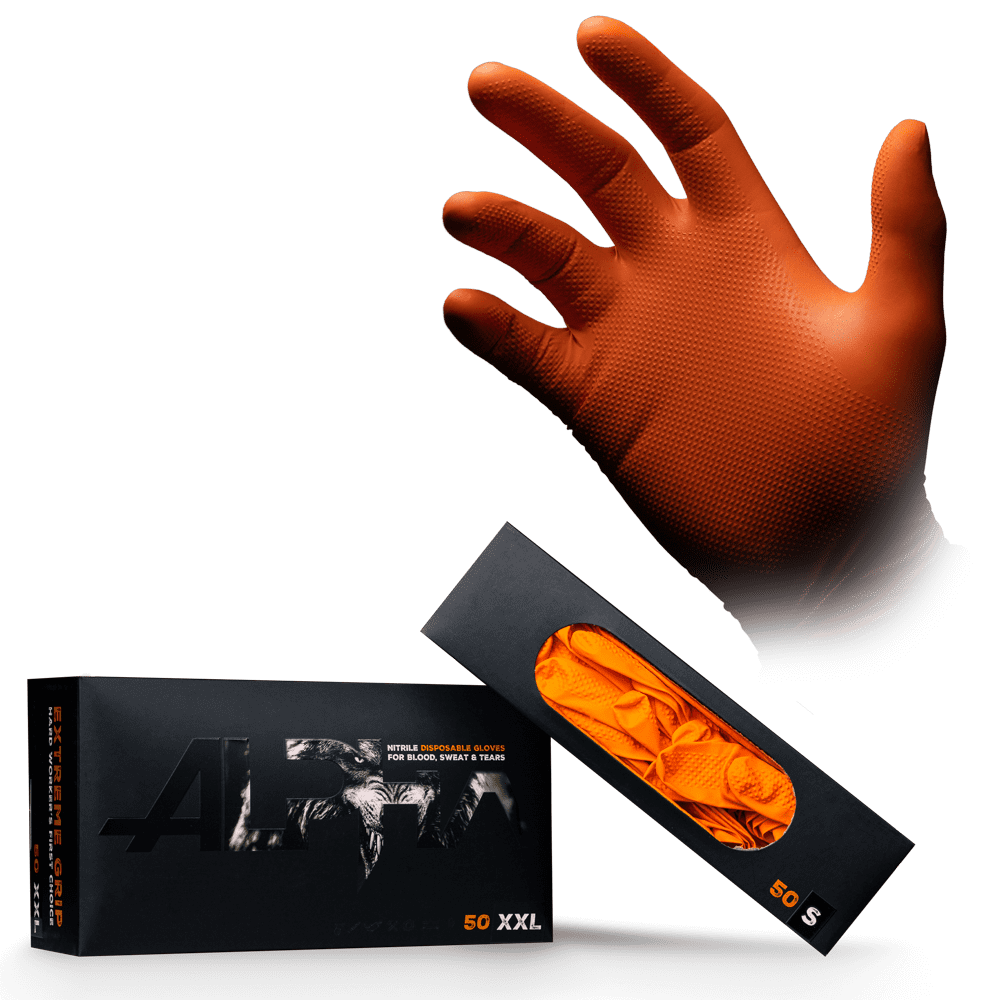
- Nitrile gloves with grip: ALPHA EXTREME GRIP in orange and ALPHA HIGH GRIP BLACK in black, with a textured surface for a secure grip.
Looking for further protective equipment for landscaping or caretaking? Write to us at info@ampri.de.
10. Frequently asked questions
Can I use a leaf blower on a Sunday in the UK?
There is no general legal ban on using a leaf blower on a Sunday in England. However, if the noise unreasonably and substantially interferes with your neighbours, the council can treat it as a statutory nuisance[1].
Can I report a neighbour’s leaf blower?
Yes. Your local council investigates noise complaints and must serve an abatement notice if it finds a statutory nuisance[1].
Do leaf blowers have to show a noise level?
Yes. Under the 2001 outdoor equipment regulations, leaf blowers must be marked with their guaranteed sound power level[3].
Do gardeners have to wear hearing protection?
Employers must provide hearing protection at an exposure of 85 dB(A) and assess the risk from 80 dB(A)[4].
11. Conclusion
In the UK there are no fixed legal hours for leaf blowers, but excessive noise can still lead to an abatement notice. Using the tool at sensible times, choosing a quieter model and talking to neighbours prevents most disputes. Anyone using a leaf blower regularly should also protect their hearing, lungs and hands.
Sources
- [1] GOV.UK – “Noise nuisances: how councils deal with complaints” – Link
- [2] Shelter England – “Local authority duties to deal with noise” (Environmental Protection Act 1990) – Link
- [3] The Noise Emission in the Environment by Equipment for use Outdoors Regulations 2001 – Link
- [4] Health and Safety Executive – Noise at work – Link
- [5] Geräte- und Maschinenlärmschutzverordnung (32. BImSchV), § 7 – Link
- [6] Ley 37/2003, de 17 de noviembre, del Ruido – Link
All sources accessed on 9 November 2026.
Related products